Understanding the Challenges of Resisting Guilty Pleasures
The Temptation of Unhealthy Choices
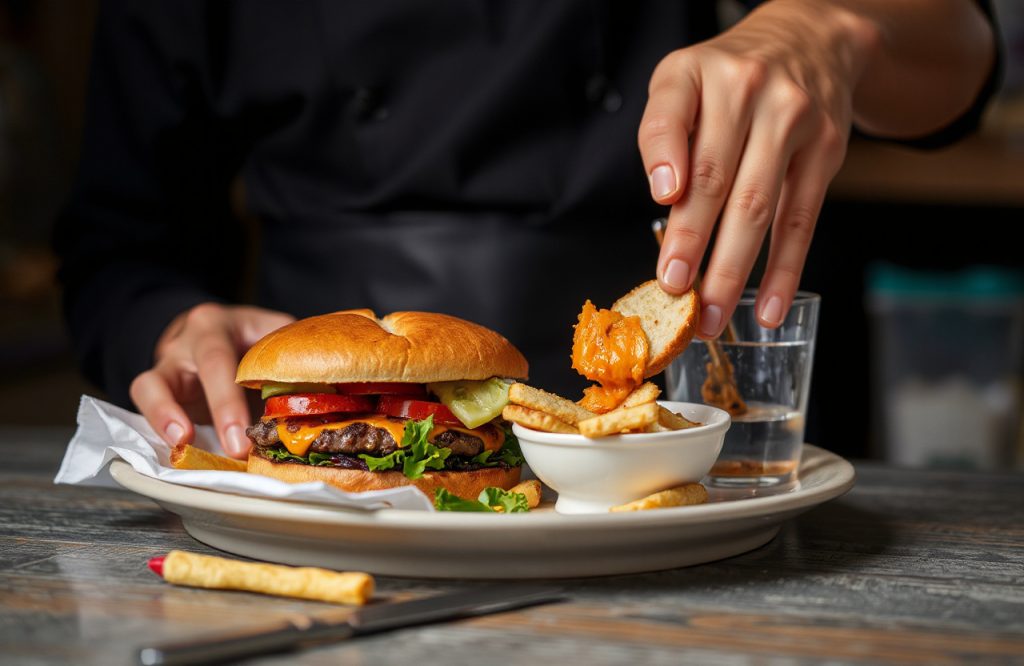
New research delves into the reasons behind the difficulty many individuals face when attempting to abstain from guilty pleasures, such as consuming unhealthy foods and alcohol. Despite knowing the long-term health risks associated with fast food and excessive drinking, many find it challenging to resist the allure of a burger and fries or a glass of wine after a taxing day.
The Role of Reward Pathways
The appeal of these indulgences often lies in their immediate gratification. Engaging in such behaviors activates reward pathways within the nervous system, providing a fleeting sense of pleasure that can overshadow the potential negative consequences.
Environmental Cues and Advertising Influence
One significant factor contributing to this struggle is the pervasive advertising of fast food and alcoholic beverages, characterized by visually enticing images and catchy slogans. These marketing strategies serve as environmental cues that entice individuals to indulge in unhealthy choices. Recent research is focusing on strategies to help people ignore these persuasive signals.
Research Insights from the University of New South Wales
Experimental Design
A psychology experiment conducted by the University of New South Wales aimed to explore the factors that make it challenging to resist these environmental cues. Participants were presented with a screen displaying a brightly colored circle, either blue or orange, among various other shapes. They were informed that they could earn money by locating a diamond-shaped object while avoiding attention to the distracting circle.
Memory Load Impact on Attention
The study included two variations: a low-memory load condition and a high-memory load condition. In the high-memory load scenario, participants were required to memorize a sequence of numbers in addition to finding the diamond. Results indicated that fewer participants successfully located the diamond in the high-memory load condition, which was attributed to diminished attention resources available for the task.
The Role of Executive Control
Researchers also highlighted the importance of executive control in resisting unwanted reward signals such as fast food and alcohol. Executive control encompasses cognitive functions that enhance organization, focus, and emotional regulation. Strengthening executive control could have implications for managing addiction and supporting weight loss efforts.
Stress and Its Effects on Decision-Making
This research may also shed light on why individuals struggle with alcohol addiction or dieting when under stress. The high-memory load experiment simulates a stressful environment, suggesting that stress may hinder the ability to ignore tempting cues. Further investigation is necessary to better understand how to enhance executive control and mitigate stress, as well as to clarify the direct relationship between executive control and the ability to resist these rewarding stimuli.
Conclusion
In summary, while the allure of guilty pleasures can be strong, ongoing research aims to uncover methods to enhance self-control and reduce the impact of environmental cues. Understanding these dynamics is crucial for developing effective strategies for healthier living.
References
Dubach, I. (2019, July 04). Ignoring cues for alcohol and fast food is hard – but is it out of our control? Retrieved July 9, 2019, from https://newsroom.unsw.edu.au/news/science-tech/ignoring-cues-alcohol-and-fast-food-hard-it-out-our-control
Watson, P., Pearson, D., Chow, M., Theeuwes, J., Wiers, R., Most, S. B., & LePelley, M. E. (2019). Capture and Control: Working Memory Modulates Attentional Capture by Reward-Related Stimuli [Abstract]. Psychological Science. doi:10.1177/0956797619855964