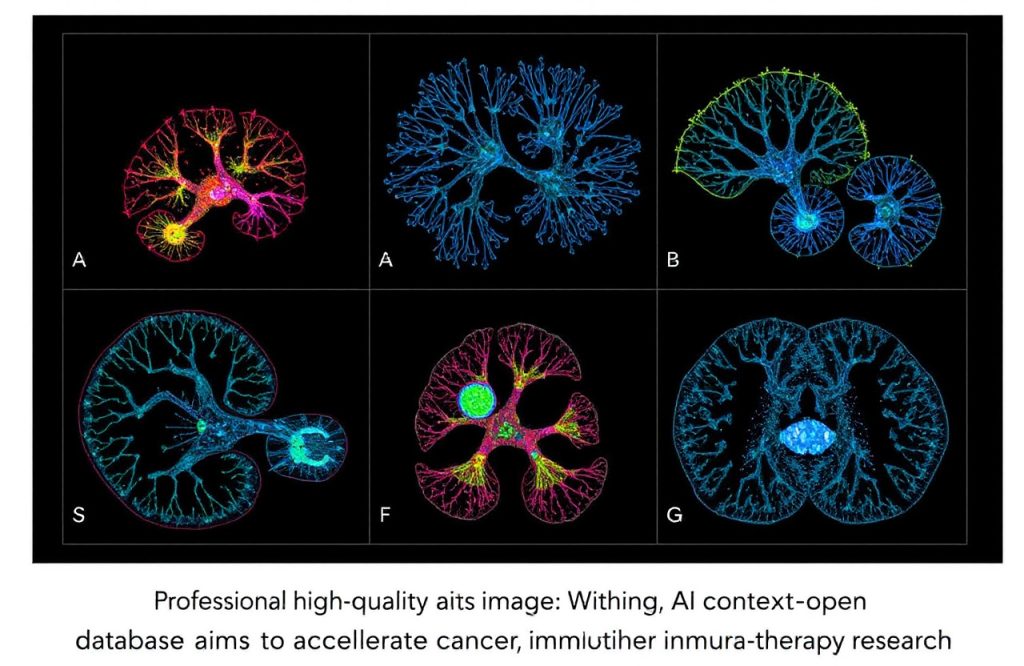
Launch of AI-Ready Immunotherapy Database
Accelerating Cancer Research
The Cancer Research Institute (CRI) has introduced a groundbreaking AI-ready immunotherapy database aimed at expediting research and the development of treatments for cancer. This innovative collaborative initiative seeks to resolve longstanding challenges in cancer research by standardizing and globally sharing essential data.
Focus Areas of the Database
In its initial phase, the database will concentrate on melanoma and colorectal cancer. It will include both successful treatment outcomes and instances of failed therapies, providing insights into the reasons behind the effectiveness or ineffectiveness of various treatments.
A Living Resource for Researchers
The new open-access database is designed to serve as a dynamic resource, enabling scientists to gain a deeper understanding of how the immune system reacts to cancer treatments over time. This aspect has traditionally posed challenges in immunotherapy research.
Collaboration with Leading Institutions
The CRI has partnered with several prestigious institutions, including Stanford University School of Medicine, the University of Pennsylvania Perelman School of Medicine, Memorial Sloan Kettering Cancer Center, and the biotechnology firm 10x Genomics, to launch the CRI Discovery Engine. This centralized, AI-ready platform is dedicated to advancing cancer immunotherapy research.
Leadership of the Initiative
The Discovery Engine is spearheaded by three principal investigators: Andrea Schietinger, PhD, and Ansuman Satpathy, MD, PhD, both recognized as CRI STARs investigators, alongside E. John Wherry, PhD, who serves as the associate director of CRI’s Scientific Advisory Council.
Addressing Key Barriers in Oncology Research
This initiative aims to tackle two significant obstacles in academia that hinder progress in oncology research: the limited sharing of data and the challenges related to the reproducibility of experimental results.