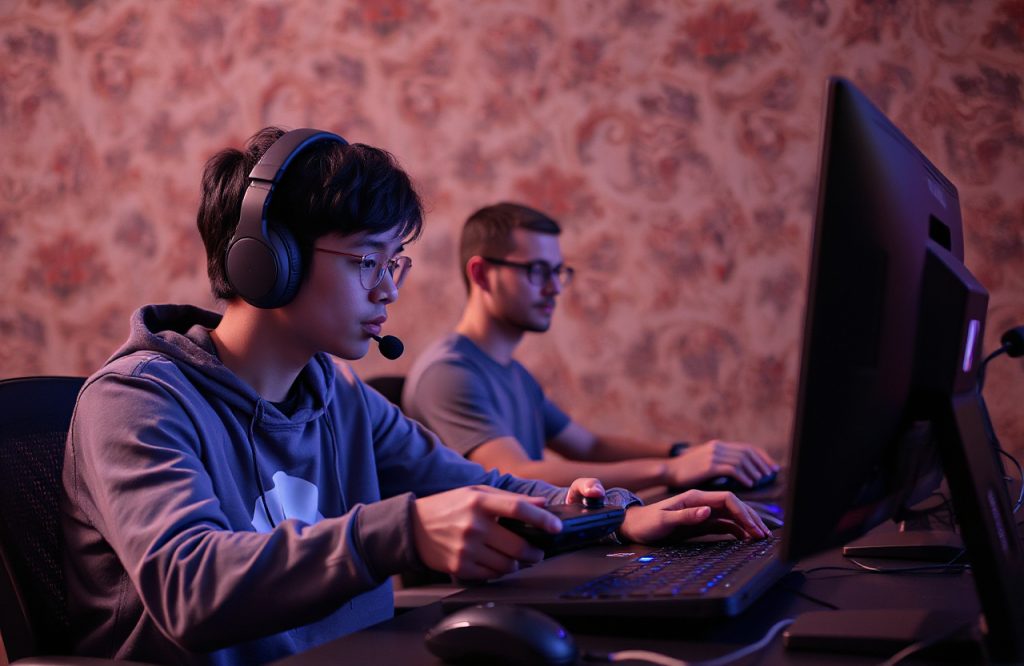
Exploring the Impact of Video Games on Memory and Attention
Popularity of Video Games
A recent study examined the effects of both active and sedentary video games on memory and attention. Video games have become highly popular, with two-thirds of American households owning at least one gaming platform. Many individuals in these households engage in gaming for three or more hours weekly.
Understanding Active and Sedentary Video Games
It is important to differentiate between sedentary video games (SVG) and active video games (AVG). Active video games resemble titles like Wii Sports or Virtual Reality experiences, whereas sedentary games include genres such as first-person shooters. Additionally, games can vary in terms of narration, which adds a layer of complexity and cognitive demand for players.
Research Study Overview
Participant Recruitment and Methodology
A research team from Massachusetts recruited 100 healthy, non-smoking young adults aged 18 to 25 who were unfamiliar with the specific games used in the study. Participants were divided into four groups:
– Active video game with narrative: N-AVG
– Active video game without narrative: AVG
– Sedentary video game with narrative: N-SVG
– Sedentary video game without narrative: SVG
Findings on Physical Activity and Engagement
As anticipated, participants in the AVG conditions demonstrated increased physical activity. Notably, the addition of a narrative was found to enhance both physical engagement and cognitive function. While AVG typically aligns with the national recommendation of 30 minutes of moderate exercise, the incorporation of a narrative led to a 23% increase in steps taken. This aligns with previous studies indicating that narratives can enhance effort in physical activity.
Participants in the AVG group also exhibited an 11% increase in exercise intensity, as monitored by an accelerometer. Moreover, narratives may contribute to greater player engagement, potentially leading to longer gaming sessions and improved perceptions of exercise.
Active Gamers vs. Sedentary Gamers
Working Memory Performance
In terms of cognitive performance, participants engaging in AVG outperformed their sedentary counterparts in working memory tasks. Measurements indicated more efficient encoding times, response accuracy, and retrieval latency in the AVG group, although the presence of a narrative did not significantly impact these results.
Comparative Benefits of AVG
Research suggests that AVG may offer superior cognitive benefits compared to traditional exercise, although studies on this topic remain limited. The distinct engagement required by AVG appears to enhance attentional functioning and cognitive flexibility more effectively than conventional exercises.
Strengths and Limitations of the Study
Sample Size and Control Group Limitations
While the study utilized a robust sample size, it lacked a complete control group, specifically a “non-gamer” category, which constrains broader generalizations. The focus on young adults further limits the applicability of the findings across different age groups.
Variability in Player Preferences
The design of the experiment also faced challenges regarding individual player preferences. Variations in gaming platform familiarity may have influenced performance, and participants were not given a choice of games, possibly affecting their engagement levels. The narrative aspect may have improved the appeal of certain games, leading to enhanced cognitive outcomes.
Future Considerations
Questions Raised by the Study
This research raises several intriguing questions for future exploration:
– Does adding narration to games like Kung-FuKinect enhance both physical and cognitive engagement?
– Can video games serve as a replacement for traditional forms of exercise?
– How do video games impact cognitive functioning in young adults compared to traditional exercise methods?
Further insights from participants regarding their experiences with different games and narratives would provide valuable context. Understanding the comparative effectiveness of various gaming platforms in promoting physical activity and cognitive function remains a key area for future research.
Conclusion
The study presents compelling evidence for the benefits of active video games in enhancing physical activity and cognitive performance among young adults. As the popularity of video games continues to grow, understanding their potential as tools for promoting healthier lifestyles and improved cognitive function becomes increasingly important.
References
Hwang, Jungyun, and Amy Shirong Lu. “Narrative and Active Video Game in Separate and Additive Effects of Physical Activity and Cognitive Function among Young Adults.” Scientific Reports, vol. 8, no. 1, 2018, doi:10.1038/s41598-018-29274-0.
Endo, K. et al. Dynamic exercise improves cognitive function in association with increased prefrontal oxygenation. J. Physiol. Sci. 63,287–298 (2013).