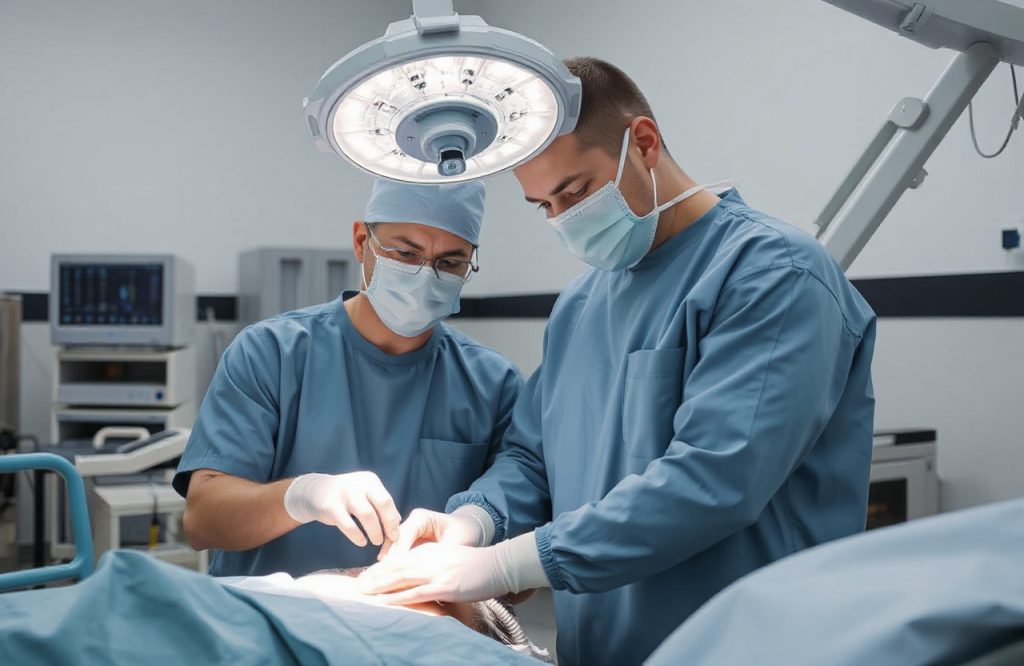
AI Tool Predicts Risk of GVHD and Improves Patient Outcomes
Introduction to the AI-Based Tool
An innovative AI tool has emerged that can predict the risk of developing chronic graft-versus-host disease (GVHD) as well as transplant-related mortality following stem cell or bone marrow transplants. By integrating biomarkers with clinical factors, this tool offers more accurate outcome predictions than traditional clinical data alone, particularly concerning transplant-related death.
Patient Risk Assessment
The AI model effectively categorizes patients into low- and high-risk groups, demonstrating significant differences in outcomes up to 18 months post-transplant. Its reliability has been confirmed through validation in an independent patient cohort. This machine learning model is accessible as a free, web-based application designed to assist with risk assessment and further research.
Understanding Stem Cell and Bone Marrow Transplants
Stem cell and bone marrow transplants are vital procedures that replace diseased or damaged blood-forming cells with healthy tissue. These transplants are commonly used to treat conditions such as leukemia, lymphoma, and various blood disorders. The procedures can involve harvesting cells from a donor (allogenic transplant) or utilizing the patient’s own cells (autologous transplant). For many patients, these transplants are life-saving; however, recovery extends well beyond hospital discharge.
The Challenge of GVHD
Despite advances in transplant care that have improved survival rates, GVHD remains the leading cause of late morbidity and mortality after allogenic stem cell transplants. Predicting which patients will develop GVHD is challenging, with evidence indicating that between 50% to 33% of individuals who undergo allogeneic transplants exhibit some symptoms of this condition. GVHD may manifest shortly after the transplant as acute GVHD or can develop months later as chronic GVHD (cGVHD).
Preventive Strategies and Research Implications
Preventing GVHD is a complex issue, often requiring a careful balance of immune suppression to mitigate GVHD while minimizing the risk of infections and adverse reactions to treatments. A recent study published in the Journal of Clinical Investigation outlines a machine-learning model that can estimate a patient’s risk of developing cGVHD and dying from transplant-related causes before symptoms manifest. Researchers believe this tool could provide clinicians with an early warning, facilitating closer monitoring and the implementation of preventive strategies.