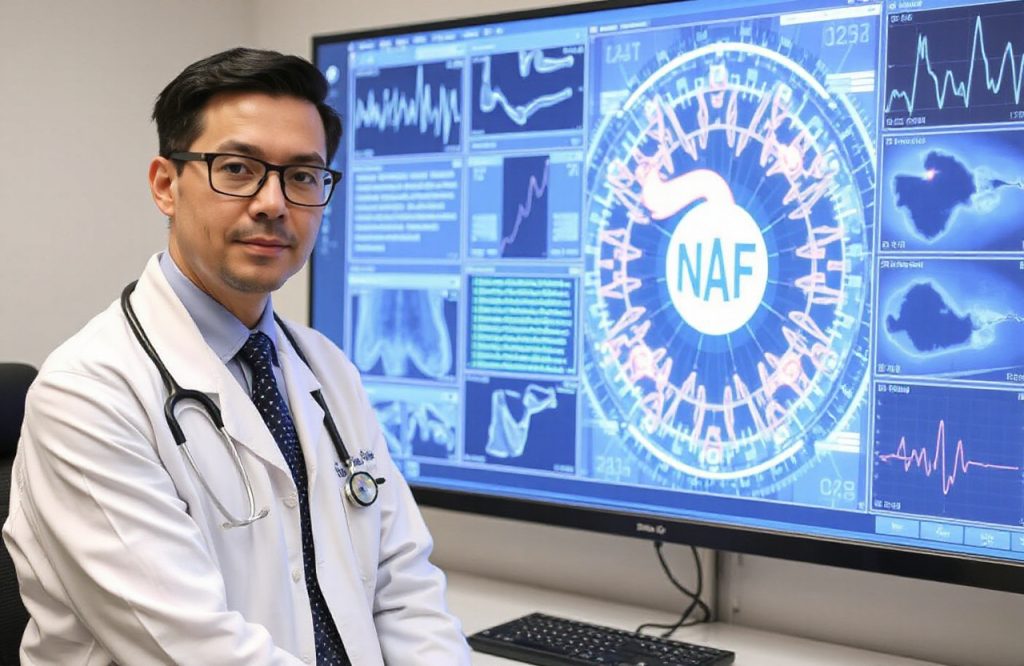
AI’s Role in Healthcare Emphasized by NMC Chairperson
Dr. Abhijat Sheth’s Perspective on AI
New Delhi: Dr. Abhijat Sheth, Chairperson of the National Medical Commission (NMC) and President of the National Board of Examinations in Medical Sciences (NBEMS), highlighted the significant role of artificial intelligence (AI) in healthcare. He urged caution against excessive reliance on AI, asserting that it should serve as a complement to, rather than a replacement for, medical professionals. Dr. Sheth emphasized the importance of maintaining ethical and clinical standards in the integration of AI technologies.
Launch of Free AI Course for Medical Trainees
In his remarks, Dr. Sheth referred to the recent launch of a complimentary AI course by the NBEMS, aimed at educating undergraduate and postgraduate trainees about AI applications in medicine. This initiative seeks to promote responsible and ethical usage of AI among future healthcare providers.
Integration of Clinical Research into Medical Curriculum
Additionally, the NMC has reportedly approved, in principle, the incorporation of clinical research into the core medical curriculum. This strategic move will mandate research training as part of medical education and assessment, facilitated by partnerships with organizations such as the Indian Council of Medical Research (ICMR), the Indian Institute of Science (IISc), and various Indian Institutes of Technology (IITs). The goal is to bolster evidence-based practices and cultivate a robust clinical research culture in India.
Insights from Dr. Sheth on AI and Medical Education
Caution Against Over-Dependence on AI
In an exclusive interview with ANI, Dr. Sheth acknowledged the importance of AI in healthcare while cautioning against over-dependence among medical students. He declared that while AI’s significance cannot be overlooked, it is crucial that it does not undermine the values upheld by healthcare professionals.
Details of the Free AI Course
The free AI course, which commenced on December 30, 2025, is designed to equip doctors with essential AI skills for enhanced diagnostics and personalized treatment. This initiative marks the first large-scale offering of such a course, featuring approximately 20 lectures and interactive sessions. Participants will receive a certificate upon successful completion.
Clinical Research as a Core Component of Medical Education
Dr. Sheth further asserted that clinical research should be a foundational aspect of medical education, moving beyond its traditional peripheral role. He noted that the NMC Board has approved this integration, ensuring that future healthcare professionals comprehend the importance of evidence-based practice from the outset of their training.
Collaboration for Effective Implementation
To implement this vision, the NMC plans to establish a multi-stakeholder committee that includes the ICMR, IISc, IITs, and medical experts. This collaboration aims to create frameworks for extensive clinical research training at both undergraduate and postgraduate levels.
Benefits for Medical Education and National Development
Dr. Sheth expressed optimism that this integration would enhance the quality of medical education and foster a culture of clinical research within the medical community, which is vital for national progress. He also mentioned that institutions like the ICMR are open to launching new PhD programs in clinical research to support this initiative.
Conclusion
In summary, Dr. Abhijat Sheth’s insights highlight the dual focus on integrating AI responsibly into healthcare and enhancing clinical research training within medical education. These efforts are poised to shape the future of medical practice in India, ensuring that technology serves to complement the vital roles of healthcare professionals.