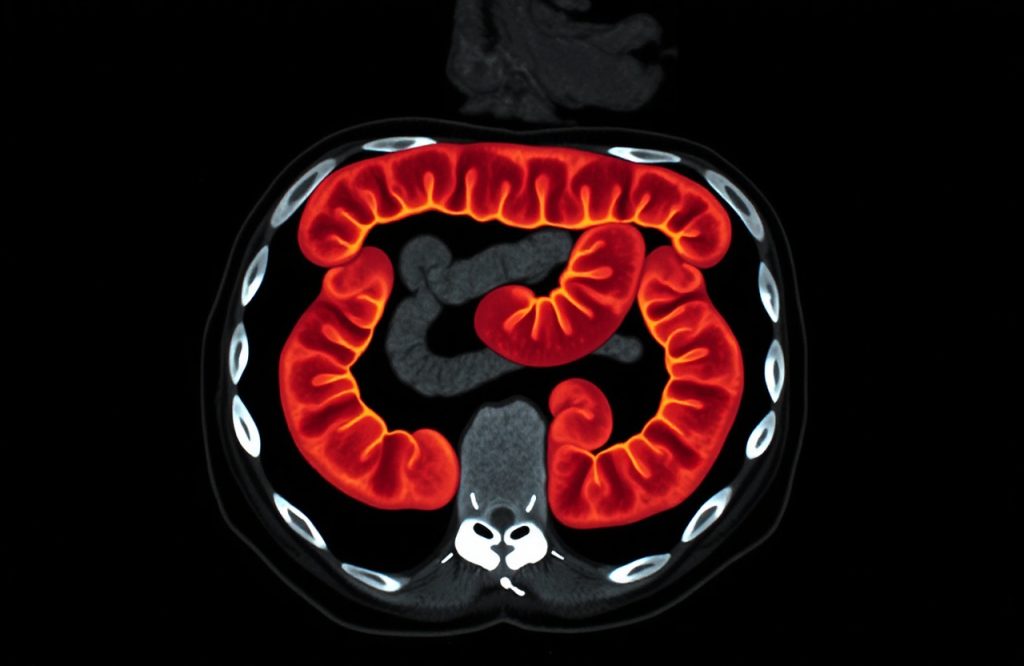
AI Model Predicts Colorectal Cancer Risk in Ulcerative Colitis Patients
Introduction to AI in Cancer Prediction
Recent research indicates that an artificial intelligence (AI) tool can effectively forecast colorectal cancer risk in individuals with ulcerative colitis and low-grade dysplasia. This advancement has significant implications for patient care and monitoring.
Study Overview and Methodology
The AI model was developed using data from over 55,000 patients, enabling it to accurately identify individuals at very low risk for colorectal cancer. This capability could help minimize unnecessary surveillance colonoscopies, thereby reducing patient burden and healthcare costs.
Implications for Personalized Surveillance
The findings suggest that AI could enhance personalized surveillance strategies, working in tandem with clinicians to make informed decisions regarding patient care.
Understanding Colorectal Cancer
Definition and Prevalence
Colorectal cancer encompasses any malignancy affecting the colon and rectum, also referred to as bowel cancer. It ranks as the third most prevalent cancer globally, accounting for approximately 10% of all cancer diagnoses. Furthermore, it is the second leading cause of cancer-related fatalities.
Risk Factors Associated with Colorectal Cancer
Certain factors, particularly inflammatory bowel diseases (IBD) like ulcerative colitis, contribute to an increased risk of developing colorectal cancer. Research highlights that individuals with ulcerative colitis face a two- to three-fold higher risk than the general population.
Dysplasia and Its Implications
Patients with IBD, particularly those who are untreated, may develop dysplasia, characterized by abnormal cells in the colon or rectum that are not yet cancerous. This condition, termed colitis-associated dysplasia (CAD), has the potential to progress to cancer over time.
Challenges in Early Detection
The Clinical Challenge of Monitoring Dysplasia
While dysplasia serves as an early warning signal, accurately determining which patients are most likely to progress to colorectal cancer poses a significant clinical challenge. This uncertainty complicates the decision-making process for both patients and healthcare providers regarding the timing of increased surveillance or the consideration of preventive surgery.
Potential of AI in Cancer Prediction
A recent study published in *Clinical Gastroenterology and Hepatology* suggests that the AI model can reliably predict patients at the highest risk of developing colorectal cancer. This innovative approach may lead to more tailored care strategies, improving outcomes for those at risk.