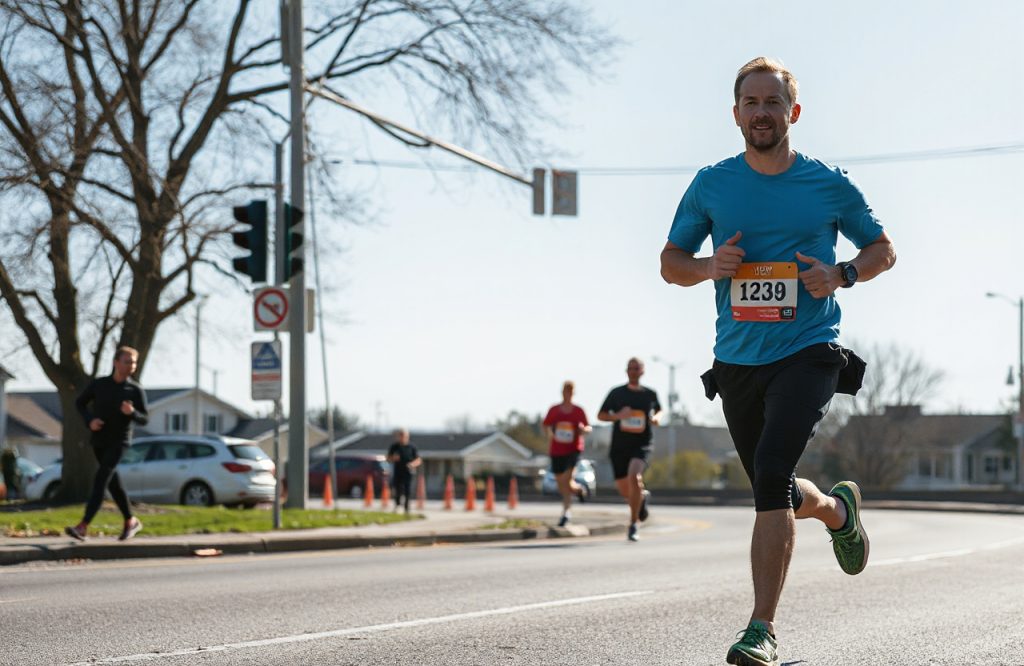
Increased Cardiac Stress in Amateur Marathon Runners
Overview of Marathon Running
Running a marathon has gained immense popularity as a challenging sport that offers numerous health benefits. However, there is ongoing debate regarding whether this demanding activity may pose more risks than rewards for non-professional runners.
Heart Attack Incidence in Marathon Runners
While the occurrence of heart attacks among marathon runners is estimated at one in every 100,000 participants, there remains a notable incidence of exercise-induced heart attacks during marathon events.
Research Study on Cardiac Stress
A recent study conducted by researchers in Spain focused on assessing cardiac stress levels in amateur marathon runners. The findings were published in *Circulation*, a journal associated with the American Heart Association.
Study Design and Participants
The study involved 63 amateur runners who were grouped into trios. Each runner participated in a race of varying lengths: a 10-km race, a half marathon, or a full marathon. The participants were matched based on age, body composition, running experience, and 10-year cardiovascular risk.
Cardiac Biomarkers Analysis
Researchers collected blood samples from each participant both before and ten minutes after their race to evaluate cardiac biomarkers. These biomarkers included troponin I, troponin T, NT-proBNP, creatine kinase-MB, creatine kinase-MM, and myoglobin, which serve as indicators of heart muscle strain.
Findings of the Study
The results revealed significantly elevated levels of cardiac troponin I and troponin T in runners who completed a full marathon compared to those who ran shorter distances. Additionally, other cardiac biomarkers such as NT-proBNP, creatine kinase-MB, and myoglobin also increased with longer running distances. Notably, this increase occurred despite the greater training volume undertaken by those preparing for a full marathon compared to shorter races.
Implications of Increased Cardiac Stress
These findings highlight a significant rise in cardiac stress experienced by amateur marathon runners following long-distance races, particularly full marathons. Although elevated cardiac biomarkers do not necessarily indicate heart dysfunction, they do suggest increased strain on the heart. Further research involving a larger sample of amateur runners is needed to explore the clinical implications of this heightened cardiac stress.
References
Beatriz, L., Salinero, J.J., Gallo-Salazar, C., Areces, F., Ruiz-Vicente, D., Martinez, M., & DelCoso, J. (2018). Elevation of Cardiac Troponins After Endurance Running Competitions. *Circulation*. doi:10.1161/CIRCULATIONAHA.118.034655
Thacker, C. (2018, December 3). Running a marathon can increase cardiac strain in amateur runners. Retrieved December 4, 2018, from https://newsroom.heart.org/news/running-a-marathon-can-increase-cardiac-strain-in-amateur-runners?preview=0508