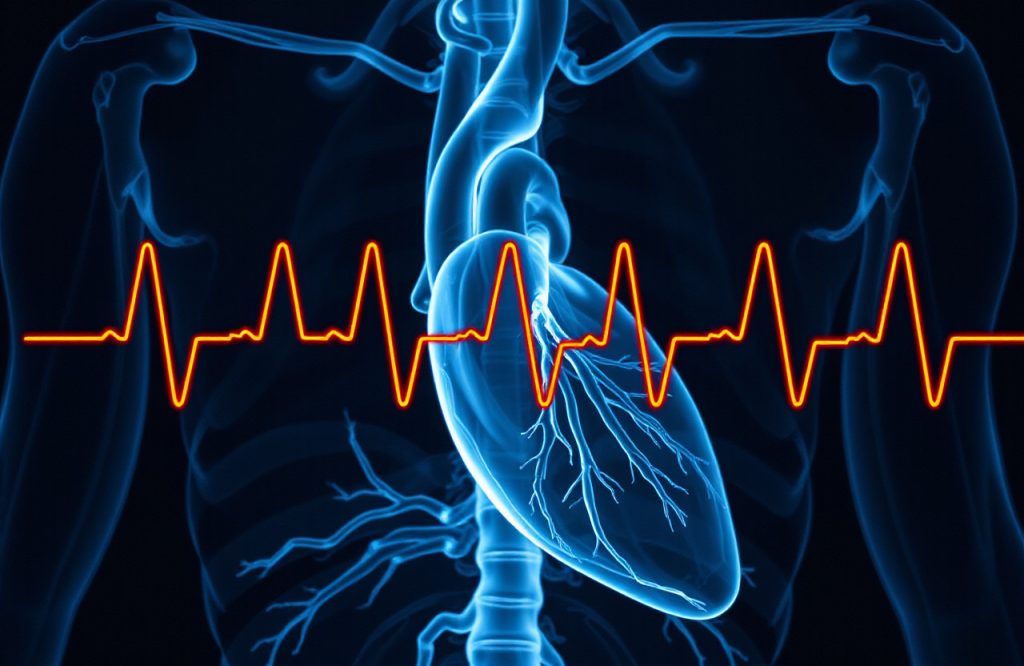
Understanding Cardiovascular Disease and Aortic Stiffness
The Global Impact of Cardiovascular Disease
Cardiovascular disease ranks among the leading causes of death worldwide. It significantly affects individuals with hypertension, who are at an increased risk for these conditions.
The Role of Aortic Stiffness in Hypertension
Aortic stiffness not only contributes to hypertension but also occurs prior to the development of high blood pressure. This condition can serve as an indicator for assessing the risk of cardiovascular diseases, providing a target for early patient management.
Measuring Aortic Stiffness
Aortic stiffness can be quantified using estimated pulse wave velocity (ePWV). This measurement provides valuable insights into cardiovascular health, particularly for hypertensive patients.
Study Insights from JAMA Network Open
A recent study published in JAMA Network Open examined 9,361 patients from the SPRINT (Systolic Blood Pressure Intervention Trial) over a period of 3.26 years. Researchers calculated ePWV at baseline and again after 12 months, using the patients’ age and systolic blood pressure. The participants were categorized based on their target systolic blood pressure—either 120 mm Hg (intensive treatment) or below 140 mm Hg (standard treatment)—and their treatment responses were analyzed.
Key Findings on ePWV and Mortality Risk
The study found that patients whose ePWV responded to antihypertensive treatment, regardless of their systolic blood pressure changes, had a 42% lower risk of mortality. The findings suggest that ePWV is a more effective predictor of risk compared to traditional scoring systems like the Framingham Risk Score (FRS).
Conclusion and Future Implications
The authors of the study emphasized the importance of aortic stiffness markers as potential treatment targets for individuals with hypertension. The use of aortic stiffness measurement is a novel, non-invasive method that offers a more reliable way to predict cardiovascular risk among hypertensive patients.
Article Reference
This article is based on research conducted by Vlachopoulos, C., Terentes-Printzios, D., Laurent, S., Nilsson, P., Protogerou, A., Aznaouridis, K., Xaplanteris, P., Koutagiar, I., Tomiyama, H., Yamashina, A., Sfikakis, P., and Tousoulis, D. (2019). Association of Estimated Pulse Wave Velocity With Survival. JAMA Network Open, 2(10), p.e1912831.
Author Information
This article was written by Dr. Radhika Baitari, MS.
Image Credit
Image by Clker-Free-Vector-Images from Pixabay.