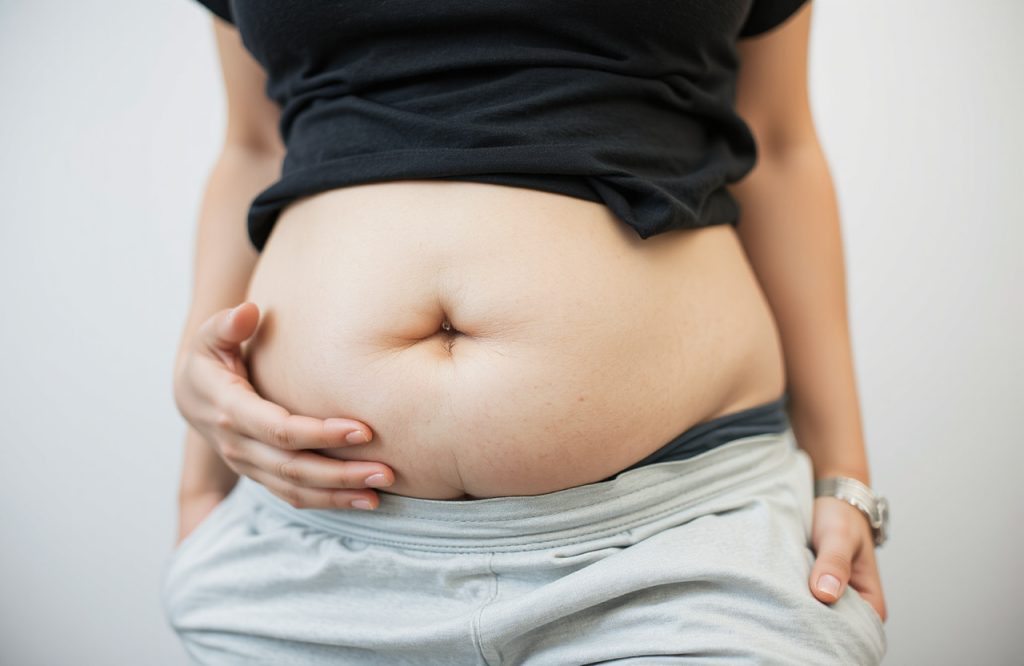
Increased COVID-19 Risks for Patients with Abdominal Fat
Overview of Findings from TMDU
Doctors at Tokyo Medical and Dental University (TMDU) caution that individuals with excess abdominal fat face a heightened risk of mortality from COVID-19. Research indicates that patients with a Body Mass Index (BMI) exceeding 30 are three times more likely to require hospitalization and have a higher likelihood of death related to the virus. Recent studies emphasize that the location of fat in the body, rather than the total amount, significantly influences COVID-19 outcomes.
Understanding the Impact of Abdominal Fat
Patients with an “apple-shaped” body, characterized by abdominal fat distribution, are at greater risk of severe COVID-19 complications compared to those with a “pear-shaped” distribution, who carry weight on the hips. This distinction is crucial for developing targeted treatments for high-BMI patients. Research published in the Proceedings of the National Academy of Sciences reveals that individuals with severe COVID-19 symptoms tend to have a higher BMI, particularly among those with an apple shape.
Link Between Body Shape and COVID-19 Severity
The study categorized patients based on their fat distribution—either under the skin (pear-shaped) or around internal organs (apple-shaped). Findings showed that those with the most severe COVID-19 cases were predominantly apple-shaped, correlating with lower survival rates. Medical professionals suggest that this increased mortality may stem from an exaggerated immune response driven by abdominal fat, indicating that anti-inflammatory treatments could enhance survival rates for apple-shaped patients.
The Role of Immune Response in COVID-19 Outcomes
Research Insights on Immune Response
TMDU scientists conducted experiments using obese mice with an apple-shaped fat distribution, discovering that these mice experienced worse COVID-19 outcomes compared to their pear-shaped or lean counterparts. The research highlighted that apple-shaped mice were more susceptible to severe symptoms and potentially fatal immune reactions. High-tech RNA sequencing revealed an over-activation of the Interleukin-6 (IL6) immune pathway in apple-shaped mice infected with COVID-19.
Consequences of Elevated IL6 Levels
Typically, IL6 plays a role in healing and fighting infections, but excessive levels can lead to chronic inflammation and an overreaction of the immune system. This overreaction can have catastrophic effects, overwhelming the body and damaging critical organs.
Potential Treatments Targeting IL6
New Therapeutic Approaches
Encouragingly, researchers found that administering a drug to block IL6 in apple-shaped mice improved their ability to combat COVID-19 without triggering a harmful immune response. Additionally, weight loss, which reduces IL6 levels, also offered protection against severe COVID-19 effects.
Implications for COVID-19 Treatment Plans
These findings suggest that Anti-IL6 therapies, such as Tocilizumab, could facilitate personalized treatment plans for COVID-19 patients. While pear-shaped individuals may not benefit from IL6 blockers, apple-shaped patients could see a significant increase in their survival chances.
References
1. Hosoya T et al. Apple-shaped obesity: A risky soil for cytokine-accelerated severity in COVID-19. Proc Natl Acad Sci. 2023; e2300155120, 120(22) doi: 10.1073/pnas.2300155120
2. Singh R et al. Association of Obesity With COVID-19 Severity and Mortality: An Updated Systemic Review, Meta-Analysis, and Meta-Regression. Front. Endocrinol. 2022; 13: 780872. doi:10.3389/fendo.2022.780872
3. Chen L et al. Visceral adipose tissue and risk of COVID-19 susceptibility, hospitalization, and severity: A Mendelian randomization study. Front. Public Health. 2022; 10:1023935. doi: 10.3389/fpubh.2022.1023935
4. Huang Y et al. Obesity in patients with COVID-19: a systematic review and meta-analysis. Metabolism. 2020; 113:154378. doi: 10.1016/j.metabol.2020.154378
5. Neeland I et al. Visceral and ectopic fat, atherosclerosis, and cardiometabolic disease: a position statement. Lancet Diabetes Endocrinol. 2019 Sep;7(9):715-725. doi: 10.1016/S2213-8587(19)30084-1
6. Wueest S & Konrad D. The controversial role of IL-6 in adipose tissue on obesity-induced dysregulation of glucose metabolism. Am J Physiol Endocrinol Metab. 2020 Sep 1;319(3):E607-E613. doi: 10.1152/ajpendo.00306.2020. Epub 2020 Jul 27.
7. Tanaka T et al. IL-6 in Inflammation, Immunity, and Disease. Cold Spring Harb Perspect Biol. 2014; a016295-a016295, 6(10) doi: 10.1101/cshperspect.a016295.