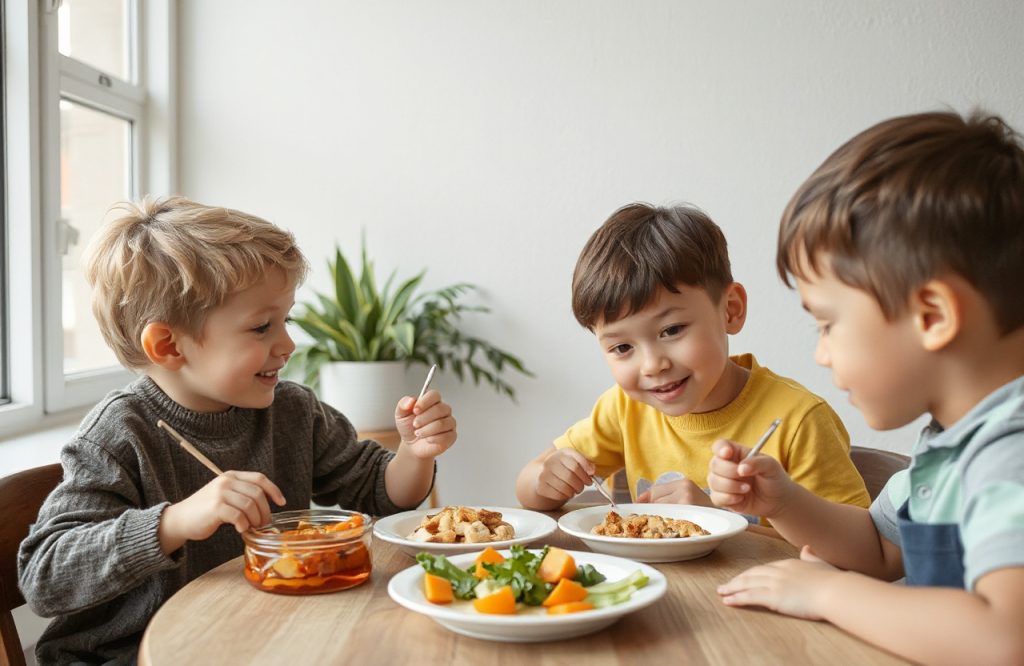
Impact of Family Mealtime on Children’s Self-Esteem
Importance of Children’s Mental Health
Children’s mental health plays a crucial role in their overall well-being. Recent research has highlighted various factors that significantly influence children’s mental health and self-esteem. Among these, the act of sharing meals as a family has emerged as a potentially impactful practice.
Study Overview
A study conducted in Canada investigated the relationship between mealtime habits and children’s self-esteem. The researchers surveyed over 4,000 fifth-grade students, gathering information about their eating practices. This included whether they typically enjoyed family dinners, ate while watching television, dined alone, or occasionally skipped meals.
Research Findings
Using statistical analysis, the researchers explored the correlation between mealtime habits and self-esteem, taking into account various lifestyle and socioeconomic factors. The findings revealed that children who frequently ate dinner alone or while watching TV were more likely to experience low self-esteem. Conversely, regular family dinners correlated with higher self-esteem levels, while skipping meals was linked to lower self-esteem.
Reference
Katherine F Eckert, Mark Asbridge, Leslie Anne Campbell, Sam Stewart, Mark Bennett, Olivia K Loewen, Paul J Veugelers, Leah E Cahill, “Meal regularity is associated with self-esteem among grade 5 children,” The American Journal of Clinical Nutrition, nqaa321, https://doi.org/10.1093/ajcn/nqaa321
Image Credit
Image by Anna Prosekova from Pixabay