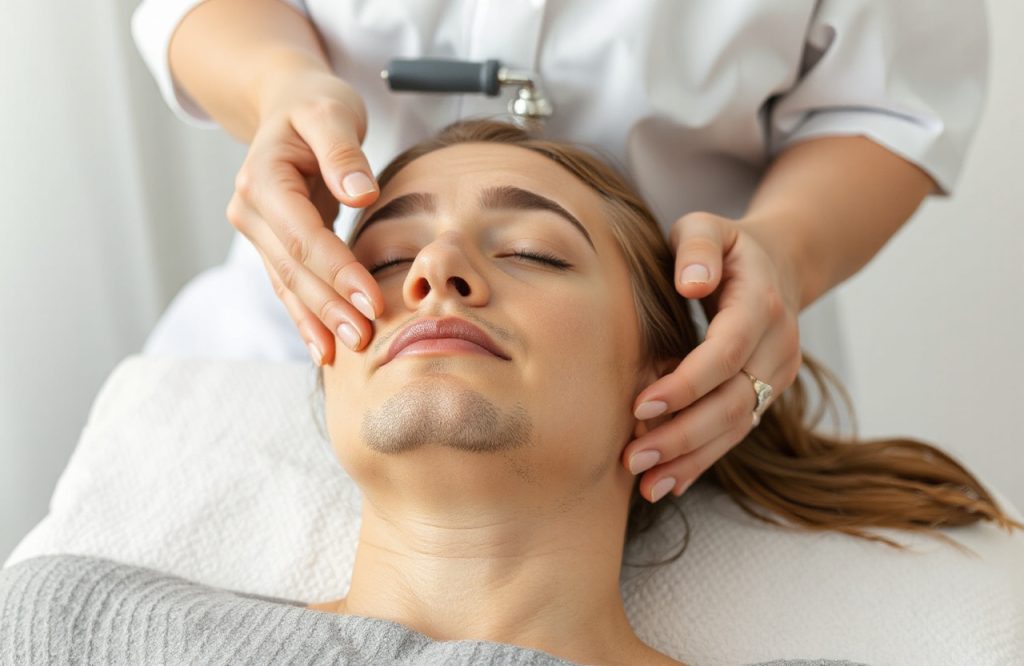
Understanding Face Massage Rollers
The Rise of Facial Rollers in Skincare
Face massage rollers have emerged as a popular beauty trend that mechanically stimulates facial muscles. This stimulation has been observed in terms of blood vessel size, leading to various claimed benefits. Products like the jade roller, rose quartz roller, ice roller, and gua sha are said to provide similar advantages, including relief from facial tension, improved blood circulation, and a reduction in the appearance of fine lines. While many YouTube beauticians showcase a healthy glow and reduced puffiness after using these rollers, questions about their effectiveness naturally arise.
Research Insights on Face Massage Rollers
To investigate the actual benefits of face massage rollers, a team of researchers from Tokyo, Japan, conducted a study examining their effects on facial blood flow both in the short term and long term. Prior knowledge indicates that stimulating the skin and muscles can enhance blood flow, allowing more blood to reach the skin’s surface. However, the specific impacts of facial rollers on blood vessel function over time were less understood.
Study Overview
Research Methodology
The study, published in the journal *Complementary Therapies in Medicine*, involved two experiments: a short-term assessment and a long-term evaluation. A total of 25 participants (12 men and 13 women) were included, all of whom were free from nerve disorders, heart conditions, and eczema, and not taking any prescription medications.
Short-Term Experiment: Blood Flow Measurement
In the first experiment, researchers measured blood flow speed before, during, and after the use of a face roller in a controlled environment. Participants used the roller for five minutes, resulting in an impressive 25% increase in blood flow to the affected cheek, lasting for over 10 minutes post-massage. The intensity and speed of application, rather than the frequency of use, may have contributed to this increase, although further research is needed to clarify this observation.
Long-Term Experiment: Vascular Response
The second experiment focused on the long-term effects of mechanical and thermal stimulation on blood vessels. Participants massaged their right cheeks for at least five minutes daily over five weeks. Additionally, researchers used a 40°C heat probe to assess how well blood vessels could expand and contract. Results indicated that using a face massage roller improved the vessel’s response to heat stimulation, allowing for greater heat release. However, this effect was attributed solely to heat stimulation, not mechanical stimulation from the roller.
Conclusions and Implications
Understanding Blood Vessel Behavior
The study suggested that skin cell stress and pressure from the roller might lead to increased production of nitric oxide, a chemical facilitating blood vessel expansion. However, the inability to control the roller’s application speed and pressure limited definitive conclusions about the reasons behind increased blood flow. Additionally, the researchers did not track the duration of the blood flow response, leaving questions about how quickly blood vessels return to their normal size.
Takeaways on Blood Flow and Usage
Despite these limitations, the findings indicate that face massage rollers can enhance local blood flow temporarily and improve responsiveness to heat over time. Long-term use may lead to desensitization of the blood vessels, suggesting a need for balanced application.
Reference
Miyaji et al. “Short- and long-term effects of using a facial massage roller on facial skin blood flow and vascular reactivity.” *Complementary Therapies in Medicine*, 41(2018): 271-276. doi: 10.1016/j.ctim.2018.09.009
Photo Credit
Image by Tara Winstead from Pexels.