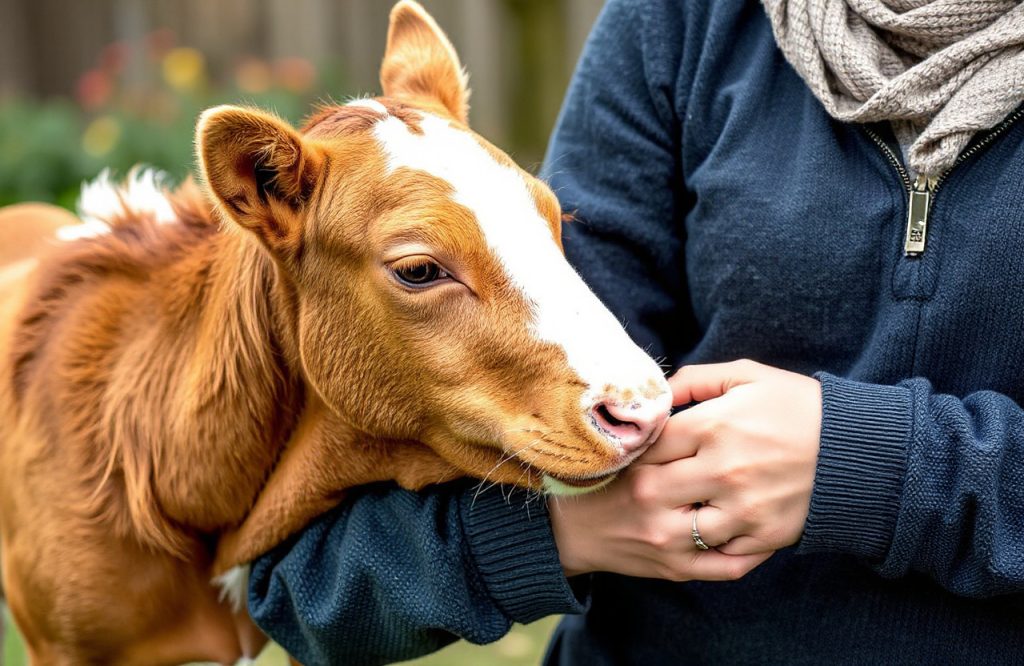
Early Exposure to Farm Animals and Immune System Development
The Role of the Gut Microbiome
Early exposure to farm animals may positively influence the development of an infant’s immune system through modifications in the gut microbiome. The gut microbiome is a complex ecosystem comprising trillions of bacteria that inhabit the human gastrointestinal tract. These microbes play a crucial role in various aspects of health and disease. They help shape the development of the digestive system and other physiological processes. Disruptions to the gut microbiome, referred to as dysbiosis, can lead to a range of disorders, including digestive, metabolic, immune, neuronal, and respiratory issues.
Impact of External Factors
It is well-established that external factors can significantly impact the internal microbial environment, subsequently affecting health and immunity. The “hygiene hypothesis” proposes that an excessively sanitized modern lifestyle has contributed to the increased incidence of autoimmune and allergic diseases. Exposure to a broader array of environmental bacteria during childhood may enhance immune responses by promoting a more diverse gut microbiota.
Research Findings from Ohio State University
Microbial Diversity in Rural vs. Urban Infants
Recent research from Ohio State University supports these concepts. Dr. Zhongtang Yu, a microbiology professor and co-lead author of the study, stated, “Good hygiene is important, but from the perspective of our immune systems, a sanitized environment robs our immune systems of the opportunity to be educated by microbes. Too clean is not necessarily a good thing.” This study, published in Frontiers in Immunology, indicates that rural Amish infants exhibit a more diverse gut microbiome compared to their urban counterparts. This increased diversity is linked to stronger immune system development in an animal model.
Study Methodology
To investigate the differences in gut microbiomes, the researchers analyzed fecal samples from ten infants aged six months to one year. Five of these infants were from rural Amish households with access to farm animals, while the other five were urban, non-Amish infants with no exposure to livestock. The researchers also conducted fecal microbiota transplants into germ-free piglets, which are ideal for microbiome studies due to their sterile environment.
Key Findings
The results showed that babies raised in farming environments had a greater diversity of gut microbiomes than their urban peers, attributed to their exposure to livestock and a less sanitized lifestyle. Pigs that received the rural-type microbiome exhibited a higher abundance of intestinal immune cells, particularly lymphoid and myeloid cells. Dr. Renukaradhya Gourapura, co-lead author and professor at Ohio State’s College of Food, Agricultural and Environmental Sciences, emphasized the value of pigs in microbiome research due to their anatomical and physiological similarities to humans.
Conclusion
This study highlights the benefits of animal exposure on immune system development. The findings suggest that fecal microbiota transplantation into germ-free piglets is an effective method for studying the gut-immune system connection. Furthermore, variations in gut microbiota composition between rural and urban infants may lead to different immune system development outcomes, providing insights into the prevalence of health issues such as asthma and food allergies in different communities.
References
Dhakal, S. et al. Amish (Rural) vs. non-Amish (Urban) Infant Fecal Microbiotas Are Highly Diverse and Their Transplantation Lead to Differences in Mucosal Immune Maturation in a Humanized Germfree Piglet Model. Front. Immunol. 10, 1509 (2019).
Crane, M. Keeping livestock in the yard just might help your baby’s immune system. Ohio State News (2019).