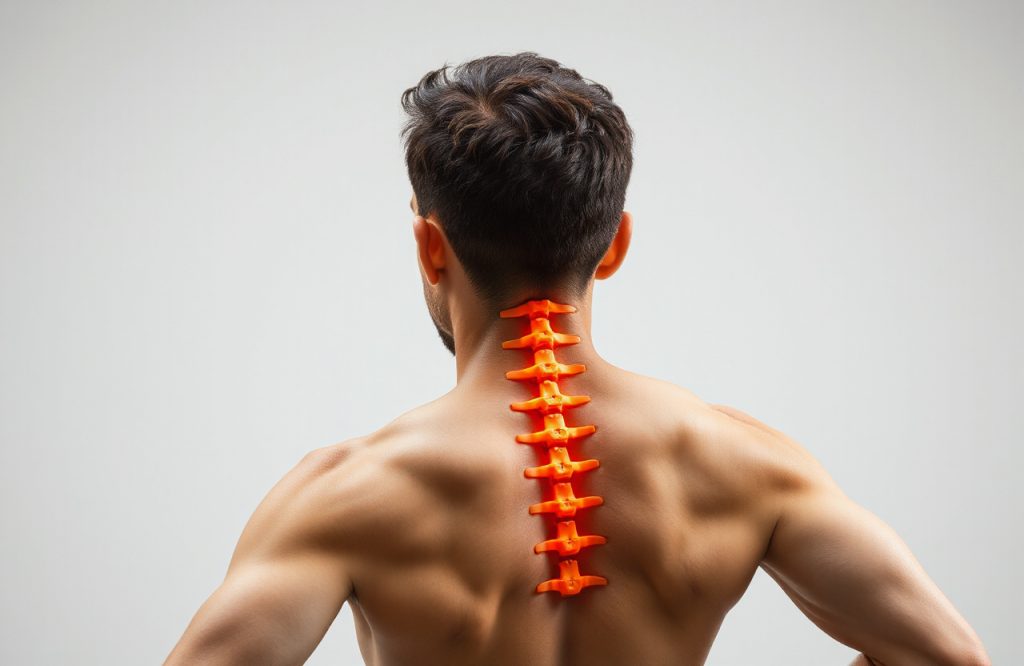
Study Examines Exercise Impact on Intervertebral Spinal Discs
Overview of the Research
A recent study conducted in Australia has explored the effects of exercise on the intervertebral spinal discs (IVD) of healthy individuals with varying exercise habits. The research involved MRI scans of participants who fell into three categories: non-athletes, joggers, and long-distance runners. The findings indicated that the IVDs of runners exhibited superior composition and thickness compared to those of individuals who did not engage in regular physical activity. This marks the first human study to demonstrate that exercise can enhance the health of spinal IVDs, laying the groundwork for future exercise programs aimed at back pain prevention.
Significance of Back Pain and IVD Health
Back pain represents a significant health concern, with degeneration of the intervertebral discs being a primary contributor. Enhancing our understanding of how to improve and maintain IVD health is crucial for preventing back pain. While there is substantial knowledge regarding activities that can harm the IVD, such as spinal compression, bending, and twisting, less is understood about the regular activities that may strengthen these discs. Additionally, due to the low turnover rate of IVD cells, it remains uncertain whether beneficial effects can be achieved over a typical human lifespan.
Study Design and Participant Details
Recruitment and Methodology
Researchers at Deakin University in Victoria, Australia, published their findings in Science Reports. The study included 79 healthy men and women aged 25 to 35, divided into three groups: those who engaged in no sports (no regular physical activity in the last five years), joggers (20-40 km per week for at least five years), and long-distance runners (over 50 km per week for at least five years). MRI scans revealed that the running groups had significantly improved IVD composition, characterized by higher hydration and proteoglycan content, compared to the non-sport group. Furthermore, long-distance runners demonstrated thicker IVDs than their non-active counterparts.
Insights into Physical Activity and IVD Health
Activity Monitoring and Findings
To gain deeper insights into the correlation between physical activity and IVD health, study participants wore monitors that tracked their activity levels over eight days. The total volume of physical activity did not show a direct relationship with IVD tissue characteristics. However, physical activity within a specific intensity range was linked to enhanced IVD health. Subsequent investigations indicated that fast walking or slow running at a speed of 2 m/s fell within this beneficial activity range, while slow walking, fast running, and high-impact jumping did not.
Implications for Future Research
Conclusions and Future Directions
This pioneering human study underscores the potential benefits of exercise on IVD health. Although further research is necessary, the results support the notion that certain types of exercise may improve IVD composition. Gaining a better understanding of how IVDs respond to various activity levels will enable the development of targeted exercise guidelines, which could ultimately aid in the prevention and management of back pain.
Author Information
Written by: Julie McShane.