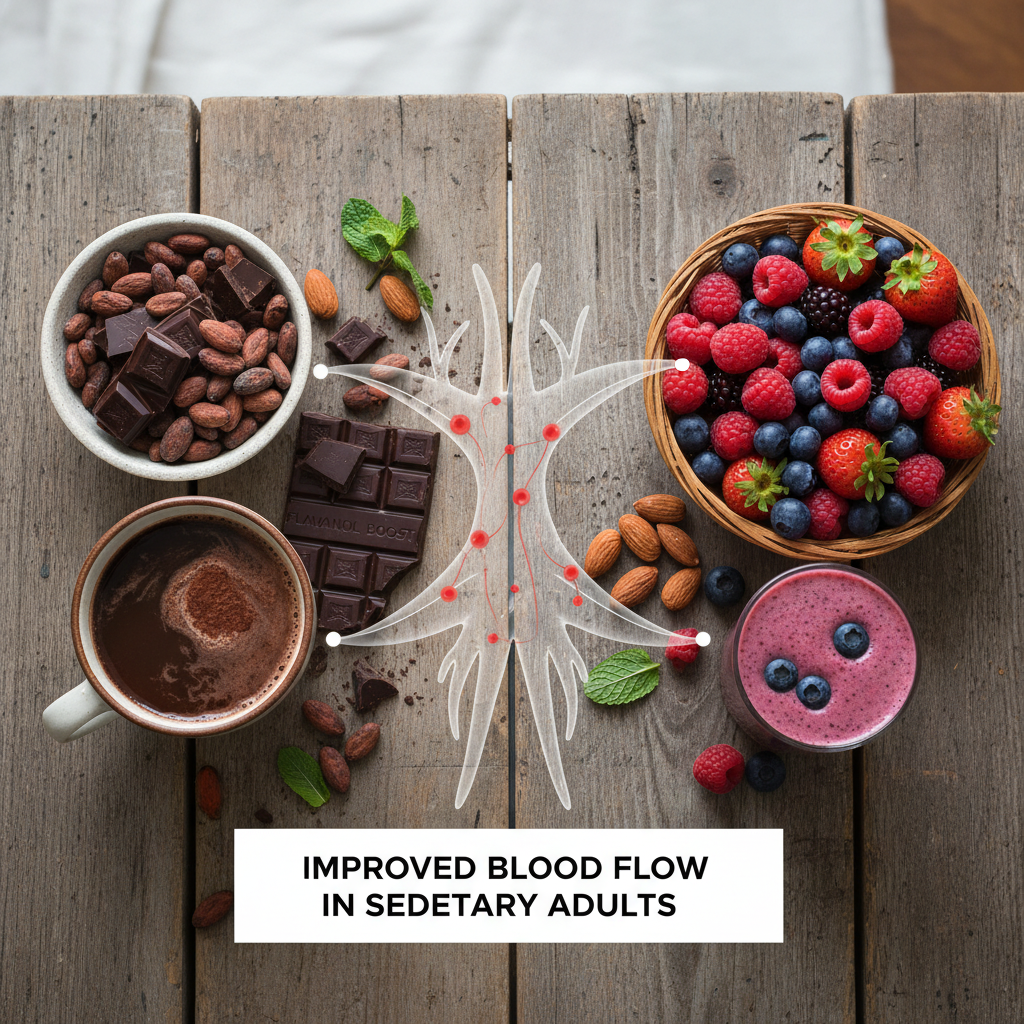
Research Highlights Vascular Benefits of Flavanol-Rich Foods
Impact of Sedentary Lifestyles
Modern lifestyles increasingly involve prolonged periods of sitting, whether at a desk, watching television, or during travel. This sedentary behavior can negatively affect blood vessel function, leading to potential health risks.
Flavanols and Vascular Function
Recent research indicates that foods high in flavanols—antioxidants found in plant foods such as cocoa, tea, and certain fruits and vegetables—may enhance vascular function in sedentary individuals. Studies show that extended sitting is linked to a decline in vascular function, particularly in the legs, even among physically fit individuals. In the United States, adults reportedly sit for an average of six hours daily, with adolescents often exceeding this duration.
Health Risks Associated with Vascular Decline
A decline in vascular function can elevate the risk of cardiovascular diseases, including strokes and heart attacks. Given the prevalence of sedentary occupations, extensive travel, and screen time, many individuals spend significant portions of their day seated.
Study Findings from the University of Birmingham
Researchers at the University of Birmingham conducted a study published in The Journal of Physiology, which explored the effects of flavanols on vascular health during periods of sitting. The small-scale study involved young men who consumed a high-flavanol cocoa drink prior to sitting for two hours. The results indicated that these participants exhibited improved blood flow in both the femoral (leg) and brachial (arm) arteries compared to those who ingested a low-flavanol version.
Expert Commentary
Christopher Yi, MD, a board-certified vascular surgeon at MemorialCare Orange Coast Medical Center, commented on the study’s methodology. “Even though the trial was small, its randomized, double-blind, placebo-controlled, crossover design gives it strong internal validity for detecting acute physiological changes. However, the external validity is narrow: all were young, healthy, male, and the experiment lasted only two hours. The outcome, flow-mediated dilation, is a well-validated marker of endothelial function but still a surrogate, not a clinical endpoint. Thus, the findings are mechanistically meaningful but not clinically definitive.”