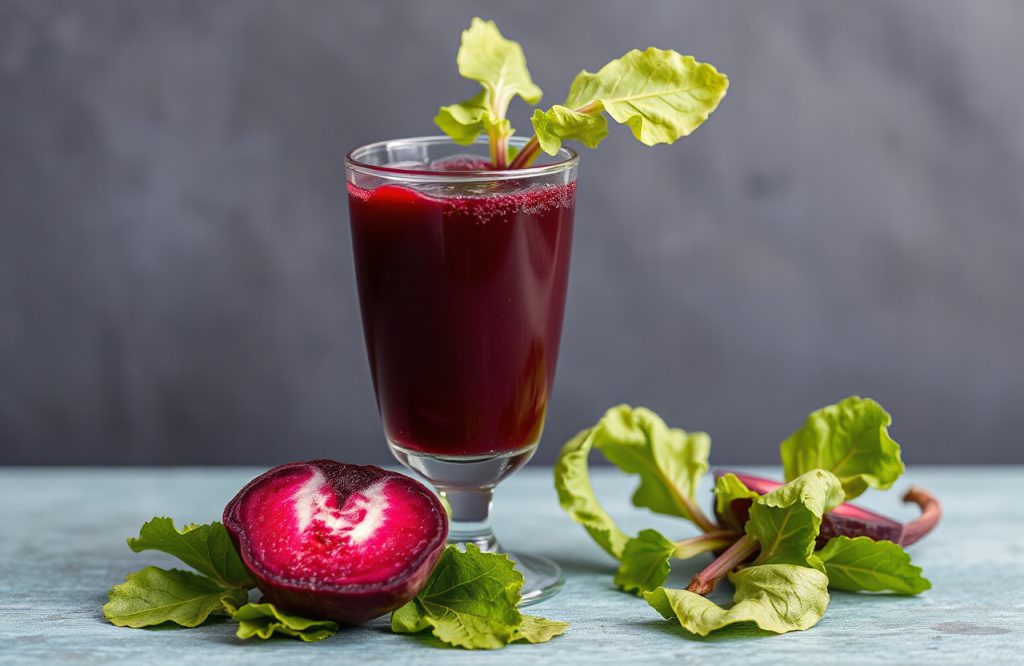
Beet Juice and Heart Attack Risk: Insights from Recent Research
Study Overview
A recent study indicates that beet juice, a rich source of dietary nitrate, may contribute to lowering heart attack risk by mitigating the overstimulation of the sympathetic nervous system linked to heart disease. The sympathetic nervous system, a component of the autonomic nervous system, oversees involuntary bodily functions. Its overactivity is significant in the development of heart disease, as high blood pressure can trigger the release of hormones that accelerate heart rate.
Benefits of Beetroot
Beetroot, commonly known as beets, is packed with essential vitamins, minerals, and antioxidants. Its high dietary nitrate content is noteworthy for its vascular benefits, including the dilation of blood vessels, which can lead to reduced blood pressure.
Research Methodology
The study, published in the *American Journal of Physiology-Heart and Circulatory Physiology*, involved researchers from the University of Guelph examining the influence of dietary nitrate on sympathetic nerve activity, specifically referred to as sympathetic outflow. The research team engaged 20 young adults, with an average age of 27, who participated in two clinic visits. During these visits, various measurements were taken, including blood pressure, heart rate, muscle activity, and muscle sympathetic nerve activity (MSNA). Each measurement was conducted four times under different conditions:
1. At the beginning of the visit, while at rest.
2. At the beginning of the visit, during exercise (participants repeatedly squeezed a handgrip using their non-dominant hand).
3. At rest after consuming either raw beet juice or a placebo drink, following three hours of rest.
4. During exercise after consuming raw beet juice or a placebo, again following three hours of rest.
Findings and Implications
The researchers discovered that nitrate supplementation through beet juice effectively reduced muscle sympathetic outflow at both rest and during exercise. Notably, MSNA burst rates during exercise were lower when participants consumed raw beet juice compared to the placebo. Additionally, sympathetic nerve activity decreased during physical exertion. Surprisingly, the study found no significant differences in blood pressure at rest or during exercise between the two groups. The authors concluded that their research provides “proof-of-concept that dietary nitrate supplementation can modulate central sympathetic outflow.”
Considerations for Future Research
Despite these findings, the researchers caution against prematurely recommending dietary nitrate supplementation from beet juice as a treatment for heart disease. The study’s small sample size of 20 participants, with half receiving a placebo, and the youth of the participants—none were at risk for heart disease—highlight the need for caution. Larger studies are essential to evaluate the effects of dietary nitrate supplementation on blood pressure and sympathetic nerve activity, especially in older adults and in scenarios that mimic everyday physical activities such as lifting, running, or shoveling snow.
Conclusion
In summary, while the study presents promising evidence regarding the vascular benefits of beet juice, more extensive research is necessary to fully understand its potential role in heart disease management.
Written By: Debra A. Kellen, PhD