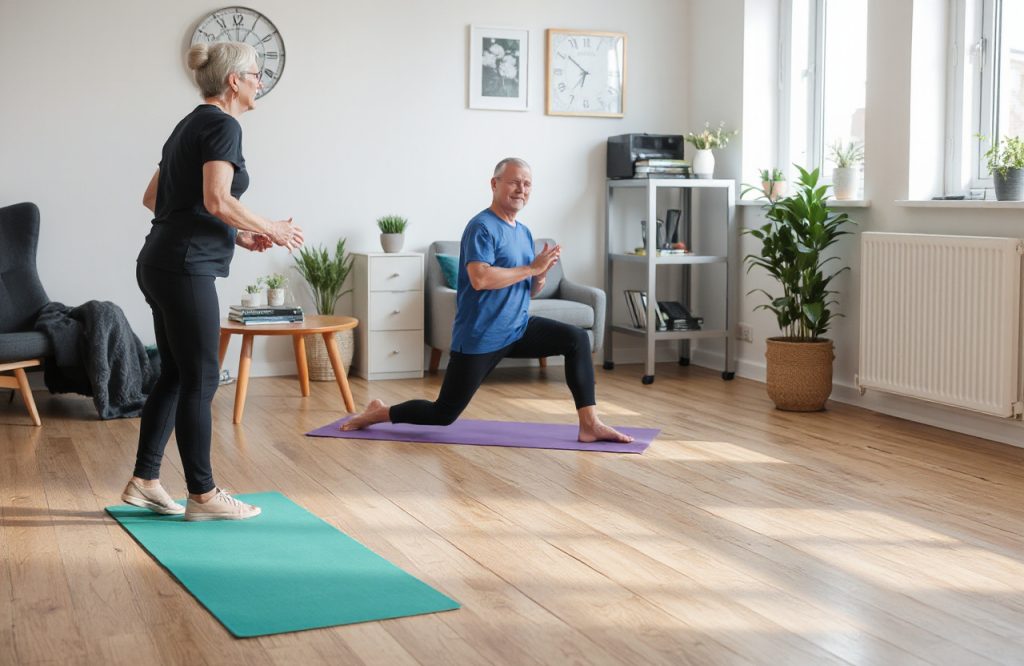
Benefits of Resistance Training for Seniors in Long-Term Care
Introduction to the Study
A preliminary study conducted in China investigates the potential advantages of resistance training exercises for seniors residing in long-term care facilities. As individuals age, leading a sedentary lifestyle can significantly undermine their quality of life. Various exercise programs exist for seniors, but this particular study aims to address sarcopenic obesity—a prevalent health concern characterized by decreased muscle mass and increased fat mass.
Understanding Sarcopenic Obesity
Sarcopenic obesity poses serious health risks as it can lead to further complications in seniors. Resistance training exercises have been proposed as an effective method to mitigate these health risks.
Study Design and Participant Criteria
The research, published in BMC Geriatrics, outlined specific criteria for participant selection. Eligible individuals were aged 60 years or older, had no physician-recommended exercise restrictions, and had resided in a long-term care facility for a minimum of three months. Out of 70 respondents, 64 successfully completed a three-month exercise program between October 2015 and March 2016.
Exercise Regimen
The exercise program consisted of a warm-up session, full-body strength exercises performed while seated, and a cool-down stretch. This was compared to a control group that received only standard long-term care without any structured exercise.
Results and Findings
The findings revealed no significant difference between the two groups regarding body fat and skeletal muscle growth percentages. However, improvements were noted in grip strength and pinch strength among participants who engaged in resistance training. These metrics are crucial as they enhance self-care capabilities, particularly in activities such as dressing.
Limitations of the Study
As with any research, this study had its limitations. It excluded bedridden or severely ill individuals, which may impact the external validity of the results. Additionally, the methods for assessing body composition could be enhanced by using a DEXA scan as opposed to the bioelectrical impedance analysis employed in this study.
Conclusion
Despite these limitations, the study conclusively demonstrated that participating in strength training twice a week is feasible for seniors with sarcopenic obesity in long-term care settings. This training promotes increased lean muscle mass and improved grip strength, ultimately fostering greater autonomy in the later stages of life. Incorporating exercise programs for seniors could prove to be a vital addition to long-term care initiatives.
Reference
Chang, S.F., Chiu, S.C., Yang, R.J., Yang, R.S. (2018). Effects of resistance training on body composition and functional capacity among sarcopenic obese residents in long-term care facilities: a preliminary study. BMC Geriatrics, 18(21). DOI 10.1186/s12877-018-0714-6