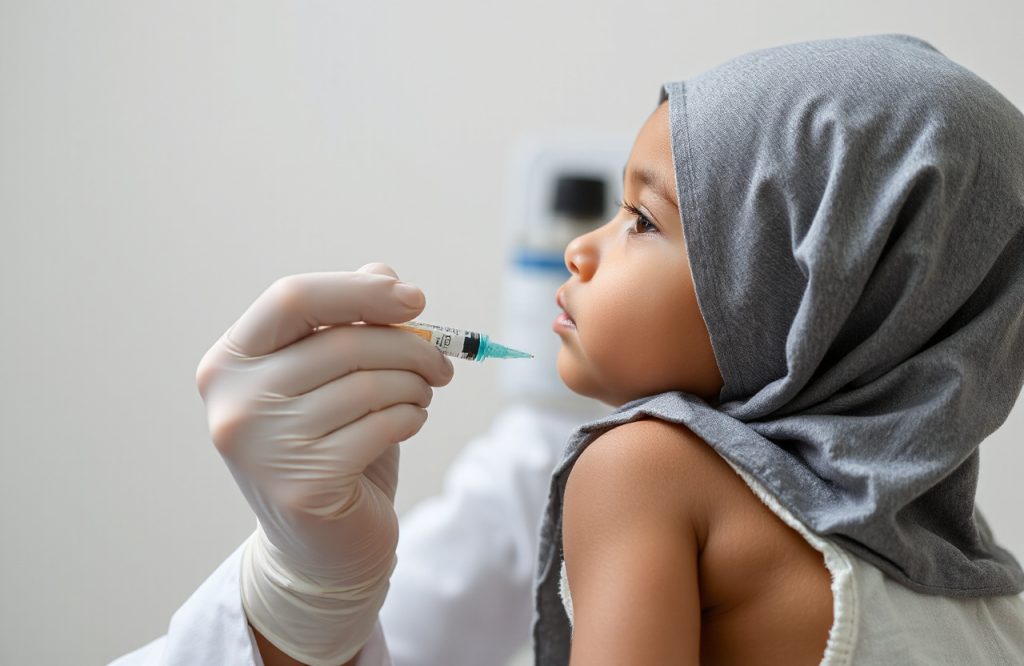
Impact of Early Measles Vaccination on Immune Response and Survival
Study Overview
A team of researchers from Guinea-Bissau, Africa, conducted a significant study to investigate whether early measles vaccination can modify the immune system, thereby enhancing survival chances in individuals who contract measles. The findings of this research were published in BMC Public Health.
Measles Vaccine and Non-Specific Effects
Recent studies indicate that vaccines can influence the overall incidence of diseases and mortality rates by training the body’s immune system. It has been observed that early measles vaccination, along with other recommended vaccines, may confer non-specific effects that alter an individual’s vulnerability to diseases not directly targeted by the vaccine. The World Health Organization (WHO) has explored evidence regarding the non-specific effects of various vaccines, including the Bacillus Calmette-Guérin vaccine, the diphtheria-tetanus-pertussis vaccine, and the measles vaccine. Their review highlighted the non-specific impacts of the measles vaccine.
Current Vaccination Guidelines
Present vaccination programs and policies do not adequately address the non-specific effects of vaccines. The WHO recommends administering the measles vaccine at 9 months of age in regions with high measles prevalence, while the vaccine should be given at 12 months in areas where measles infections are under control.
Research Methodology
The research compared early measles vaccinations given at 4.5 months of age to the standard measles vaccination administered at 9 months. The study followed children under five years of age through a Health and Demographic Surveillance System in Guinea-Bissau. Specifically, children aged 6 to 36 months were monitored based on their vaccination status, with follow-up visits occurring up to a maximum of six months.
Key Findings
The study revealed that early measles vaccination significantly reduces mortality rates. However, the vaccine is recommended only under specific conditions to mitigate the potential interference from maternal measles antibodies (MatAb) on the natural antibody response to the measles vaccine. Despite a reduction in the natural antibody response, administering the vaccine in the presence of MatAb can still prevent severe cases and fatalities associated with measles.
Implications for Survival
The research concluded that children who received the measles vaccine exhibited higher survival rates compared to those who were not vaccinated. The most significant benefits were associated with early measles vaccination. The findings suggest that the current vaccination policy, which advocates for delaying vaccination until the age of 12 months when measles control improves, may not effectively reduce mortality rates from measles. Therefore, the advantages of the measles vaccine and the implications of age at vaccination should be considered in the planning of vaccination programs, especially in low-income countries.
Reference
Hansen JS, Thysen SM, Rodrigues A, Martins C, Fisker AB. Is early measles vaccination associated with stronger survival benefits than later measles vaccination? BMC Public Health. 2018;18(1):984. Published 2018 Aug 7. doi:10.1186/s12889-018-5866-y