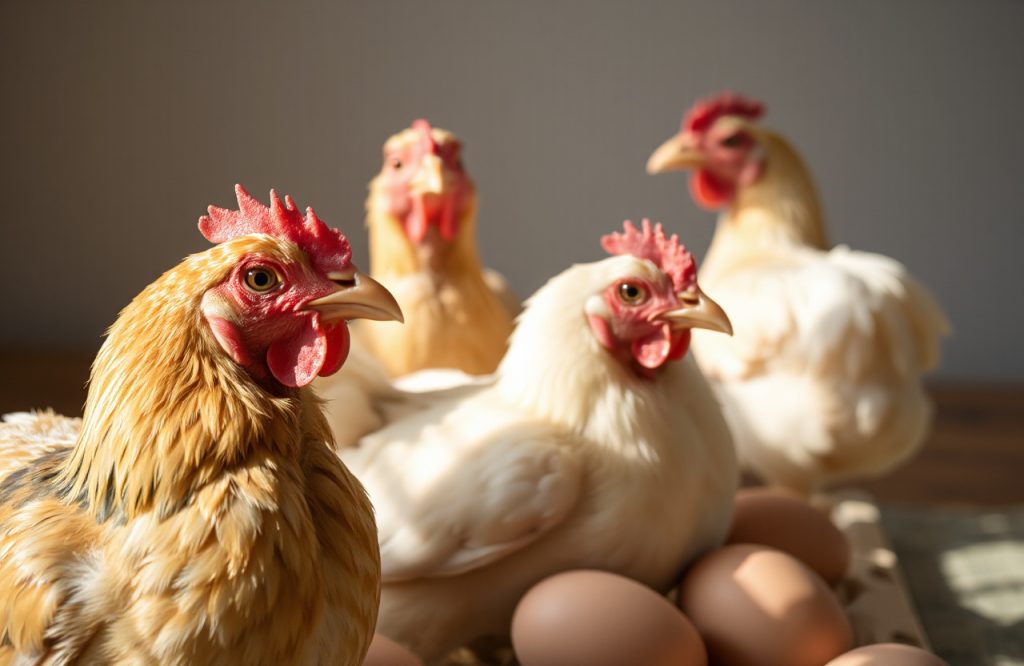
Increasing Vitamin D in Eggs: Research from Martin Luther University Halle-Wittenberg
Importance of Vitamin D
Vitamin D is a crucial fat-soluble vitamin necessary for maintaining healthy bones. The body naturally synthesizes vitamin D when exposed to sunlight. However, limited sunlight exposure can lead to vitamin D deficiency, which is increasingly common globally. This scenario makes dietary supplementation an appealing method for boosting vitamin D levels.
Research Methodology
Researchers at Martin Luther University Halle-Wittenberg (MLU) investigated a novel approach to enhance the vitamin D content in chicken eggs by utilizing UV-B light exposure. Their findings were published in the journal Poultry Science. The study involved two different breeds of chickens, which were kept indoors and subjected to UV-B light. The team analyzed the vitamin D levels in the freshly laid eggs, comparing those from chickens exposed to varying durations of light each day. Additionally, they assessed how this light exposure influenced the hens’ behavior and egg-laying patterns.
Key Findings
The results indicated that the vitamin D concentration in eggs from UV-B exposed chickens tripled across both breeds. The hens were exposed to UV-B light for approximately six hours daily over a period of three weeks. Importantly, this artificial light exposure did not alter the hens’ behavior or cause any significant issues.
Conclusions and Implications
The researchers concluded that this technique is an effective method for enhancing the vitamin D content in eggs, thereby providing an additional source of this essential vitamin. Unlike previous studies that used a single chicken per lamp in controlled conditions, this research was conducted in a realistic indoor setting with multiple chickens. Dr. Julia Kühn noted, “The idea was to stimulate the natural vitamin D production of chickens. Using UV lamps in the henhouses would increase the vitamin D content of the eggs.”
Practical Applications
This study offers a practical solution for enriching the vitamin D levels in eggs, suggesting that implementing this straightforward method on chicken farms could help mitigate vitamin D deficiency and promote better health.
References
Kühn, J., Wassermann, C., Ebschke, S., Schutkowski, A., Thamm, K., Wensch-Dorendorf, M., von Borell, E. and Stangl, G. (2019). Feasibility of artificial light regimes to increase the vitamin D content in indoor-laid eggs. Poultry Science.
Pressemitteilungen.pr.uni-halle.de. (2019). A solarium for hens? How to increase the vitamin D content of eggs. [online]. Available at: https://pressemitteilungen.pr.uni-halle.de/index.php?modus=pmanzeige&pm_id=3110 [Accessed 25 Jun. 2019].