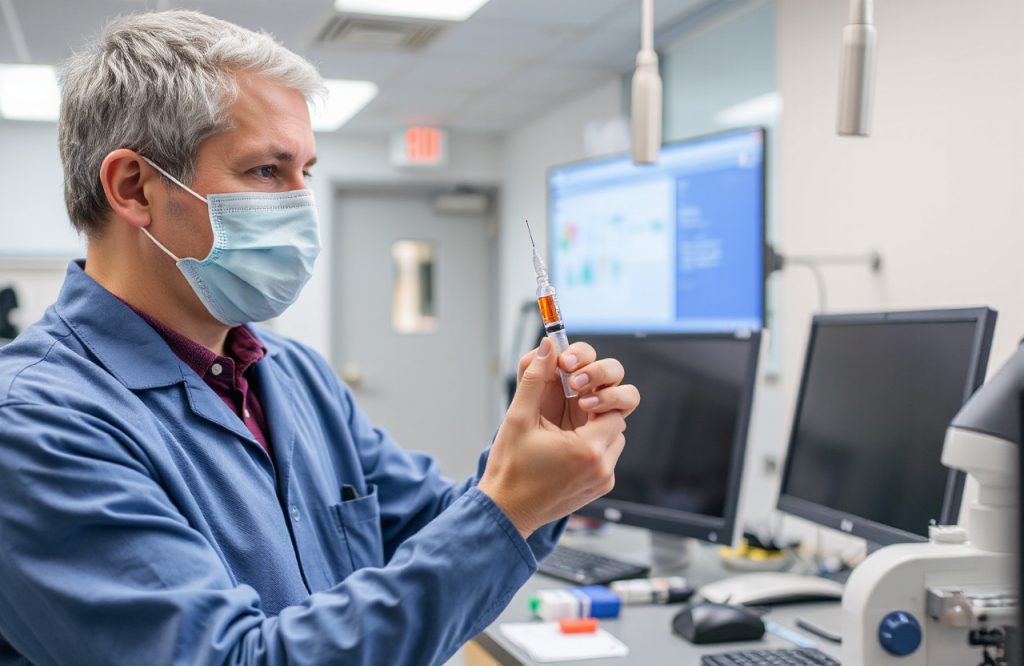
Advancements in SARS-CoV-2 Vaccine Research
Progress Towards a Vaccine
Researchers in Hong Kong are optimistic about their recent findings regarding the development of a SARS-CoV-2 vaccine that could potentially protect a significant portion of the global population from the coronavirus. This advancement comes as questions linger about the effectiveness of current measures against COVID-19.
Understanding SARS and its Origins
The severe acute respiratory syndrome (SARS) was first identified in 2003 in China’s Yunnan province, caused by a virus from the coronavirus family. This zoonotic virus initially infected animals before it crossed over to humans. The original SARS virus was traced back to cave-dwelling bats, and while zoonotic viruses can infect humans, they often do not transmit between individuals until they mutate. This mutation was responsible for the spread of SARS in 2003 and is similarly the case for the novel COVID-19 caused by SARS-CoV-2.
Symptoms of COVID-19
COVID-19 presents symptoms akin to influenza, including high fever, body aches, sore throat, fatigue, and coughing. Typically, the incubation period ranges from 4 to 6 days, but symptoms can appear as late as 14 days after exposure, which is why many countries enforce 14-day quarantines. A significant risk associated with COVID-19 is the potential development of pneumonia, which can lead to severe respiratory issues and increased mortality rates.
Current Strategies and the Need for a Vaccine
The primary method for combating COVID-19 involves identifying and isolating infected individuals, along with tracing their contacts. However, this approach has limitations, highlighting the urgent need for a vaccine to effectively curb the virus’s spread.
Research Breakthroughs in Vaccine Development
The researchers in Hong Kong have made a significant breakthrough by identifying specific targets on the SARS-CoV-2 virus that could be used to create a vaccine. Their research suggests that these targets could potentially offer protection to up to 96% of the global population.
Methodology and Immune Response
To reach this conclusion, the researchers analyzed genetic sequences from both the 2003 SARS virus and the more recent SARS-CoV-2. They also referenced previous studies on individual immune responses to the 2003 outbreak. The immune system combats infections by recognizing and attacking foreign materials through specialized cells, leading to the production of antibodies. Vaccines work by simulating an infection, allowing the immune system to prepare and respond effectively to future exposures.
Implications of Genetic Diversity
By comparing the antibodies from individuals infected with the 2003 SARS virus with those targeting the 2019 SARS-CoV-2, the researchers discovered identical segments in both viruses. This finding indicates that these sections could be incorporated into a vaccine to elicit a robust immune response. However, genetic differences among populations may affect vaccine efficacy. For instance, while a vaccine could achieve over 96% efficacy globally, it may only be around 88% effective within the Chinese population.
Future Research Directions
The researchers advocate for further studies into the immune responses of individuals infected with SARS-CoV-2 to refine vaccine development. These promising results pave the way for creating a more effective vaccine against COVID-19.
References
1. HKUST scientists shed light on COVID-19 vaccine development. (2020). Retrieved 26 February 2020, from https://www.eurekalert.org/pub_releases/2020-02/hkuo-hss022520.php
2. Ahmed, S., Quadeer, A., & McKay, M. (2020). Preliminary Identification of Potential Vaccine Targets for the COVID-19 Coronavirus (SARS-CoV-2) Based on SARS-CoV Immunological Studies. Viruses, 12(3), 254. doi: 10.3390/v12030254
3. Nucleocapsid. (2020). Retrieved 26 February 2020, from https://www.sinobiological.com/nucleocapsid-a-6107.html
4. Severe acute respiratory syndrome. (2020). Retrieved 26 February 2020, from https://en.wikipedia.org/wiki/Severe_acute_respiratory_syndrome