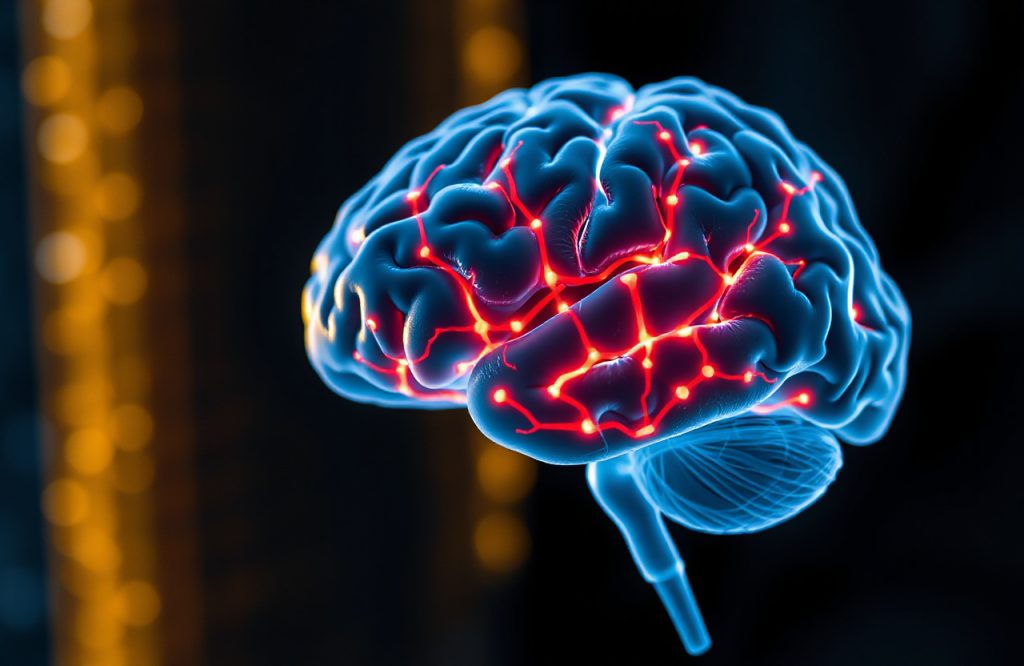
Understanding Premenstrual Symptoms and Mood Swings
The Science Behind PMS
Ever wonder why premenstrual symptoms (PMS) can lead to feelings of sadness? Research indicates that the emotional fluctuations many women experience before their period have a biological basis. Scientists have identified specific brain circuitry associated with these mood swings, with valuable insights drawn from studies involving mice.
Hormonal Changes and Depression
A study conducted by Californian researchers suggests that a decline in estrogen levels disrupts certain brain pathways, presenting new avenues for treating depression in women. Published in 2023 in *Nature Neuroscience*, this research explores the brain circuitry responsible for depression-like symptoms in mice undergoing hormone withdrawal, which mimics conditions such as postpartum depression and menopause.
Investigating the Role of the Medial Preoptic Area
Key Findings on Mood Regulation
The medial preoptic area (MPOA) of the brain, known for controlling mood and emotions, has been identified as a crucial region in understanding the connection between hormonal changes and mood disturbances. Dr. Li I. Zhang and colleagues from the University of Southern California discovered that removing the ovaries of mice, which simulates menopause, resulted in depression-like behavior.
The Impact of GABAergic Neurons
The researchers found that GABAergic neurons in the MPOA, essential for mood regulation, exhibited decreased activity when estrogen levels dropped. This decline in activity was linked to lower levels of estrogen receptor-1 (Esr1), which serves as a docking station for estrogen. Consequently, reduced estrogen leads to impaired mood regulation, manifesting as feelings of sadness or irritability.
Research Methodology and Results
Studying Hormonal Influence on Mood
To examine how hormonal changes affect mood, researchers controlled living conditions for female mice and monitored their reproductive cycles. Some mice underwent ovary removal to simulate hormone withdrawal, while others received continuous estrogen as a control. The team administered a schedule of hormone injections to induce depressive-like behaviors.
Behavioral Assessments of Mice
The researchers conducted various behavioral tests to assess the impact of hormonal changes. They evaluated the mice’s enjoyment of sweet treats, social interactions, and responses to challenges, such as forced swimming and navigating mazes. Notably, mice experiencing hormone withdrawal displayed significant depressive-like behaviors, confirming the influence of reproductive hormones on mood.
Exploring Neurotransmitter Activity in the MPOA
Mapping Neuronal Pathways
Using advanced imaging technology, the researchers examined the activity of specific neurons within the MPOA. They focused on GABAergic neurons, which inhibit activity, and glutamatergic neurons, which stimulate it. By manipulating these neurons with light and pharmacological agents, they observed the effects on the mice’s behavior.
Effects of Neuronal Manipulation
Activating GABAergic neurons improved the mice’s mood and social behavior, while silencing these neurons led to depressive symptoms. This suggests that GABAergic neurons play a critical role in maintaining emotional well-being.
Implications for Future Research and Treatment
Targeting Mood Disorders
The study highlights the intricate wiring of the brain’s mood regulation system, opening new avenues for developing targeted treatments for mood disorders linked to hormonal fluctuations, such as menopause and premenstrual dysphoric disorder.
Potential for Estrogen-Based Treatments
Further exploration revealed that injecting estrogen directly into the MPOA could alleviate depressive symptoms in mice. This raises the question of whether estrogen therapy could serve as an effective treatment for premenstrual depression in humans.
Conclusion: The Path Forward
This research underscores the potential of the medial preoptic area as a focal point for understanding and treating mood swings related to hormonal changes. By advancing our knowledge of these brain circuits, researchers aim to develop more effective therapies for women experiencing mood disturbances due to hormonal fluctuations.
References
1. Tao C, Zhang GW, Huang JJ, Li Z, Tao HW, Zhang LI. The medial preoptic area mediates depressive-like behaviors induced by ovarian hormone withdrawal through distinct GABAergic projections. Nat Neurosci. 2023;26(9):1529-1540. doi:10.1038/s41593-023-01397-2
2. Burke SM, van de Giessen E, de Win M, et al. Serotonin and dopamine transporters in relation to neuropsychological functioning, personality traits and mood in young adult healthy subjects. Psychol Med. 2011;41(2):419-429. doi:10.1017/S0033291710000486