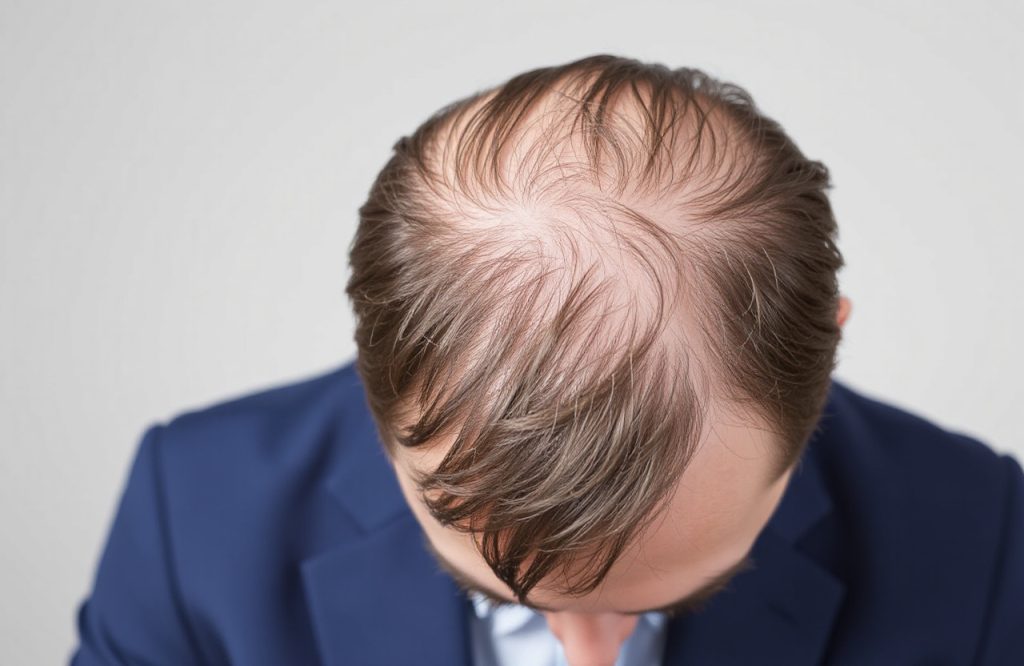
Understanding Male Pattern Baldness: Genetic Insights
The Mirror’s Reflection
As you prepare to head out, a quick glance in the mirror or a check of your hairline may seem routine. For many men, especially those of European descent, this moment can stir concerns about hair loss. Research indicates that up to 80% of these men will experience some degree of baldness as they age. While it’s widely known that the genes influencing male pattern baldness are primarily inherited from the mother via the X chromosome, predicting the timing of hair loss is more complex than merely observing maternal family traits. Recent research published in Nature Communications sheds light on this topic.
Research Breakthroughs
A 2023 study conducted by German geneticists analyzed DNA from over 70,000 British men to uncover genetic markers related to hair loss. This research forms part of a broader effort to understand how genetics influence hair patterns in men.
Hair Loss and Heredity
Genome-Wide Association Studies
Researchers have focused on genome-wide association studies to explore the genetic variants associated with male hair loss. These variants, often termed “common variants,” are mutations found in many individuals. The study revealed that these small DNA variations are inherited alongside androgenic hair loss patterns, allowing scientists to create a hair loss risk profile. This profile could potentially help predict when and where a man might start to lose his hair.
Health Indicators
Interestingly, male pattern baldness may also serve as an early indicator of age-related health conditions such as cardiovascular and metabolic issues. Although this research might not resonate with those fortunate enough to keep their hair, it highlights the connection between hair loss and overall health.
Correlation vs. Causation
Understanding Genetic Markers
While geneticists can estimate when an individual might begin losing hair, this does not imply that a cure is imminent. The genetic markers identified are linked to patterns of inheritance associated with male androgenic baldness, but they do not necessarily cause it.
Genetic Variations
Many common genetic variants appear in non-coding regions of chromosomes, which can indicate potential hair loss but do not explain the underlying mechanisms of follicle failure. Dr. Stefanie Heilmann-Heimbach and her team from the University of Bonn utilized the UK Biobank to delve deeper into these genetic intricacies.
Revealing Rare Genetic Variations
Group Dynamics of Genetic Mutations
Individual genetic variations may be rare, but when combined, they can lead to common hair loss outcomes. Genes that affect traits such as height and skin tone operate similarly, with rare mutations contributing to shared biological processes. Identifying these combinations requires a large sample size and advanced computational tools to analyze extensive DNA datasets.
The Role of Advanced Technology
Thanks to powerful computing capabilities and the extensive anonymized DNA database from the UK Biobank, researchers can now investigate these genetic puzzles in unprecedented detail.
Investigating Hair Loss
Study Methodology
The researchers collected DNA profiles from over 70,000 Caucasian males in the UK Biobank, all of whom provided information about their health and hair loss patterns. Participants were categorized based on their age of onset for hair loss and the areas affected, such as the crown or hairline. Using advanced DNA sequencing tools, the team identified rare genetic variations prevalent in each group.
Identifying Genetic Variants
The analysis revealed five genes consistently associated with hair loss. Two of these genes, EDA2R and WNT10A, were previously noted in other studies, but the Bonn researchers provided a stronger statistical backing. The discovery of three additional genes—HEPH, CEPT1, and EIF3F—was unexpected.
New Genes Linked to Male Pattern Baldness
Gene Functions and Associations
The identified genes play roles in hair growth and relate to proteins found in hair follicles. For instance, WNT10A is linked to hair and tooth formation, with mutations potentially halting hair growth at a certain length. Additionally, the EIF3F gene has associations with alcohol use, raising intriguing questions about the connections between hair loss and behavioral patterns.
Future Directions in Hair Loss Research
The Path Ahead
This study marks a significant step in identifying new candidate genes related to male pattern baldness, but much work remains. Continued exploration of these genes will clarify their functions and variant behaviors. Enhanced algorithms and analytical tools could further refine our understanding, unlocking more secrets within the biobank.
Implications for Hair Loss Treatments
Throughout history, efforts to combat hair loss have included everything from wigs to various remedies. If future research confirms the roles of these five genes in male pattern baldness, it could lead to groundbreaking advancements in hair loss science. With the hair loss treatment market estimated at $3 billion annually, the pursuit of effective drugs will likely intensify.