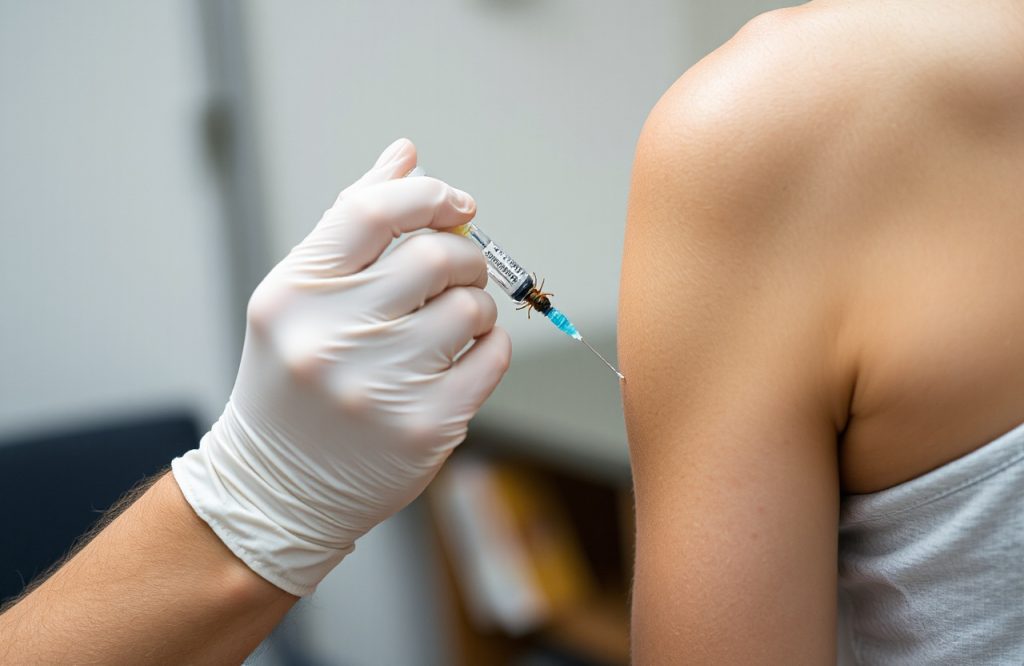
Lyme Disease: A Public Health Concern
Understanding Lyme Disease
Lyme disease poses a significant public health challenge, primarily caused by an infection from the bacterium Borrelia burgdorferi, transmitted through bites from infected ticks. Early diagnosis and treatment can lead to successful recovery; however, delayed treatment may result in the infection spreading to critical areas such as the heart, joints, and nervous system, leading to severe long-term complications.
The Quest for a Vaccine
Currently, there is no approved vaccine for Lyme disease in humans, although a vaccine exists for dogs. Researchers are actively exploring various vaccine options to combat this illness. A study published in Clinical Infectious Diseases delves into the historical context and future prospects of Lyme disease vaccinations. In the 1990s, two vaccines were developed that demonstrated effectiveness in reducing Lyme disease risk in humans, but their use was ultimately discontinued.
Current Research and Vaccine Development
Recent clinical trials have observed a similar vaccine, with researchers investigating multiple approaches, including outer surface protein C, other B. burgdorferi proteins, lipid immunogens, live mutant vaccines, and transmission-blocking vaccines. When assessing potential hybrid vaccines, factors such as cost and risk-to-benefit ratios are taken into account.
Geographical Risk Factors
The article emphasizes that individuals residing in the Northeast and Upper Midwest regions of the United States are at a higher risk for Lyme disease compared to those living in southern areas. Another avenue of research is focused on reducing the population of infected ticks in specific environments.
Advancements in Vaccine Technology
Advancements in technology are aiding scientists and researchers in their pursuit of an effective new vaccine for Lyme disease.
References
Gomes-Solecki M, Arnaboldi PM, Backenson PB, et al. Protective immunity and new vaccines for Lyme disease. Academic OUP. Published October 17, 2019. Accessed October 17, 2019. https://doi.org/10.1093/cid/ciz872.