New Nanotechnology Strategy Shows Promise in Reversing Alzheimer’s Disease in Mice
Understanding Alzheimer’s Disease
Alzheimer’s disease remains a perplexing condition, with researchers still unclear about its exact causes. However, prior studies have identified several potential contributing factors, including genetics, age, and the accumulation of specific proteins in the brain, notably amyloid-beta and tau.
Breakthrough Research Findings
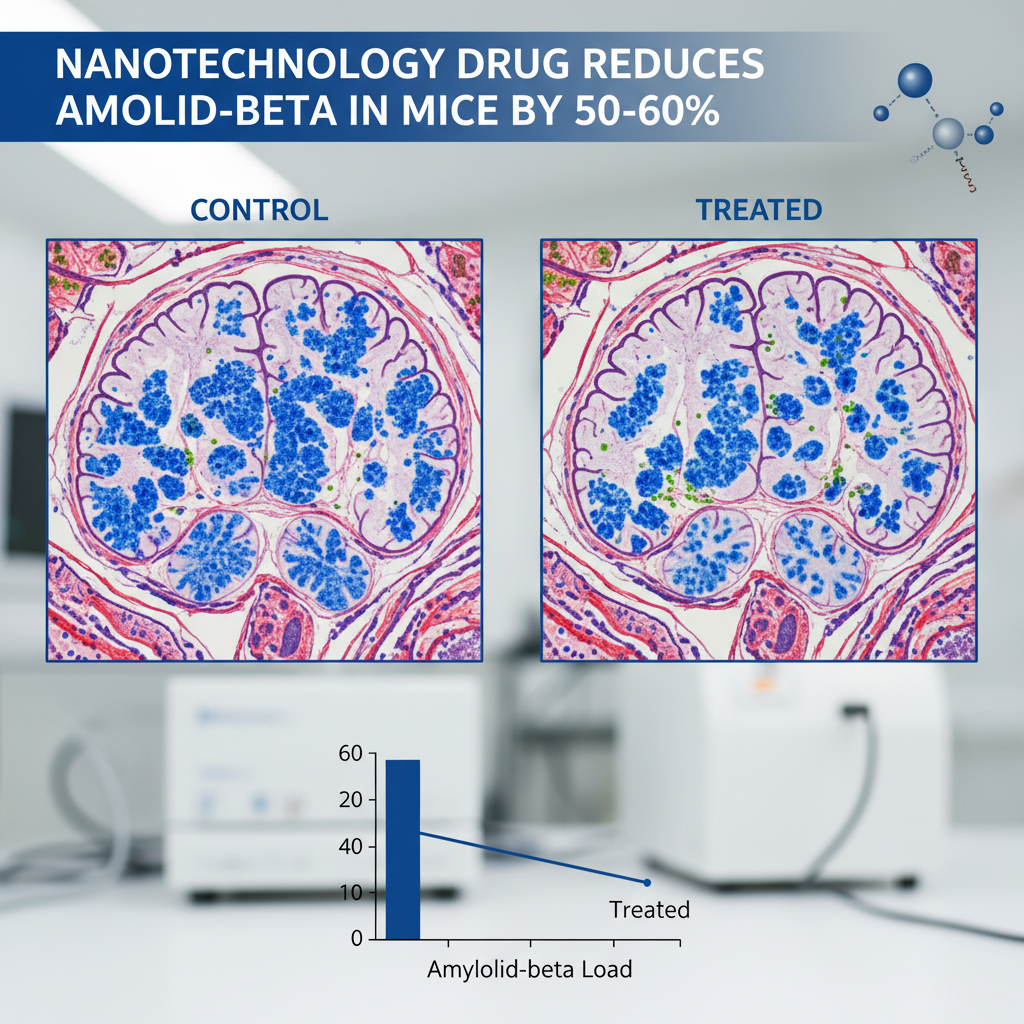
A recent study has revealed how a research team successfully utilized a novel nanotechnology approach to reverse Alzheimer’s disease in mice diagnosed with the condition. This innovative technology led to a significant reduction of amyloid-beta levels in the mice’s brains, achieving a decrease of 50-60%.
Challenges and Future Directions
As the global population ages, the prevalence of Alzheimer’s is escalating, currently affecting an estimated 55 million individuals worldwide as of 2020. Existing treatments have shown limited effectiveness, often providing only modest benefits. Dr. Giuseppe Battaglia, an ICREA research professor and the leader of the Molecular Bionics Group at the Institute for Bioengineering of Catalonia (IBEC) in Spain, emphasized the urgency for more effective therapies.
Insights from Dr. Battaglia
Dr. Battaglia noted, “Alzheimer’s is growing fast with aging populations, and current treatments provide only modest benefits for many people. The disease isn’t driven by a single mechanism; rather, vascular dysfunction, inflammation, and protein aggregation all contribute to its progression. We need therapies that not only slow damage but actively restore the brain’s ability to maintain its health. This necessitates new strategies that incorporate prevention, the removal of toxic proteins, and the repair of systems that support brain homeostasis.”
Conclusion
Dr. Battaglia is the lead author of the study published in Signal Transduction and Targeted Therapy, which highlights the potential of this new nanotechnology strategy in combating Alzheimer’s disease. Researchers are continuing to explore innovative treatments that may offer hope not just in managing, but possibly reversing the effects of this debilitating condition.