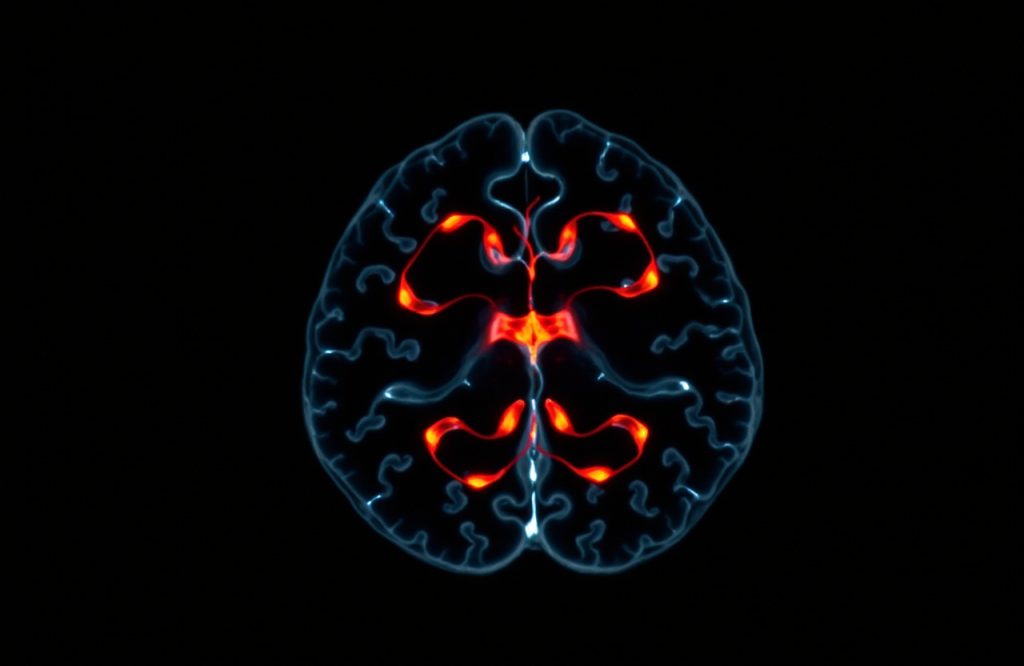
Glioblastoma Multiforme: An Overview
Prevalence and Aggressiveness
Glioblastoma multiforme is recognized as the most common and aggressive type of brain tumor in adults. Despite treatment options including surgery, temozolomide chemotherapy, and radiotherapy, the median survival rate for patients remains approximately 15 months.
Challenges in Treatment
Ongoing research has not yielded significant improvements in survival rates. Recent studies indicate that this stagnation in glioblastoma management and prognosis is partly due to the presence of chemotherapy-resistant glioblastoma-initiating cells (GICs). These cells exhibit a high resistance to chemotherapies and possess the ability to generate entirely new tumors.
Recent Research Findings
Study on Chemotherapy-Resistant GICs
A study published in Neuro-oncology investigated the efficacy of 10,560 independent compounds against tumor-resistant GICs. Researchers identified two compounds that notably decreased the viability of GICs without causing significant toxicity to normal brain cells.
Mechanism of Action
Further analysis revealed that these compounds function by inhibiting dihydroorotate dehydrogenase (DHODH), an enzyme essential for pyrimidine production. Notably, the most promising candidate, designated as 10607, showed low stability in mouse liver microsomes.
Identification of a New Compound
In pursuit of more stable alternatives, researchers screened a new library of compounds with similar DHODH inhibitory activity. This led to the identification of 10580, a stable orally administered compound that effectively inhibits DHODH, thereby preventing pyrimidine synthesis.
Impacts of Compound 10580
Effects on Cancer Cells
Compound 10580 demonstrated the ability to inhibit cancer cell proliferation, promote survival, and maintain stem-cell characteristics. Additionally, it successfully reduced tumor mass and the number of cancer cells without causing short-term toxicity in mice.
Potential Implications for Therapy
This study presents 10580 as a potential new treatment for chemotherapy-resistant glioblastoma. Its mechanism, which involves the inhibition of DHODH and suppression of pyrimidine synthesis, may play a critical role in tumor development and GIC chemotherapy resistance.
Future Research Directions
Safety and Long-Term Effects
While 10580 showed no short-term toxicity in the tested mice, the potential long-term consequences remain unexamined. Consequently, further research is essential to fully understand the safety profile of 10580 and its derivatives.
Conclusion
The findings from this study underscore the need for continued exploration into therapies targeting GICs and the mechanisms underlying chemotherapy resistance in glioblastoma.
Reference
Echizenya, S., Ishii, Y., Kitazawa, S., Tanaka, T., Matsuda, S., Watanabe, E., … & Natsume, T. (2019). Discovery of a new pyrimidine synthesis inhibitor eradicating glioblastoma-initiating cells. Neuro-oncology.