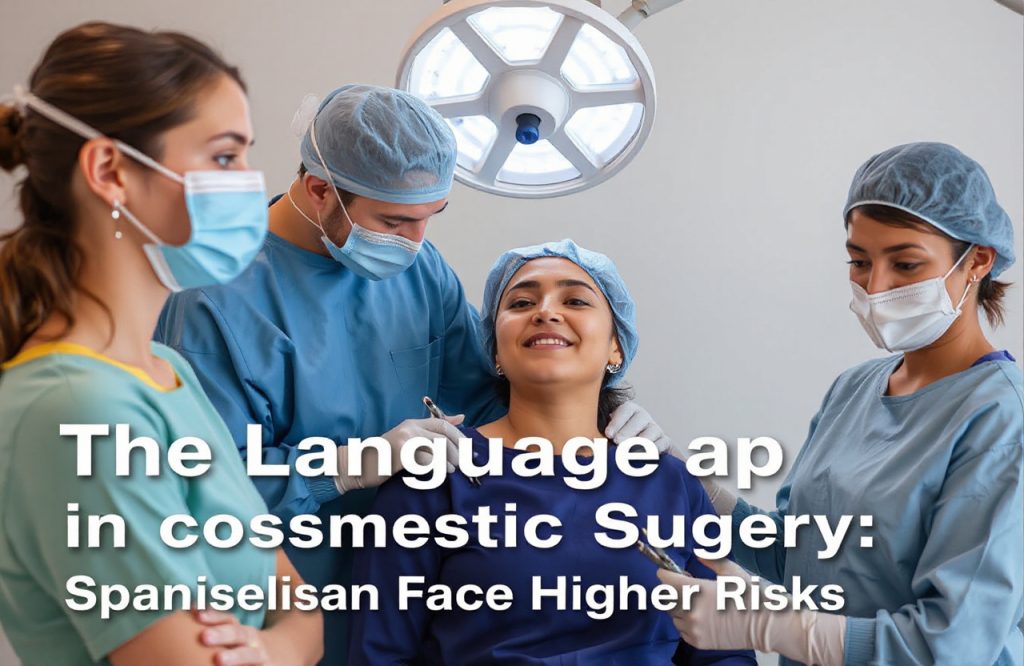
Rising Popularity of Cosmetic Surgery in the United States
Current Statistics on Cosmetic Procedures
Cosmetic surgery has reached unprecedented levels in the United States. According to the American Society of Plastic Surgeons, over 26 million cosmetic procedures were performed on Americans in 2023, with numbers consistently increasing each year.
Language Barriers in Cosmetic Surgery Consultations
Despite the thriving industry, a significant issue persists: many patients face challenges in making complex medical decisions due to language barriers. With an estimated 42 million native Spanish speakers in the U.S., cosmetic surgery consultations can often result in confusion. This miscommunication can lead to serious consequences, including misunderstandings of pre-operative instructions and patients struggling to articulate their goals to surgeons.
The Importance of Effective Communication in Elective Surgery
Risks Associated with Language Barriers
In emergency medicine, the consequences of a language barrier are glaringly evident; misinterpreted symptoms can lead to misdiagnosis. However, the communication gap presents a different kind of risk in cosmetic surgery, which is often overlooked.
Plastic surgery is inherently personal, as patients have specific expectations regarding their appearance. Achieving desired outcomes requires thorough discussions between patients and surgeons. Research published in the Journal of Surgical Research indicates that patients with limited English proficiency are more susceptible to poor surgical outcomes and extended hospital stays compared to their English-speaking counterparts.
The Challenge of Informed Consent
The informed consent process adds another layer of complexity. Patients must understand the risks, alternatives, and realistic expectations of their procedures before surgery. When translation is rushed or casual, patients may consent to procedures without fully understanding them. Medical organizations and the FDA emphasize that informed consent should involve genuine comprehension, not merely a signature.
Understanding the Disparity in Access
Demographic Trends
The gap in access to Spanish-speaking plastic surgeons is concerning, particularly in light of the growing Latino population. According to the U.S. Census Bureau, Hispanics and Latinos make up about 19 percent of the U.S. population, making them the largest minority group. This percentage is even higher in states like Texas, California, and Florida.
Challenges Faced by Spanish-Speaking Patients
The American Society of Plastic Surgeons highlights that only a small fraction of board-certified plastic surgeons speak Spanish. Many practices rely on interpreters or bilingual staff, but studies show that untrained personnel can lead to greater miscommunication compared to professional medical interpreters. A 2022 analysis in Health Affairs found that Spanish-speaking patients were less likely to receive understandable follow-up care instructions and were more likely to report avoidable complications due to inadequate post-operative care guidance.
Guidelines for Spanish-Speaking Patients Seeking Cosmetic Surgery
The Importance of Language Proficiency
Choosing a cosmetic surgeon who speaks your language is not just a convenience; it is critical for patient safety. The American Medical Association has established guidelines stating that language-concordant care leads to better outcomes, increased patient satisfaction, and fewer complications.
Steps for Patients to Consider
For Spanish-speaking patients planning cosmetic surgery, specialists recommend several steps before selecting a provider. First, inquire whether the surgeon speaks Spanish or relies on interpreters. A surgeon who communicates directly with the patient throughout the consultation, surgery, and recovery process enhances both safety and satisfaction.
Online directories that connect patients with Spanish-speaking plastic surgeons can simplify the search, particularly in metropolitan areas with higher populations of these professionals. These resources allow patients to filter by language, location, and specialty, thus alleviating the trial-and-error approach that many non-English-speaking patients encounter.
The Role of Cultural Competence
Understanding Cultural Context
Language is only part of the equation; cultural context also plays a significant role in patient care. Patients are more likely to share their medical histories and comply with post-operative instructions when they feel a cultural connection with their healthcare providers.
In cosmetic surgery, aesthetic preferences vary across cultures. Surgeons familiar with these nuances can better align procedures with patients’ true objectives, avoiding the pitfalls of a one-size-fits-all approach.
The Growing Cosmetic Surgery Industry and Its Challenges
Future Projections
By the end of 2023, the cosmetic surgery market in the U.S. is projected to continue its growth, nearing a valuation of $30 billion, fueled by younger and increasingly diverse patient demographics. Addressing the language gap is not merely a customer service issue; it is a clinical necessity.
Calls for Action
Organizations like the National Hispanic Medical Association and the Association of American Medical Colleges have advocated for the recruitment of more bilingual medical providers and the establishment of language access programs across all medical specialties, including elective procedures.
Key Takeaway for Patients
The essential message for patients is clear: never choose a surgeon with whom you cannot communicate openly. Your ability to express concerns, understand medical advice, and adhere to post-operative instructions is critical to achieving a successful surgical outcome. A surgeon who comprehends your needs—both literally and figuratively—can significantly enhance your experience and results.
Image by wayhomestudio from freepik
The editorial staff of Medical News Bulletin had no role in the preparation of this post. The views and opinions expressed in this post are those of the advertiser and do not reflect those of Medical News Bulletin. Medical News Bulletin does not accept liability for any loss or damages caused by the use of any products or services, nor do we endorse any products, services, or links in our Sponsored Articles.