## Chandigarh: Transfer of Rural Medical Officers Faces Challenges
### Overview of the Transfer Initiative
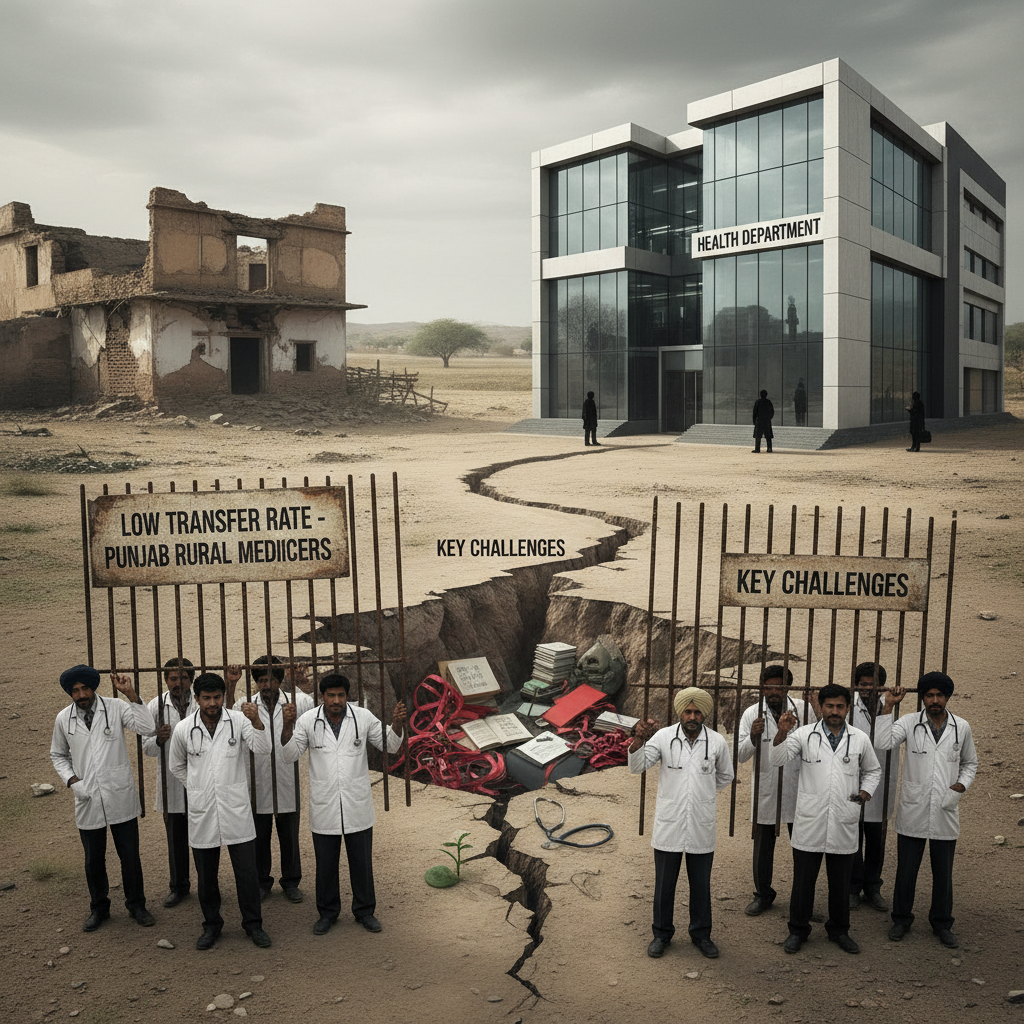
The Punjab Government’s recent decision to transfer Rural Medical Officers (RMOs) from the Department of Rural Development and Panchayats to the Health Department has seen minimal progress. Out of a total of 500 RMOs, only 2% have agreed to the move.
### Current Participation Rates
According to official data, only 10 doctors have consented to the transfer thus far. The breakdown of these consents includes:
– **Patiala**: 3 doctors
– **Faridkot**: 3 doctors
– **Mohali**: 2 doctors
– **Muktsar**: 1 doctor
– **Mansa**: 1 doctor
### Reasons for Low Response
Despite the state’s approval of pay protection for those opting to join the health department, the response has significantly fallen short of expectations. The proposed transfer aims to merge rural dispensaries with the health department to strengthen the state’s health infrastructure, which is currently facing a shortage of doctors in Primary Health Centres (PHCs), Community Health Centres (CHCs), and district hospitals.
### Administrative Hurdles and Concerns
The initiative was expected to attract more participants after the finance department removed previous administrative hurdles. However, RMOs have indicated that their decision to transfer hinges on two critical factors:
– **Assured seniority protection**
– **Continuation of service-related benefits**
### Details of the Merger Proposal
The merger proposal specifies that the seniority of RMOs willing to join the health department will be calculated from the date of joining the new department, rather than from their regularization under the panchayats department. This clause may have contributed to the low response rate among doctors. Furthermore, emoluments will only commence from the date of joining the health department.
### Implications for Non-Transferring Officers
RMOs who choose to remain with the panchayats department will be classified as part of a “dying cadre.” This designation implies that no new appointments will be made for any vacancies that arise in their current roles. The corresponding rural dispensary, along with its paramedical and Class IV staff, will subsequently be transferred to the health department.
### Concerns from Officials and Associations
Uma Shankar Gupta, Director-cum-Special Secretary (Rural Development and Panchayats), highlighted that the lack of seniority protection is a significant reason for the poor response. He stated, “The state has ensured pay protection for RMOs moving to the health department, but the lack of seniority protection remains a key hurdle.”
### Request for Consideration from RMOs
Dr. Jagjit Bajwa, State President of the Rural Medical Officers’ Association, Punjab, has urged the state government to address the issue of seniority and DACP/MACP benefits before proceeding with the merger of RMOs into the health department. He emphasized that rural medical officers dedicate nearly two decades of service exclusively to rural areas, and it would be “unjust” to overlook their years of service in the proposed merger. Dr. Bajwa has appealed to the Chief Minister to consider this legitimate demand, asserting that any transfer without credit for past service would be unfair to a cadre that has been the backbone of rural healthcare in Punjab.