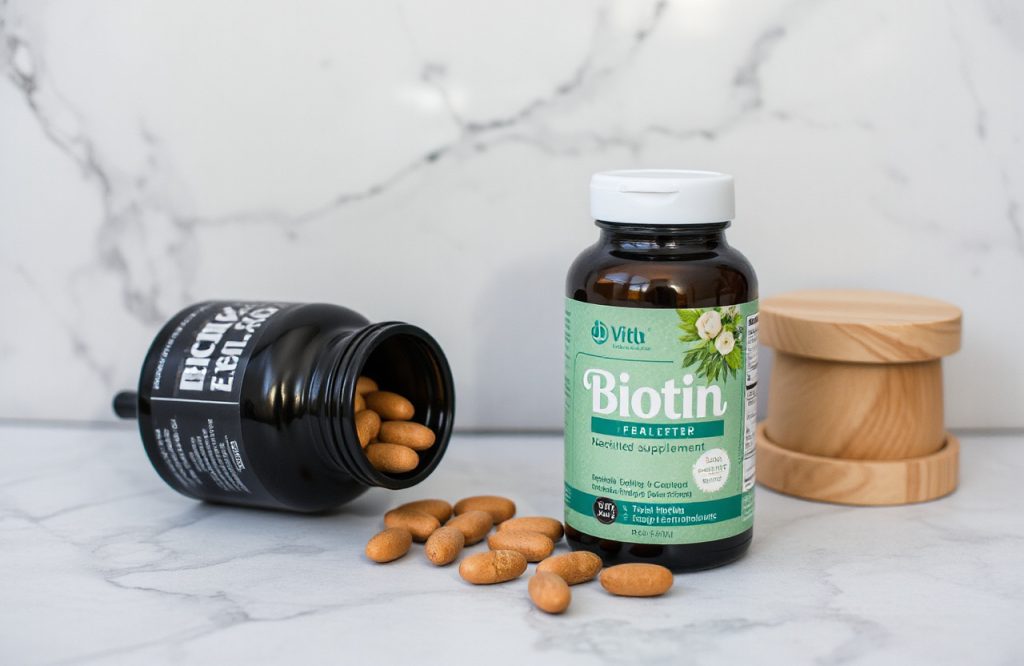
What is Biotin?
Definition and Importance
Biotin, also known as vitamin B7, is a crucial vitamin that supports metabolic processes in the body, specifically those that produce ATP, the cellular energy molecule. This water-soluble vitamin is excreted through the kidneys, necessitating small, regular doses for adequate bodily function. While there is no established recommended daily allowance for biotin, the Institute of Medicine advises a daily intake of 30mg for adults.
Biotin Supplement Review: Claims and Evidence
Understanding Biotin Deficiency
Complete biotin deficiency is uncommon; however, some studies indicate that ‘marginal biotin deficiency’ may occur, particularly among pregnant women. High-dose biotin has been investigated for its potential therapeutic effects on various medical conditions.
Biotin Deficiency During Pregnancy
Research indicates that biotin deficiency can occur during pregnancy and may have teratogenic effects. A study involving pregnant women suggested that increasing biotin intake to 2-3 times the adequate amount might be necessary during this period.
Biotin for Multiple Sclerosis
A clinical trial assessing high-dose biotin in multiple sclerosis patients showed clinical improvements in most participants. Patients received daily doses ranging from 100-300mg of biotin. Although some patients experienced diarrhea, the treatment was generally deemed safe. The researchers propose that biotin may aid multiple sclerosis due to its role in myelin production.
To verify these findings, a larger double-blind, placebo-controlled trial was conducted, where patients with progressive multiple sclerosis were treated with 300mg of biotin per day for one year. This study reported a reversal of disability in 13 patients and improvements in disability scales compared to the control group. Conversely, another study found no improvements in patients taking biotin supplements over the year, suggesting that increased biotin levels might have exacerbated some conditions due to heightened metabolic demands on the nervous system.
Biotin for Amyotrophic Lateral Sclerosis
Following the positive outcomes observed in multiple sclerosis trials, researchers explored the effects of biotin on amyotrophic lateral sclerosis (ALS) patients. The underlying rationale was the common involvement of motor neurons in both conditions. A pilot study involving 30 ALS patients administered either 300mg of biotin (MD1003) or a placebo for six months. While the treatment was safe and well-tolerated, no significant differences in the ALS Functional Rating Scale-Revised (ALSFRS-R) scores were reported between the two groups. Researchers advocate for larger studies to further evaluate the treatment’s efficacy.
Biotin for Hair and Nail Growth
Biotin supplements are widely recognized for claims regarding hair and nail growth. However, a review of existing studies indicates limited evidence supporting this use. Improvements in hair and nail growth have primarily been observed in patients with medical conditions that hinder growth. Generally, healthy individuals can obtain sufficient biotin through their diet, reducing the need for supplementation.
Side Effects of Biotin Supplements
Regular consumption of biotin supplements may lead to side effects such as nausea, stomach discomfort, or diarrhea. Potential risks may arise if supplements are taken alongside other medications or health issues. It is advisable to consult a healthcare professional before starting any vitamin or supplement regimen.
References
1. Mock D. M. (2017). Biotin: From Nutrition to Therapeutics. The Journal of Nutrition, 147(8), 1487–1492. https://doi.org/10.3945/jn.116.238956
2. Institute of Medicine Standing Committee on the Scientific Evaluation of Dietary Reference Intakes and Its Panel on Folate OBV, and Choline. Dietary Reference Intakes for Thiamin, Riboflavin, Niacin, Vitamin B6, Folate, Vitamin B12, Pantothenic Acid, Biotin, and Choline. National Academies Press (US), Washington 1998
3. Czeizel AE, Dudás I. Prevention of the first occurrence of neural-tube defects by periconceptional vitamin supplementation. N Engl J Med 1992;327:1832–5.
4. Mock DM. Marginal biotin deficiency is common in normal human pregnancy and is highly teratogenic in the mouse. J Nutr 2009;139:154–7
5. Mock DM. Adequate intake of biotin in pregnancy: why bother? J Nutr 2014;144:1885–6.
6. Mock DM, Quirk JG, Mock NI. Marginal biotin deficiency during normal pregnancy. Am J Clin Nutr 2002;75:295–9
7. Perry CA, West AA, Gayle A, Lucas LK, Yan J, Jiang X, Malysheva O, Caudill MA. Pregnancy and lactation alter biomarkers of biotin metabolism in women consuming a controlled diet. J Nutr 2014;144:1977–84.
8. Juntas-Morales R, Pageot N, Bendarraz A, et al. High-dose pharmaceutical grade biotin (MD1003) in amyotrophic lateral sclerosis: A pilot study. EClinicalMedicine. 2020;19:100254. Published 2020 Jan 27. doi:10.1016/j.eclinm.2019.100254
9. Sedel F, Papeix C, Bellanger A, et al. High doses of biotin in chronic progressive multiple sclerosis: a pilot study. Mult Scler Relat Disord 2015;4:159–69
10. Tourbah A, Lebrun-Frenay C, Edan G, et al. MD1003 (high-dose biotin) for the treatment of progressive multiple sclerosis: a randomized, double-blind, placebo-controlled study. Mult Scler 2016;22:1719–31
11. Birnbaum G, Stulc J. High dose biotin as treatment for progressive multiple sclerosis. Mult Scler Relat Disord. 2017;18:141-143. doi:10.1016/j.msard.2017.09.030
12. Patel, D. P., Swink, S. M., & Castelo-Soccio, L. (2017). A Review of the Use of Biotin for Hair Loss. Skin appendage disorders, 3(3), 166–169. https://doi.org/10.1159/000462981