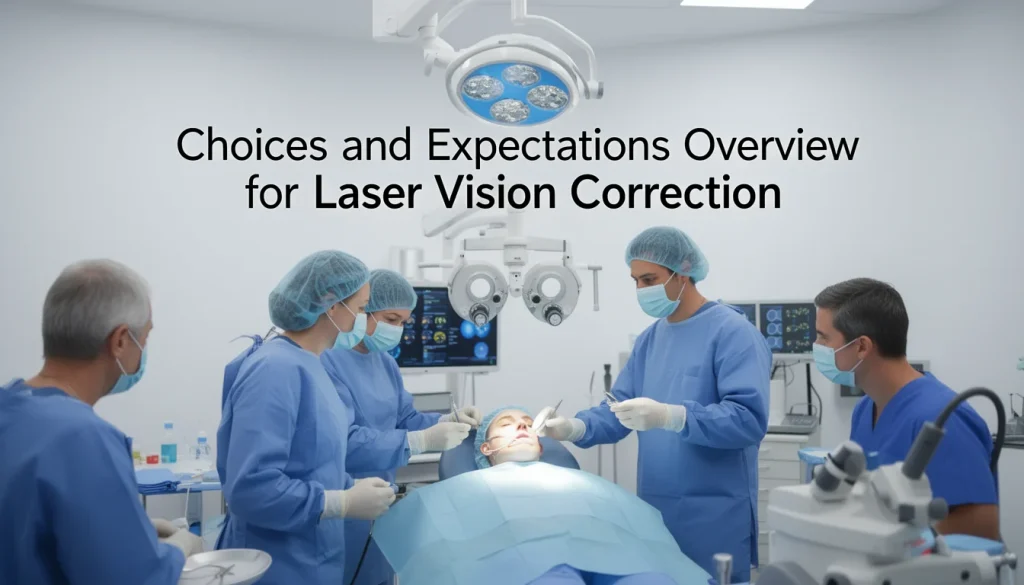
Why many people put off laser vision correction — and what truly matters
Most people delay laser vision correction for years because they don’t understand what the procedures involve. The confusion is understandable: three distinct treatments exist, prices vary widely, and every provider promises different outcomes. Instead of focusing on marketing, the important questions are straightforward: Am I a candidate? Which procedure fits my eyes and lifestyle? What should I expect during recovery and over the long term? This article walks through those facts so you can make an informed decision.
What happens at a LASIK consultation
A LASIK consultation is the practical first step to exploring laser vision correction for your eyes. In reputable clinics the visit typically includes a thorough eye examination using advanced diagnostic instruments, a review of your medical and ocular history, and a discussion about the lifestyle outcomes you want. During the consultation the clinician measures corneal thickness, evaluates your candidacy, and explains tailored recommendations. You will also receive an outline of fees, expected recovery, and the steps involved in the selected procedure. By the end of the appointment you should clearly know where you stand and what the next steps are.
How laser vision correction changes your eyes
The clear front portion of the eye is the cornea. Blurred vision occurs when the eye’s optical system does not focus light to a single point on the retina. Laser vision correction reshapes the cornea with computer-guided precision so that light focuses correctly, improving clarity.
Common refractive errors treated
Myopia (nearsightedness): Distant objects appear blurry because light focuses in front of the retina, typically due to an eye that is relatively long or a cornea that curves too much.
Hyperopia (farsightedness): Light would converge behind the retina, making nearby objects harder to see and causing blur.
Astigmatism: Irregular curvature of the cornea or lens causes light to be focused unevenly, producing blurred or distorted vision at any distance.
Laser vision correction addresses these refractive errors; it does not prevent other eye diseases or the normal age-related need for reading glasses.
The three main laser vision correction options
Understanding the procedural differences is key to choosing the right option for you. LASIK, PRK, and SMILE are the three commonly offered techniques, and each has specific advantages and trade-offs.
LASIK: the most common choice
LASIK involves creating a thin corneal flap, reshaping the underlying tissue with a laser, and then repositioning the flap. Recovery is fast for most patients: many see clear vision within 24 hours and experience minimal discomfort. The primary limitation is corneal thickness—patients with thin corneas may not be good candidates. People involved in high-contact sports sometimes select alternatives because the flap is a permanent change to the corneal structure.
PRK: the original surface method
PRK (photorefractive keratectomy) does not create a flap. The outer corneal layer (the epithelium) is removed and the laser reshapes the surface. The epithelium regrows over about three to five days, a period that can be uncomfortable, and visual recovery takes longer—typically a week or more for stabilization. PRK is often chosen for patients with thinner corneas, those who participate in high-impact activities, or for certain military requirements. Long-term visual outcomes are comparable to LASIK, with a rougher early recovery.
SMILE: a newer option with limited availability
SMILE creates a small lenticule (lens-like tissue) inside the cornea which is extracted through a tiny incision. SMILE currently treats nearsightedness and astigmatism only and is not as widely available because it requires specific equipment and surgeon training. Practices vary—Fort Worth clinics such as Mueller Vision and others may offer different combinations of these procedures depending on their technology and surgeon training.
What actually happens during treatment
Before surgery, you should expect a comprehensive eye exam, corneal thickness measurements, and a candidacy evaluation. Not everyone is eligible—roughly 30–40% of people may need an alternative approach based on their measurements and ocular health.
On surgery day numbing drops are applied (no needles required), patients remain awake, and each eye typically takes 10–15 minutes. You will feel pressure but not pain, and both eyes are usually treated the same day.
After surgery initial vision is often blurry. Common early symptoms include mild burning or a gritty sensation, light sensitivity, and the need to wear protective shields overnight. With LASIK, significant vision improvement commonly appears within a few hours; PRK can take days to a week or longer to reach stable vision.
Cost realities and payment options
Elective vision correction is generally not covered by insurance. Although the upfront expense can be significant, a single laser procedure often costs less over a lifetime than multi-decade expenses for glasses and contact lenses. Many practices offer financing, and Health Savings Account (HSA) or Flexible Spending Account (FSA) funds are commonly accepted. Final price depends on the technology used, the surgeon’s experience, and geographic location.
Expected results and possible side effects
Most patients achieve meaningful improvement: over 90% reach at least 20/40 vision (the legal driving standard), and 70–80% achieve 20/20. A small percentage—about 5–10%—may require enhancement procedures years later, since vision can regress slightly and age-related changes still occur.
Temporary side effects during healing can include dry eyes for three to six months, halos around lights at night, and light sensitivity. As with any surgery, there are risks; it’s important to review potential complications with your surgeon and seek additional information if you have concerns.
Who is an ideal candidate
The best candidates typically have stable vision for at least 12 months, sufficient corneal thickness for the intended procedure, healthy eyes free of significant disease, and reasonable expectations about the outcomes and recovery process. Most people who meet these criteria report high satisfaction and greater freedom in daily life after correction.
Frequently asked questions
How long do results last? Results are considered long-lasting, but the eyes continue to age. Some people seek enhancements after a decade or more, and presbyopia (the need for reading glasses) commonly develops around age 40 regardless of prior correction.
Does the surgery hurt? Numbing drops eliminate pain during the procedure. LASIK typically causes only mild discomfort for about 24 hours; PRK may be more uncomfortable for three to five days during epithelial regrowth. Most patients find the sensations tolerable.
Can both eyes be treated the same day? Yes. Treating both eyes in one appointment is standard practice and speeds overall recovery.
How do I pick a surgeon? Start with trusted referrals from your eye care provider, friends, or family members who have had successful procedures. Confirm the surgeon’s training and experience with the specific technology offered, and ask detailed questions during your consultation.
Is it worth the cost? That depends on your lifestyle and finances. Active people who dislike glasses or contacts often experience large quality-of-life gains, and the lifetime cost of surgery frequently compares favorably to decades of corrective lenses.
Bottom line: informed decisions, realistic expectations
Laser vision correction works for millions of patients. LASIK, PRK, and SMILE each have different requirements and recovery profiles, so the crucial first step is a thorough consultation to determine candidacy. Seek multiple opinions, ask which technology a practice uses, and get clear, realistic expectations about recovery and outcomes. Skip the hype—use objective measurements and an experienced surgeon’s guidance to decide what’s right for your eyes.
The editorial staff of Medical News Bulletin had no role in the preparation of this post. The views and opinions expressed in this post are those of the advertiser and do not reflect those of Medical News Bulletin. Medical News Bulletin does not accept liability for any loss or damages caused by the use of any products or services, nor do we endorse any products, services, or links in our Sponsored Articles.