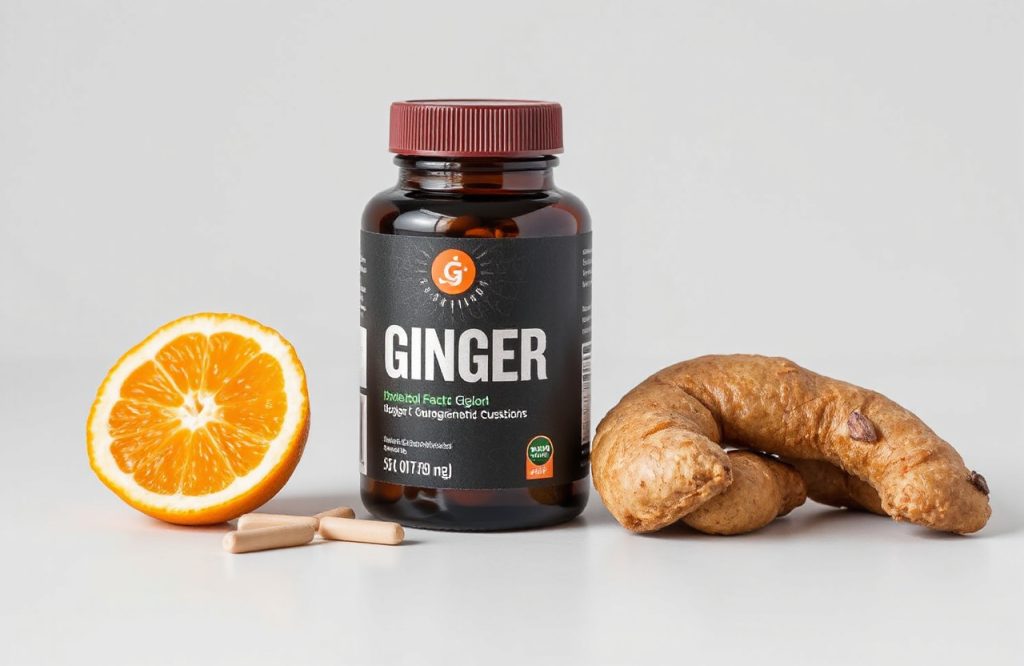
Introduction to Ginger Root
Originating in Southeast Asia, the ginger plant’s root is among the most widely utilized spices globally. Beyond its culinary applications, ginger root has served as a herbal remedy for thousands of years. This article reviews the clinical evidence supporting the use of ginger supplements as a natural treatment.
Bioactive Compounds in Ginger
Ginger root contains at least fourteen known bioactive compounds, which can vary based on the source and form of the ginger used.
Claims of Ginger Supplements
Ginger root extract is primarily recognized for its ability to alleviate nausea and vomiting, particularly in cases of motion sickness and pregnancy-related morning sickness. Researchers are also exploring the potential of ginger supplements for various other health conditions, thanks to its anti-inflammatory, antioxidant, and analgesic properties.
Ginger for Rheumatoid Arthritis
A clinical trial assessing ginger supplementation in rheumatoid arthritis patients yielded promising outcomes. In this randomized double-blind placebo-controlled study, 70 participants were divided into two groups: one received 1500 mg of ginger powder, while the other received a placebo. Over a twelve-week period, researchers evaluated inflammation markers to determine the supplement’s effects. The results indicated that ginger supplementation was linked to favorable changes in inflammation markers and a reduction in rheumatoid arthritis disease activity scores.
Ginger for Osteoarthritis
Three clinical trials focused on ginger supplementation for knee osteoarthritis reported positive findings. Two trials compared participants taking 500 mg of ginger powder to those on a placebo over three months. The ginger group experienced significant improvements in inflammation markers, with pro-inflammatory molecules reduced. Additionally, another randomized controlled trial gave participants either 1g of powdered ginger or a placebo for eight weeks. This study utilized the Knee Injury and Osteoarthritis Outcome Score for assessment but found no improvements in joint pain or quality of life compared to the placebo group, although no significant side effects were noted.
Ginger for Type 2 Diabetes
Clinical trials have explored the effects of ginger supplements on insulin resistance and glycemic indices in type 2 diabetes patients. One study involving 3g of ginger powder over three months revealed significant changes in serum glucose, HbA1c, insulin, and insulin resistance. Another randomized double-blind placebo-controlled trial with 88 participants also showed reductions in fasting blood sugar and HbA1c, alongside improvements in insulin resistance. Notably, even at lower doses, such as 1600 mg, ginger demonstrated positive effects, including reductions in fasting glucose, HbA1c, insulin, and cholesterol compared to the placebo group.
Ginger for Ulcerative Colitis
Due to the oxidative stress associated with ulcerative colitis, researchers investigated ginger’s antioxidant properties to determine their potential benefits for patients with this condition. Patients taking 2g of ginger powder daily for 12 weeks showed significant improvements in disease severity and quality of life scores compared to those on a placebo.
Ginger for Hypertension
Several clinical trials have assessed ginger’s effectiveness in reducing blood pressure, reporting decreases in both systolic and diastolic measurements. A meta-analysis of these studies indicated that the effects may depend on factors such as patient age, the duration of supplementation, and the doses of ginger administered.
Potential Side Effects of Ginger
As with any supplement, it is crucial to be aware of possible side effects, medication interactions, and health conditions that may contraindicate ginger supplementation. Consulting a healthcare professional before starting any supplements is advisable. Common side effects of ginger might include bloating, gas, abdominal pain, diarrhea, and heartburn.
References
Bode AM, Dong Z. The Amazing and Mighty Ginger. In: Benzie IFF, Wachtel-Galor S, editors. Herbal Medicine: Biomolecular and Clinical Aspects. 2nd edition. Boca Raton (FL): CRC Press/Taylor & Francis; 2011. Chapter 7. Available from: https://www.ncbi.nlm.nih.gov/books/NBK92775/
Aryaeian N, Shahram F, Mahmoudi M, et al. The effect of ginger supplementation on some immunity and inflammation intermediate genes expression in patients with active Rheumatoid Arthritis. Gene. 2019;698:179-185. doi:10.1016/j.gene.2019.01.048
Anh NH, Kim SJ, Long NP, et al. Ginger on Human Health: A Comprehensive Systematic Review of 109 Randomized Controlled Trials. Nutrients. 2020;12(1):157. Published 2020 Jan 6. doi:10.3390/nu12010157
Shidfar F, Rajab A, Rahideh T, Khandouzi N, Hosseini S, Shidfar S. The effect of ginger (Zingiber officinale) on glycemic markers in patients with type 2 diabetes. J Complement Integr Med. 2015;12(2):165-170. doi:10.1515/jcim-2014-0021
Mozaffari-Khosravi H, Talaei B, Jalali BA, Najarzadeh A, Mozayan MR. The effect of ginger powder supplementation on insulin resistance and glycemic indices in patients with type 2 diabetes: a randomized, double-blind, placebo-controlled trial. Complement Ther Med. 2014;22(1):9-16. doi:10.1016/j.ctim.2013.12.017
Mozaffari-Khosravi H, Naderi Z, Dehghan A, Nadjarzadeh A, Fallah Huseini H. Effect of Ginger Supplementation on Proinflammatory Cytokines in Older Patients with Osteoarthritis: Outcomes of a Randomized Controlled Clinical Trial. J Nutr Gerontol Geriatr. 2016;35(3):209-218.
Niempoog S, Pawa KK, Amatyakul C. The efficacy of powdered ginger in osteoarthritis of the knee. J Med Assoc Thai. 2012;95 Suppl 1:S59-S64.
Naderi Z, Mozaffari-Khosravi H, Dehghan A, Nadjarzadeh A, Huseini HF. Effect of ginger powder supplementation on nitric oxide and C-reactive protein in elderly knee osteoarthritis patients: A 12-week double-blind randomized placebo-controlled clinical trial. J Tradit Complement Med.
Arablou T, Aryaeian N, Valizadeh M, Sharifi F, Hosseini A, Djalali M. The effect of ginger consumption on glycemic status, lipid profile and some inflammatory markers in patients with type 2 diabetes mellitus. Int J Food Sci Nutr. 2014;65(4):515-520. doi:10.3109/09637486.2014.880671
Nikkhah-Bodaghi M, Maleki I, Agah S, Hekmatdoost A. Zingiber officinale and oxidative stress in patients with ulcerative colitis: A randomized, placebo-controlled, clinical trial. Complement Ther Med. 2019;43:1-6. doi:10.1016/j.ctim.2018.12.021
Hasani H, Arab A, Hadi A, Pourmasoumi M, Ghavami A, Miraghajani M. Does ginger supplementation lower blood pressure? A systematic review and meta-analysis of clinical trials. Phytother Res. 2019;33(6):1639-1647. doi:10.1002/ptr.6362