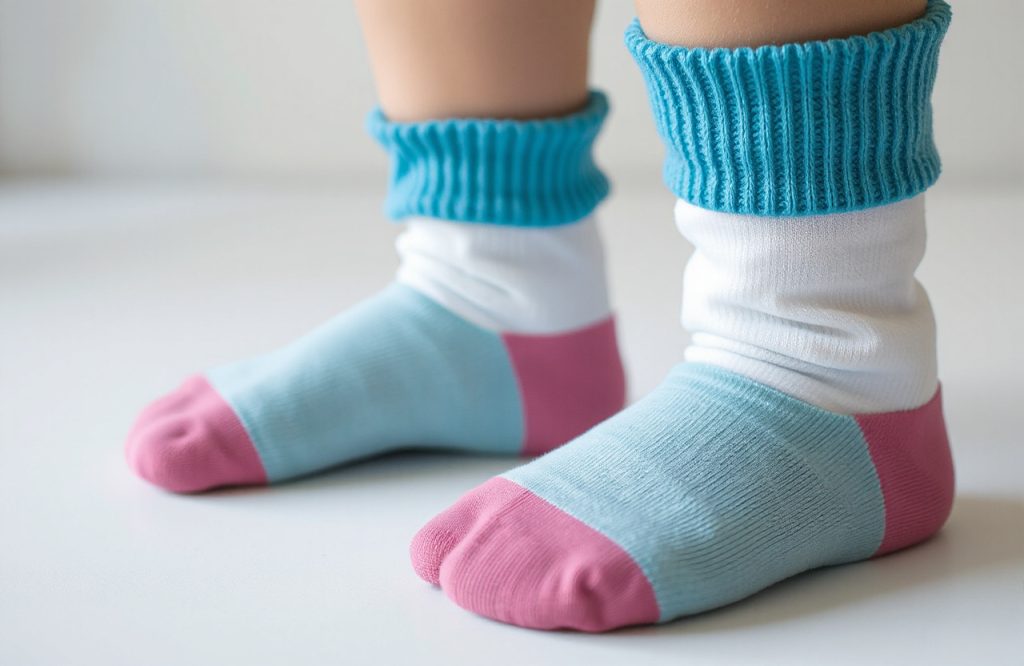
Study Investigates Endocrine Disruptors in Children’s Socks
Research Overview
A recent study conducted by Spanish researchers aimed to determine the presence of endocrine disruptors, specifically bisphenol A (BPA) and parabens, in children’s socks. The findings revealed that 35.4% of the sock samples exceeded the European Union’s limit of 0.1 parts per million (ppm) for BPA, a threshold typically applicable to children’s toys.
Understanding Endocrine Disruptors
Endocrine disruptors are chemical substances that can mimic or interfere with hormonal functions in the body. Research indicates that these disruptors can lead to various health issues in animals, including early puberty in girls, delayed puberty in boys, reproductive organ abnormalities, an increase in reproductive cancers, and immune system diseases. The risks are particularly significant for pregnant women, infants, and young children.
Common Endocrine Disruptors
Among the most prevalent endocrine disruptors are BPA, often used in food and beverage can linings, and parabens, which serve as preservatives in cosmetics, pharmaceuticals, and personal care items. Infants and children are primarily exposed to these chemicals through their diets, with BPA commonly found in plastic bottles and parabens in teething rings.
Methodology of the Study
To assess the risk of exposure to BPA and parabens in children, the researchers from the University of Granada analyzed 32 pairs of socks designed for infants aged 1-12 months and 12-48 months. The socks were sourced from three different retail outlets: a bargain store, a low-cost fast-fashion store, and a high-end department store, varying in price, composition, and color. The samples were kept in plastic bags until laboratory analysis.
Findings on BPA and Parabens
Laboratory analyses indicated that BPA was detected in 90.6% of the socks tested, with 35.4% exceeding the EU limit for children’s toys. Notably, 15 socks contained over 1000 nanograms per gram (ng/g), and those from the bargain store had BPA levels 25 times higher than those from other stores. The study also examined four types of parabens, finding three present in all samples. Ten socks from the bargain store were shown to mimic estrogen activity, while six displayed characteristics of male hormone-blocking.
Implications and Recommendations
The study concluded that children’s socks could serve as a source of exposure to these harmful chemicals, which may exhibit hormonal activity. The researchers advocate for further investigation into the chemicals utilized in children’s clothing and the establishment of regulations to protect consumers. In light of these findings, it is advisable for parents to consider dye-free, natural, or organic fabrics when shopping for clothing for babies and expectant mothers.
References
Freire C, Molina-Molina J, Iribarne-Durán L et al. Concentrations of bisphenol A and parabens in socks for infants and young children in Spain and their hormone-like activities. Environ Int. 2019;127:592-600. doi:10.1016/j.envint.2019.04.013. Accessed June 14, 2019.