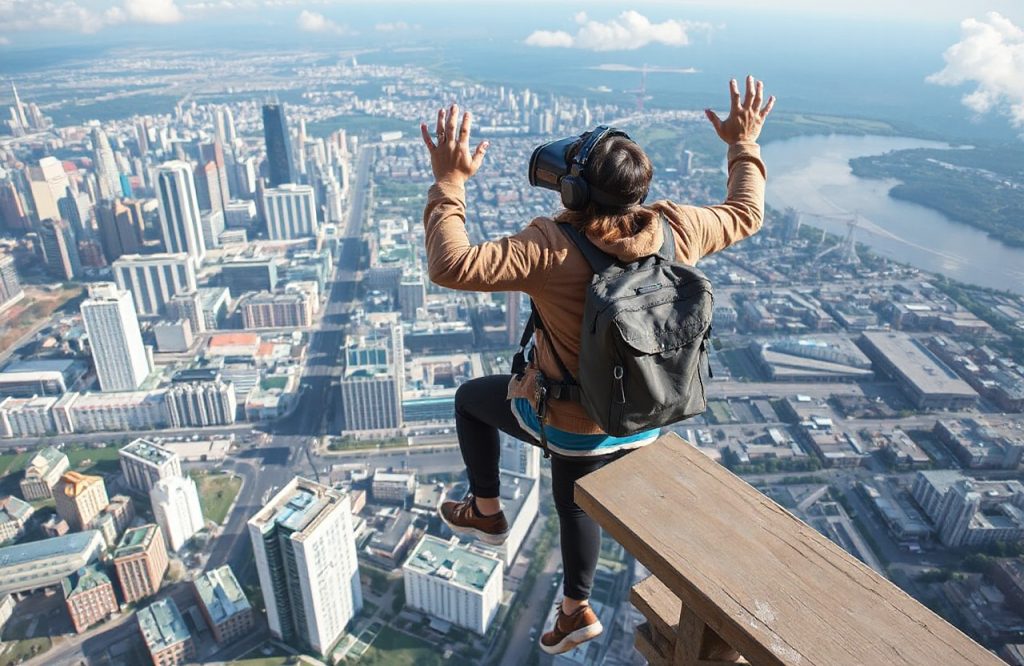
Virtual Reality’s Role in Overcoming Fear of Heights
Study Overview
A recent study published in The Lancet Psychiatry has explored the effectiveness of immersive virtual reality (VR) in addressing the fear of heights. This innovative approach demonstrates the potential of VR technology, which has rapidly evolved from a niche in the gaming industry to a widely accessible tool for mental health treatment.
Understanding Fear of Heights
The fear of heights, known as acrophobia, is one of the most prevalent fears among individuals. Statistics indicate that approximately one in five people will experience an irrational fear of heights, with one in 20 meeting the criteria for a full phobia. Traditional exposure therapy has shown effectiveness in treating this fear by gradually exposing patients to the feared situation, yielding similar results between VR and real-life exposure.
Research Methodology
In this study, researchers from the United Kingdom developed a VR program that automates the therapist’s role. The authors explained, “Our therapeutic approach is cognitive, focusing on the evaluation of threat predictions while dropping defensive behaviors, to develop memories of safety that counteract fear associations.” This method not only simplifies administration but also proves to be time-efficient and cost-effective compared to conventional treatments. However, the program’s development required substantial investment, involving collaboration among programmers, psychologists, a scriptwriter, and an actor over six months.
Results of the Experiment
The study involved 100 participants, with 49 receiving VR treatment and 51 undergoing standard therapy. Each participant experienced an average of four to five sessions, lasting about 30 minutes each. Remarkably, most individuals in the VR group reported significant reductions in their fear within two weeks, while those receiving traditional treatment showed no improvements. Notably, men experienced slightly better outcomes than women, and the benefits persisted two weeks post-treatment. Participants reported low levels of discomfort, likely due to the nature of virtual reality as a simulated experience.
Considerations and Future Research
Despite the promising results, the study lacked a long-term follow-up to assess the durability of the treatment effects beyond the initial weeks. Previous research suggests that VR can successfully alleviate anxiety symptoms for extended periods, indicating the need for further exploration of treatment duration and its long-term efficacy in overcoming fears.
Broader Implications of Virtual Reality Treatment
The findings underscore VR’s potential to enhance the cost and effectiveness of phobia treatments, potentially alleviating the societal and healthcare burdens associated with mental illnesses. Furthermore, the application of VR therapy may extend beyond phobias, with prospects for treating various anxiety disorders, depression, and more. Future studies should aim to evaluate the broader applicability and effectiveness of VR-based therapeutic approaches.
Reference
Freeman, Daniel, et al. “Automated Psychological Therapy Using Immersive Virtual Reality for Treatment of Fear of Heights: a Single-Blind, Parallel-Group, Randomised Controlled Trial.” The Lancet Psychiatry, vol. 5, no. 8, 2018, pp. 625–632., doi:10.1016/s2215-0366(18)30226-8.