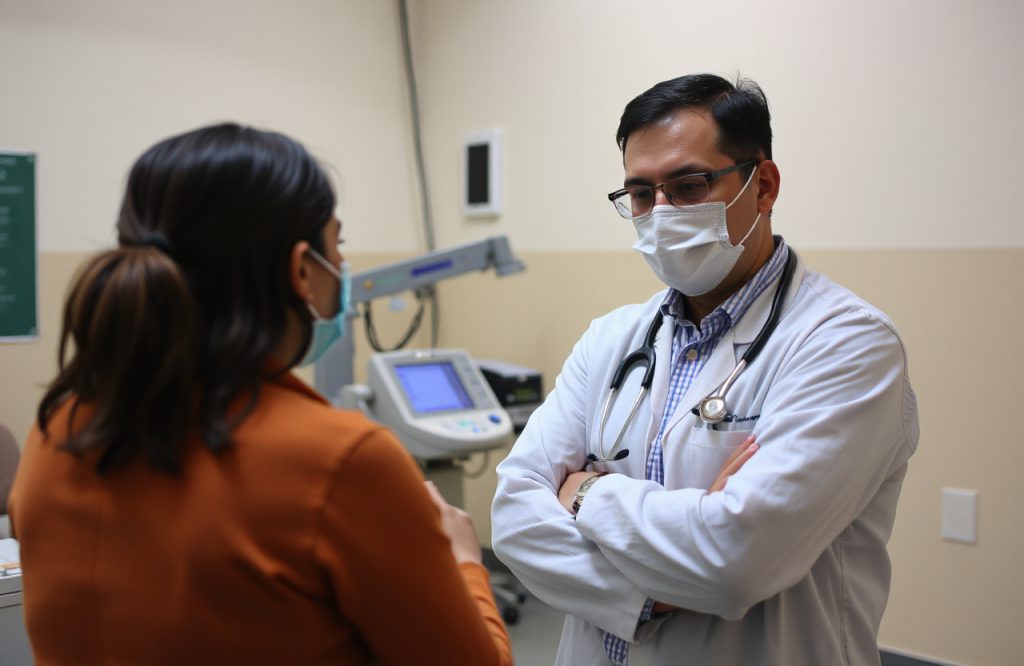
Chandigarh: State Consumer Court Exonerates Hospital and Doctors from Medical Negligence Charges
Background of the Case
The State Consumer Disputes Redressal Commission in Punjab has ruled that a medical practitioner or hospital is only liable for negligence when their conduct falls below the standard expected of a reasonably competent professional in their field. This ruling exonerates a hospital in Ludhiana and its doctors from allegations of medical negligence in the treatment of a patient suffering from Hypoxemia and COVID-19.
Previously, the District Consumer Court had ordered the hospital to pay Rs 5 lakh in compensation to the patient’s family. However, the State Consumer Court overturned this decision, stating, “we are of the opinion that a medical practitioner or hospital would be liable only where their conduct fell below the standards of a reasonably competent practitioner in their field.”
Details of the Incident
The case dates back to 2021 when the complainant’s wife was admitted to Guru Nanak Mission Hospital for treatment. After 4-5 days, she was referred to Dayanand Medical College & Hospital for more specialized care. Initially, she was fully conscious and showed signs of rapid recovery. On February 26, 2021, she was moved from the emergency ward to the General Ward by two doctors.
However, the following day, the patient experienced severe abdominal pain. Despite being informed of her condition, no medical staff attended to her for approximately 12 hours. It was only after the complainant and his family raised concerns in writing that a CT scan was conducted, leading to the discovery that the patient required surgery, for which consent was given.
The surgery took place six hours after the CT scan, but the patient’s condition deteriorated post-operation, resulting in a blood transfusion and a subsequent decline in blood pressure. Sadly, she passed away on February 28, 2021.
Claims by the Complainant
The complainant alleged that the hospital failed to refund excess charges and that the patient did not receive timely medical attention. He claimed medical negligence and deficiency in service, seeking Rs 10 lakh for negligent treatment, Rs 7 lakh for emotional distress, and Rs 3 lakh for litigation costs.
Defense by the Hospital and Doctors
The hospital and the treating physicians contended that the patient was admitted with pre-existing conditions, including Chronic Obstructive Airway Disease and obesity, and had been referred for treatment of fever and shortness of breath with a high suspicion of tuberculosis and COVID-19. Upon admission, she was found to have Hypoxemia and was immediately provided with oxygen support.
They noted that her condition improved to an oxygen saturation level of 92%. A Rapid Antigen Test and RT-PCR confirmed COVID-19, prompting her transfer to an Isolated Covid Intensive Care Unit (Level-III) for treatment according to government protocols.
On February 27, 2021, the patient began to complain of abdominal pain, which was evaluated immediately. Despite the pain assessment and conservative management with medication, a CT scan revealed a hematoma with an active leak, necessitating urgent intervention. Unfortunately, her condition worsened, leading to resuscitation efforts and ultimately her passing.
Initial Ruling by District Commission
The District Commission initially ruled in favor of the complainant, ordering the hospital and doctors to pay Rs 5 lakh for medical negligence, along with additional amounts for mental harassment and litigation costs.
Appeal and State Consumer Court Decision
Challenging the District Commission’s decision, the hospital and doctors argued that the complainant had not disclosed critical information regarding the patient’s COVID-19 status and treatment complexities. They asserted that no expert testimony was provided to substantiate the negligence claims.
Upon reviewing the case, the State Consumer Court considered the medical records and noted that the patient was indeed suffering from severe COVID-19 complications at admission, a fact not disclosed by the complainants. The Commission referenced relevant medical literature to support the hospital’s treatment decisions, emphasizing that the abdominal hematoma was a known complication of COVID-19.
The Court concluded that the appellants had adhered to medical protocols and that no negligence was evident in their treatment. Consequently, the State Consumer Court set aside the District Commission’s order.
For further details, you can view the official order [here](https://medicaldialogues.in/pdf_upload/punjab-scdrc-no-med-negligence-307486.pdf).
Additional Case References
The Commission also noted another case involving amputation after liposuction surgery, where the Kerala Medical Board found no medical negligence by the doctors involved.