Comparing COVID-19 and Influenza Deaths: An Analysis
Understanding the Comparison
The Centers for Disease Control and Prevention (CDC) indicates that the death tolls from COVID-19 and influenza may appear comparable. However, this raises the question: Are these comparisons valid? While both viruses share similarities in transmission and can be lethal, the fairness of juxtaposing their death statistics warrants scrutiny.
Research Insights from Medical Experts
A recent evaluation conducted by physicians at Harvard Medical School and Emory University School of Medicine sheds light on the reporting methods for death data related to each disease. Their findings have been published in the journal JAMA Internal Medicine.
Calculating Death Rates: A Closer Look
To assess the fairness of comparing death data from COVID-19 and influenza, it is essential to examine how death rates are calculated for both viruses. The CDC annually computes flu death rates, but instead of providing actual death counts, it offers estimates.
The reasons for this estimation include:
1. Many flu cases do not require medical attention.
2. Patients frequently delay seeking care until the virus has progressed, leading to potential inaccuracies in flu testing.
3. States are not mandated to report flu-related deaths to public health authorities.
4. In some cases, flu may exacerbate pre-existing health conditions, resulting in death without the flu being listed as the cause.
For instance, the actual number of reported flu deaths in the five years preceding the pandemic ranged from 3,448 to 15,620 annually. In contrast, the CDC’s estimates of flu deaths during the same period were between 23,000 and 61,000 annually.
Death Reporting for COVID-19
In contrast to influenza, COVID-19 death data is currently reported as actual counts rather than estimates. For a more accurate comparison, it would be beneficial to align weekly COVID-19 death figures with those of influenza.
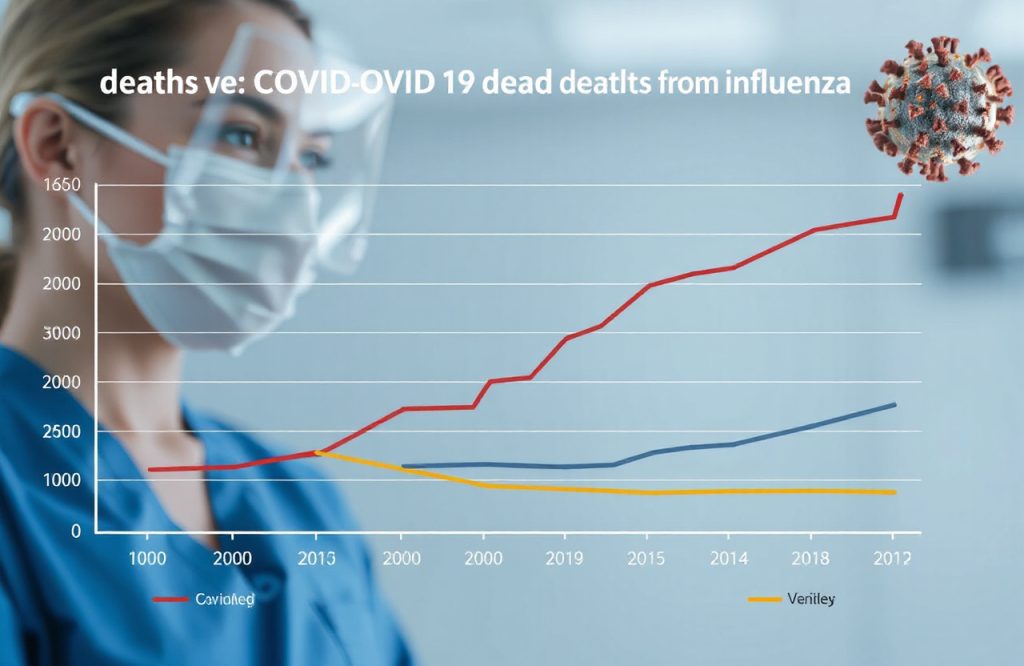
Over the past seven years, the average weekly flu death count during the peak of flu season was approximately 752.4 deaths. In stark contrast, for the week ending April 21, 2020, COVID-19 reported 15,455 deaths, a figure twenty times greater than the average weekly influenza death rate.
Limitations in Reporting COVID-19 Deaths
The analysis of mortality data reveals certain limitations in COVID-19 death reporting. These include potential undercounting due to insufficient testing supplies, false negatives, testing conducted in the later stages of illness, and variations in data reporting.
The physicians’ evaluation indicates that when comparing COVID-19 and influenza deaths without standardized calculation methods, the true public health risk posed by COVID-19 may not be accurately represented.
Conclusion
The assessment conducted by the medical professionals emphasizes the need for consistent methodologies in reporting death statistics to ensure a fair comparison between COVID-19 and influenza.
References
1. Faust J, del Rio C. Assessment of Deaths From COVID-19 and From Seasonal Influenza. JAMA Intern Med. 2020;180(8):1045. doi:10.1001/jamainternmed.2020.2306
2. Preliminary In-Season 2019-2020 Flu Burden Estimates. Centers for Disease Control and Prevention. https://www.cdc.gov/flu/about/burden/preliminary-in-season-estimates.htm. Published 2020. Accessed August 5, 2020.
3. Why CDC Estimates the Burden of Seasonal Influenza in the U.S. | CDC. Cdc.gov. https://www.cdc.gov/flu/about/burden/why-cdc-estimates.htm. Published 2020. Accessed August 5, 2020.