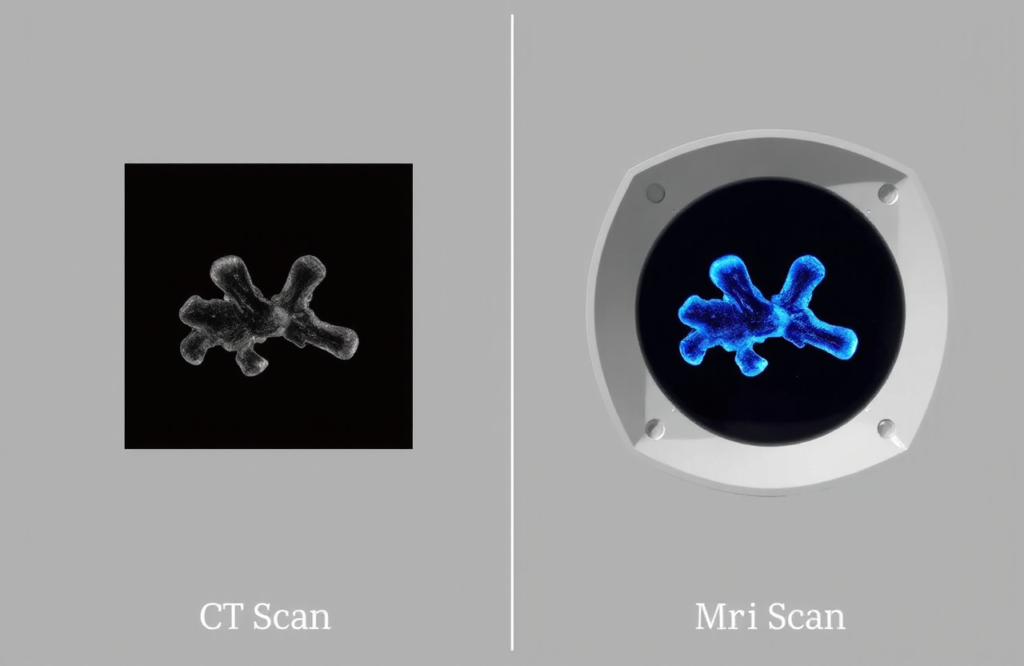
Importance of CT and MRI in Medical Imaging
CT and MRI are vital imaging techniques that provide detailed insights into the human body. These scans play a crucial role in diagnosing various medical conditions by offering comprehensive reports that illustrate the internal structures of patients.
Understanding MRI
MRI, or Magnetic Resonance Imaging, utilizes a magnetic field and radio waves to produce images of internal body structures. The technique works by sending radio waves through the body, which penetrate tissues and reflect back depending on their density. This reflection helps create detailed images of organs.
The MRI process involves a large machine with a tunnel-like design, where the patient lies on a sliding bed that moves into the structure. The device generates loud noises as magnets rotate to create the necessary magnetic waves. During the scan, patients are typically required to remain still for several minutes to ensure clear imaging.
Applications of MRI
MRI is particularly effective for visualizing:
- Organs
- Blood vessels
- Ligaments
- Joints
- Muscles
It is especially adept at providing high-definition images of soft tissues, aiding in the diagnosis, treatment planning, and management of various medical conditions.
Understanding CT Scans
CT, or Computed Tomography, also known as CAT scans, employs x-rays to generate cross-sectional images of the body and its organs. This technique is primarily used for diagnosing:
- Tumors
- Interstitial lung disease
- Internal bleeding
- Bone fractures
During a CT scan, patients lie on a table that moves through the CT machine to capture the necessary images.
CT Scan vs. MRI Scan
CT scans are generally more common and cost-effective compared to MRIs. However, MRIs are preferred when detailed images of specific lesions are required. Each method has its own set of disadvantages:
- CT Scan Disadvantages:
- Potential teratogenic effects on a fetus, making it unsuitable for pregnant women.
- Repeated scans may lead to increased radiation exposure over time.
- Possible adverse reactions to contrast materials used in some CT scans.
- MRI Disadvantages:
- Loud noises from the machine can result in temporary hearing issues.
- Claustrophobia may be triggered by the enclosed space of the machine.
- Extended MRIs can lead to increased body temperature.
- The powerful magnets in MRI machines can interfere with metal implants and electronic devices.
Despite these drawbacks, both imaging techniques are highly effective, providing essential information about various body parts and organs.
Choosing Between MRI and CT Scan
CT scans are often preferred due to their speed, affordability, and availability. However, MRIs excel in visualizing soft tissues. Specific conditions, such as brain strokes and soft tissue injuries, may be better evaluated using either CT or MRI. Ultimately, the decision regarding which scan to perform is made by the doctor, who considers all relevant factors for the patient’s needs.