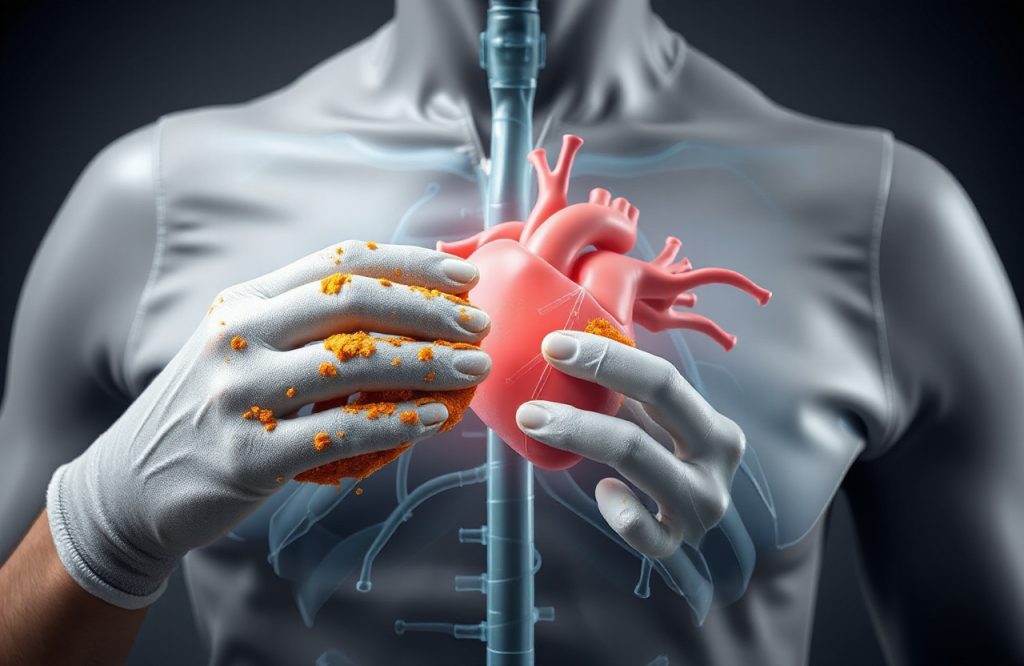
Investigating a Signaling Pathway in Chronic Heart Failure and Exercise Intolerance
Understanding Chronic Heart Failure
Chronic heart failure (CHF) occurs when a weakened or damaged heart struggles to pump blood efficiently throughout the body. Myocardial infarction, commonly known as a heart attack, is the primary cause of CHF, resulting from blockages in the coronary arteries that supply blood and oxygen to heart tissue. This condition is frequently linked to exercise intolerance, which can significantly diminish a patient’s quality of life and worsen health outcomes.
Shifting Perspectives on Exercise Capacity
Traditionally, it was believed that reduced exercise capacity in CHF patients stemmed from decreased blood flow to skeletal muscles. However, recent research indicates that improvements in heart function and blood flow do not always lead to better exercise performance. New findings suggest that muscle atrophy—the loss of muscle mass—and heightened oxidative stress may play crucial roles in diminished exercise capacity among heart failure patients.
Study Hypothesis and Methodology
A recent study published in the Journal of Applied Physiology by Wafi and colleagues explored a specific protein that could be involved in skeletal muscle impairment in the context of chronic heart failure. This protein, known as nuclear factor E2-related factor (Nrf2), is implicated in the production of antioxidant enzymes. The researchers hypothesized that curcumin, a compound that activates Nrf2 and is commonly found in curry spices, could enhance exercise performance.
To investigate these hypotheses, the researchers induced chronic heart failure in mice by surgically tying off a major coronary artery to simulate a heart attack. A control group of mice underwent surgery without artery ligation to account for any surgical effects, referred to as the sham group. Each group was further divided into two subgroups, with one receiving curcumin and the other receiving a vehicle control. Thus, there were four distinct groups of mice:
1. CHF-vehicle treated
2. CHF-curcumin treated
3. Sham-vehicle treated
4. Sham-curcumin treated
Findings of the Study
The study revealed that CHF mice exhibited lower maximal treadmill speeds, faster exhaustion, and reduced limb grip strength compared to the sham controls. Notably, the curcumin-treated CHF mice demonstrated improved performance relative to those receiving the vehicle control. CHF mice also showed decreased force and rapid fatigue in the soleus and extensor digitorum longus muscles. Curcumin treatment restored muscle force and delayed fatigue onset.
Importantly, the positive effects of curcumin on the CHF mice were linked to enhanced Nrf2 signaling rather than improved cardiac function.
Conclusion and Implications
The results of this study support the hypothesis that impaired Nrf2 signaling in the skeletal muscles of CHF mice contributes to exercise intolerance. Specifically, diminished Nrf2 signaling hampers the muscle’s ability to combat oxidative stress associated with CHF, negatively impacting skeletal muscle performance and exercise capacity.
Furthermore, the study highlighted that curcumin, a promoter of Nrf2 signaling, could enhance exercise capacity in chronic heart failure mice without significantly improving heart function or blood flow. These findings suggest that targeting the Nrf2 signaling pathway may offer a valuable approach to improving exercise capacity and overall quality of life for patients with chronic heart failure.
Written by Haisam Shah, BSc
Reference: Wafi, A. M., Hong, J., Rudebush, T. L., Yu, L., Hackfort, B. T., Wang, H. J., … & Gao, L. (2018). Curcumin Improves Exercise Performance of Mice with Coronary Artery Ligation Induced HFrEF: Nrf2 and Antioxidant Mechanisms in Skeletal Muscle. Journal of Applied Physiology.