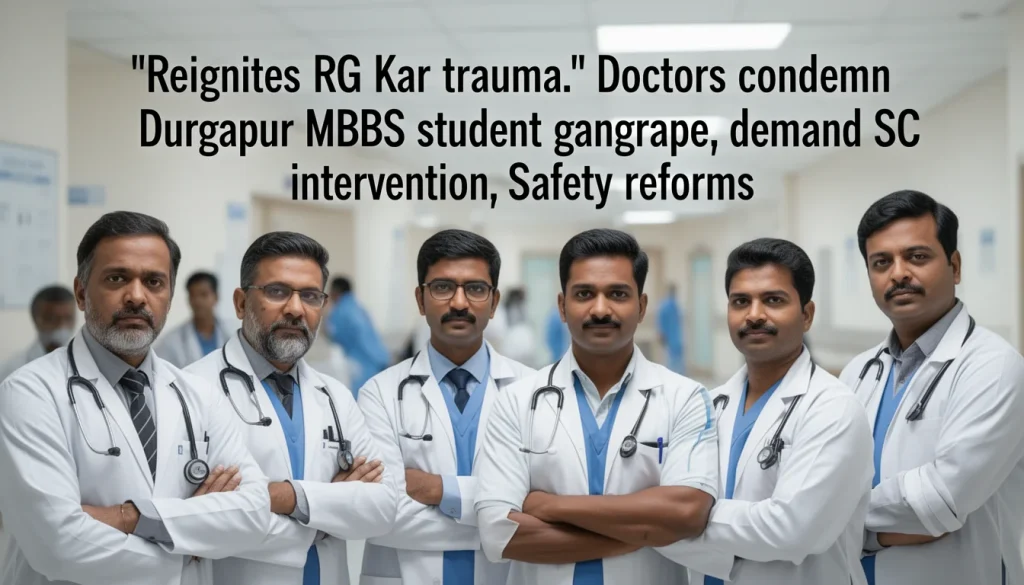
Medical community nationwide condemns alleged gangrape near IQ City Medical College, Durgapur
The reported gangrape of a second-year MBBS student near IQ City Medical College, Durgapur on October 10 has prompted strong condemnation from multiple doctors’ associations across India. The incident has reopened wounds from the R.G. Kar Medical College tragedy last year and intensified long-running concerns about the safety of female medical students and doctors in West Bengal.
Incident summary and initial accounts
What the survivor reported
According to the survivor’s brief written statement to college authorities, she and a male friend had gone outside the campus for dinner on the night of October 10. The student, who hails from Jaleswar in Odisha’s Balasore district, said the pair were walking outside the campus when they were suddenly surrounded by a group of men who assaulted her. The college forwarded the concise statement — described as three to four lines — to the police, who then registered an FIR and initiated an investigation.
Police timeline and alleged sequence of events
Police sources indicated the incident occurred between roughly 8:00 p.m. and 8:45 p.m. on that Friday. Investigators described an initial group of three men who surrounded the student and snatched her phone when she tried to call friends for help. Two more people later joined, bringing the total alleged number of assailants to five. The accused allegedly offered the survivor Rs 5,000 to leave quietly. The male friend accompanying the student is currently under police detention for questioning; investigators say his movements and conduct that night raised suspicions. Separately, the survivor’s father has filed a complaint alleging the friend fled the scene when the group surrounded her.
Arrests and investigative status
medichelpline had reported that five accused have been arrested and are in police custody. However, doctors’ associations and other statements indicate that several accused remain at large, and they have criticised delays and gaps in the investigative response that have contributed to fear among students.
Responses from medical associations and collective outrage
FAIMA’s letter to the West Bengal chief minister
The Federation of All India Medical Association (FAIMA) addressed a firm letter to West Bengal Chief Minister Mamata Banerjee, stating that the “brutal incident has shaken the conscience of the entire medical community” and has “reignited the collective trauma still fresh from the R.G. Kar Medical College tragedy just a year ago.” FAIMA demanded a swift and strict investigation and trial, psychological support and protection for the survivor and her family, mandatory safety audits, secure hostels and campuses across medical and educational institutions in West Bengal, and the creation of a dedicated grievance and protection cell for women medical students.
FAIMA’s letter also emphasised the vulnerability of medical students: “Medical students dedicate their youth and energy to serve humanity, often working under immense stress and unsafe conditions. It is therefore heartbreaking that even within the sanctuaries of learning and healing, they are not protected from such heinous acts of violence. The repeated occurrence of such crimes within the medical community reflects not only a grave lapse in law and order but also a crisis of trust and safety for every young woman pursuing education in the state.”
State and specialty associations: unified demands
Several other doctor bodies joined the chorus of condemnation. The West Bengal Doctors Forum (WBDF) and the Andhra Pradesh Junior Doctors Association (APJUDA) requested Supreme Court Chief Justice B. R. Gavai’s intervention to enforce the apex court-mandated direction for creating a National Task Force to ensure security in medical colleges. The Central Maharashtra Association of Resident Doctors (Central MARD) labelled the incident “heartbreaking” and urged urgent measures to ensure safety and dignity for women in educational institutions, workplaces and public spaces.
NAFORD’s call for Supreme Court suo motu action
The National Federation of Resident Doctors of AIIMS & INIs (NAFORD) demanded immediate suo motu cognisance by the Supreme Court to oversee a fast-tracked investigation and trial. NAFORD described the attack as “a chilling indictment of the failed safety environment for our nation’s medical students” and stated that the incident indicates that earlier Supreme Court directives and the National Task Force’s guidelines have not been implemented effectively. Their stated demands include a judicial inquiry into negligence by state and college authorities, mandatory nationwide enforcement of safety protocols in all medical colleges, and exemplary legal punishment for the perpetrators.
Regional bodies and resident doctors’ associations
The JIPMER Resident Doctors’ Association (JRDA) expressed solidarity with the survivor and urged swift and strict action against all those involved, while emphasising the need for stronger safety measures for women in public places, medical colleges and hospitals. Central MARD’s press release reiterated that despite nationwide protests and assurances following earlier incidents, a lack of preventive systems and accountability has left students vulnerable. The associations repeatedly called for transparent investigations, institutional accountability, and institutional safeguards.
Public and political aftermath
Student protests and trust deficit
Medical students from multiple institutions have taken to the streets demanding justice, accountability and systemic reforms. Associations warned that ongoing demonstrations highlight a collapse of trust in college administrations and state authorities when perceived reforms remain on paper without effective implementation.
Political reactions
The incident also triggered political uproar following comments attributed to the West Bengal chief minister suggesting women should not go out at night; such remarks further fuelled debate and public anger about responsibility for ensuring women’s safety versus calls for behavioural restrictions.
Core demands and next steps advocated by medical bodies
Across the statements and press releases, medical associations have converged on several concrete demands:
– A swift, transparent and strict criminal investigation with fast-tracked trials for the accused.
– Psychological support, protection and security for the survivor and her family.
– Independent judicial inquiries into any negligence by college and state authorities.
– Mandatory, nationwide enforcement of safety protocols in medical colleges and campuses, including secure campus access, functioning CCTV, gender-sensitisation programs, and effective Internal Complaints Committees.
– Creation of dedicated grievance and protection cells for women medical students and institutional accountability with penalties for non-compliance.
– Exemplary legal punishment for perpetrators to serve as a deterrent.
Conclusion: urgent call for accountability and effective safety measures
The Durgapur incident has reignited unresolved concerns about the protection of women in medical education. Medical associations are urging not only criminal accountability for those accused but structural reforms to prevent recurrence. With arrests reported and investigations ongoing, the immediate priorities advocated by the medical community are protection and support for the survivor, a transparent and expedited judicial process, and swift implementation of enforceable safety mechanisms across medical institutions. The collective stance from doctors’ bodies underscores that assurances alone are insufficient without enforceable action and institutional responsibility.