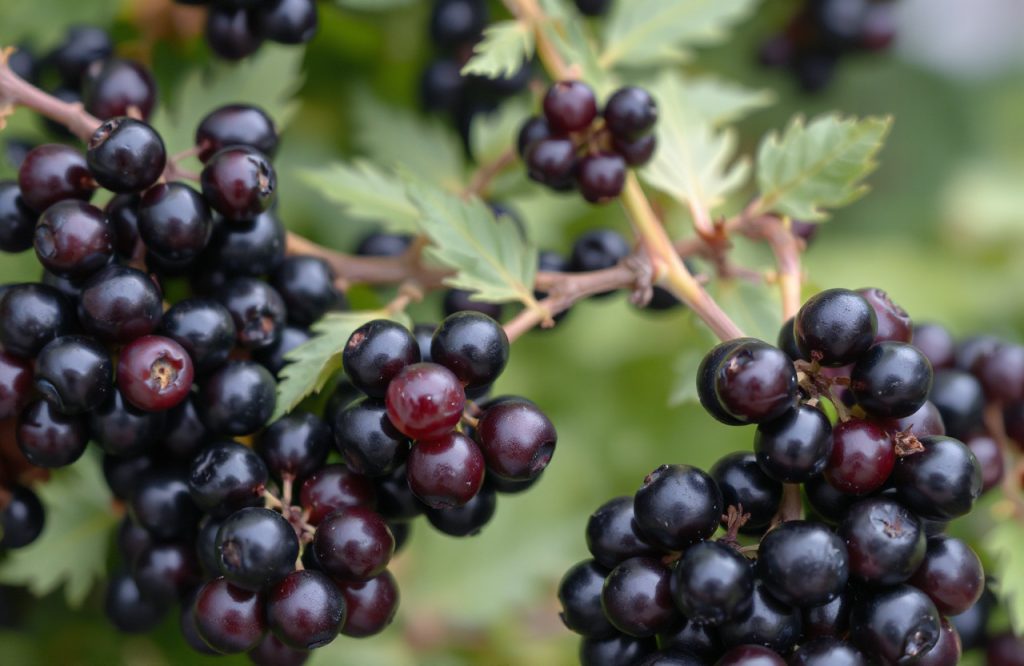
Research Explores the Health Benefits of Blackcurrant in Blood Sugar Regulation
The Nutritional Value of Fruit
Fruits are packed with a range of vitamins, antioxidants, and minerals, such as vitamin C, folate, and potassium, which contribute to overall health. These nutrients aid in injury repair, support the efficient function of blood and organ systems, and provide energy. Additionally, a diet abundant in fruits and vegetables can assist in maintaining a healthy body weight, as most fruits are high in fiber that promotes satiety while being low in calories and dietary fats.
Focus on Berries and Their Health Benefits
Recent studies have shifted attention towards the health benefits of berries. Not only are these fruits delicious, but darker varieties, in particular, contain several lesser-known compounds that may enhance various bodily functions. One noteworthy group of these compounds is anthocyanins, a type of flavonoid found in tea, fruits, vegetables, nuts, and red wine. Research indicates that anthocyanins may offer protection against multiple diseases.
Anthocyanins and Blood Sugar Management
High or unstable blood sugar levels are a known risk factor for various diseases, including diabetes. A study conducted by the University of Eastern Finland and the Savonia University of Applied Sciences aimed to investigate the relationship between anthocyanins extracted from blackcurrants and blood glucose levels. The findings were published in the British Journal of Nutrition.
Study Design and Findings
The study involved 26 healthy adults, comprised of 22 women and 4 men. Participants consumed three different solutions at separate times: one with sugar, one with sugar and blackcurrant puree, and one with sugar, blackcurrant puree, and fermented quinoa. Each solution contained 31 grams of sugar. Blood samples were collected before consumption, after fasting, and at 15-minute intervals for three hours post-consumption.
The results indicated that both blackcurrant solutions led to a lower spike in blood sugar compared to the solution containing only sugar. Additionally, the blackcurrant products were linked to reduced levels of free fatty acids in the blood. These findings suggest that consuming blackcurrant with a sugar-rich meal may help mitigate the resulting increase in blood sugar levels.
Need for Further Research
While these results are promising, additional research is necessary to further explore the significance of this relationship and to determine whether the observed decrease in blood sugar levels could potentially lower the risk of developing type 2 diabetes.
References
EurekAlert! (2020 December 3). American Association for the Advancement of Science. Retrieved 2020 December 9, from https://www.eurekalert.org/pub_releases/2020-12/uoef-baf120320.php
Lappi, J., Raninen, K., Vakevainen, K., et al (2020). Blackcurrant (Ribes nigrum) lowers sugar-induced postprandial glycaemia independently and in a product with fermented quinoa: a randomized crossover trial. British Journal of Nutrition, 1(28). Doi:10.1017/S0007114520004468
Lila, M. (2004). Anthocyanins and Human Health: An In Vitro Investigative Approach. Journal of Biomedicine and Biotechnology 2004(5): 306-313. Doi: 10.1155/S111072430440401X
USDA ChooseMyPlate. (n.d.). The United States Department of Agriculture. Retrieved 2020 December 9, from https://www.choosemyplate.gov/eathealthy/fruits/fruits-nutrients-health