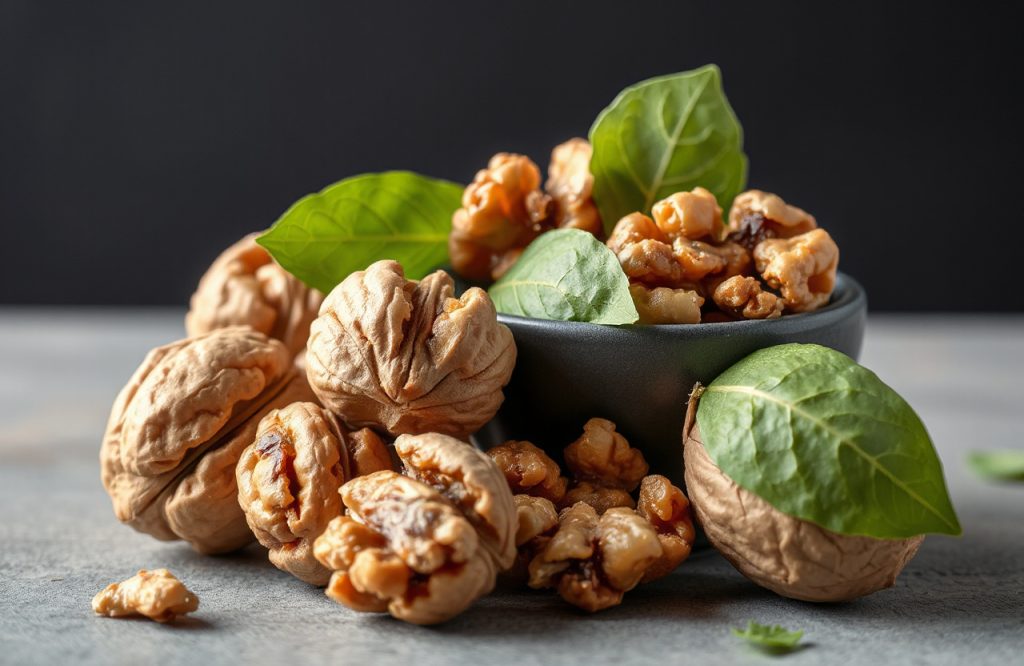
Health Benefits of Walnuts: A Study on Gut Microbiota and Health Markers
Introduction to Gut Microbiota and Diet
Researchers have explored the health benefits of walnuts, focusing on their impact on gut microbiota, bile acids derived from microbes, and various health markers. The human gastrointestinal tract is home to a diverse array of microbes that can exert both positive and negative effects on health. Current evidence indicates that diets high in saturated fats and simple sugars, coupled with insufficient dietary fiber, correlate with an increased risk of cardiovascular diseases, obesity, and certain cancers. Conversely, diets abundant in nuts, which provide unsaturated fats and dietary fiber, are linked to improved health outcomes, including lower mortality rates from cancer and heart disease.
Research Study Overview
Walnuts, in particular, have demonstrated positive effects on gut and metabolic health, although research in humans remains limited. To investigate these potential health benefits, researchers in the United States conducted a trial published in The Journal of Nutrition. This randomized study involved a controlled feeding intervention with two phases, each lasting three weeks.
Participants received a uniform base diet tailored to their individual energy requirements. The treatment group included a daily supplement of 42 grams of walnuts, while the control group did not receive any walnut supplementation. Blood samples, serum samples for cholesterol and glucose assessment, and fecal samples were collected at the beginning and conclusion of the intervention for analysis. Changes from baseline scores were calculated for the walnut treatment group to evaluate shifts in microbial populations and cholesterol levels.
Study Findings
The study comprised 18 participants, and results indicated that daily walnut consumption significantly increased levels of Firmicutes bacteria, such as Faecalibacterium, Roseburia, and Clostridium. This finding aligns with prior preclinical studies. Notably, walnut consumption led to a significant reduction in toxic secondary bile acids and cholesterol.
Two secondary bile acids produced by intestinal bacteria are regarded as toxic and linked to gastrointestinal diseases and cancer. Diets low in fiber and high in saturated fats typically result in elevated levels of these bile acids. However, this study found that incorporating walnuts into the diet markedly decreased these secondary bile acids. This reduction, along with the increased presence of Faecalibacterium, is associated with a decrease in gut inflammation.
Cholesterol and Ellagic Acid Benefits
The study also revealed lower cholesterol levels in the walnut treatment group, although this reduction was found to be unrelated to changes in gut microbiota. Additionally, walnuts are rich in ellagic acid, which can be metabolized by gut bacteria and is known for its anti-inflammatory and beneficial vascular properties.
Limitations and Future Research
The study’s design as a randomized, controlled, crossover trial, which included a washout period between treatments, bolsters the findings. However, limitations exist, including the inability to assess the functional capacity of the microbes involved. Moreover, over 70% of participants were over fifty, which may limit the generalizability of the findings across different age groups, as gut microbiota composition can vary with age. Further research is needed to explore the effects of walnut consumption on age-related differences in gut microbiota.
Conclusion
In summary, the study suggests potential health benefits of walnuts, particularly in their capacity to modify gut microbiota, reduce secondary bile acids, and lower cholesterol levels in healthy adults.
Written by Maggie Leung, PharmD
Reference: Holscher, H. D., Guetterman, H. M., Swanson, K. S., An, R., Matthan, N. R., Lichtenstein, A. H., . . . Baer, D. J. (2018). Walnut Consumption Alters the Gastrointestinal Microbiota, Microbially Derived Secondary Bile Acids, and Health Markers in Healthy Adults: A Randomized Controlled Trial. The Journal of Nutrition. doi:10.1093/jn/nxy004