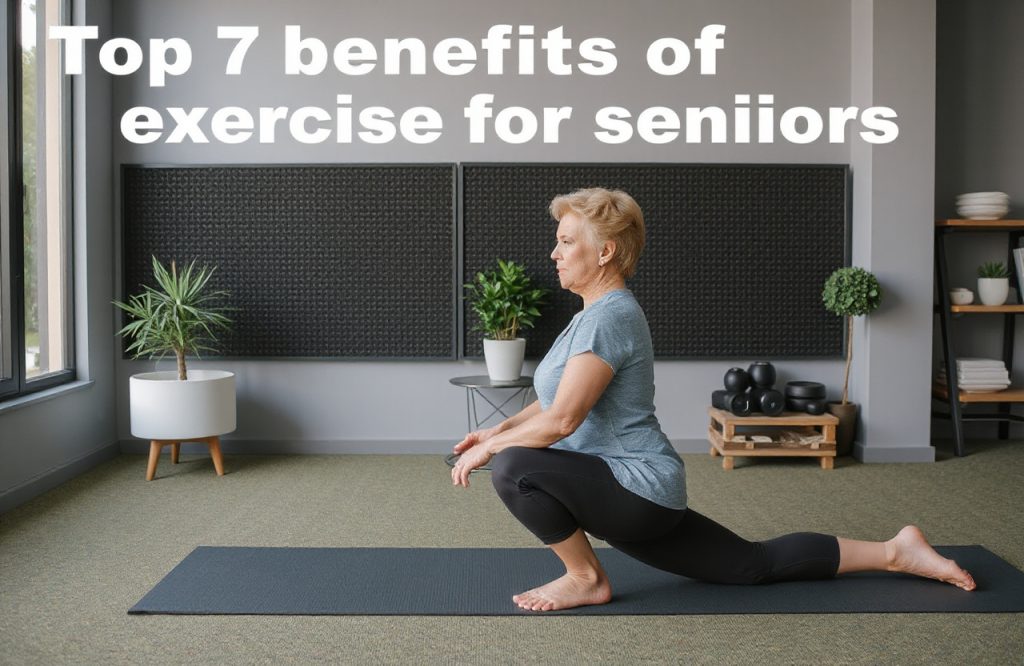
The Importance of Exercise for Seniors
Global Aging Trends
In 2018, the World Population Data indicated that 9% of the global population is comprised of individuals aged 65 years or older, a demographic commonly referred to as older adults or seniors. As people age, the human body naturally experiences a decline, primarily due to cells losing their ability to divide and multiply efficiently. This deterioration affects cellular function and membrane integrity, making it increasingly difficult for cells to absorb oxygen and nutrients while expelling carbon dioxide and waste.
Benefits of Exercise for Seniors
Recent research highlights the significant benefits of maintaining an exercise regimen for seniors, suggesting it may even slow the aging process. Below are the top seven benefits supported by current studies.
1. Improved Mental and Physical Health
A study conducted in Australia explored how retirees utilized their spare time and its impact on mental health. Findings published in PLOS ONE revealed that many retirees reported increased happiness, with 40% of their former work time replaced by household chores and 20% by screen time. The researchers classified household chores as a form of physical activity, linking this exercise to enhanced mental well-being across genders. Further research from The Cooper Institute in Dallas found that seniors with higher fitness levels in midlife had a reduced risk of depression and cardiovascular disease after age 65, as published in JAMA Psychiatry.
2. Decreased Cardiovascular Disease Mortality
A study featured in the Journal of the American Geriatric Society assessed the frailty of adults aged 60 and older in Spain from 2000 to 2001. Using the standardized “FRAIL questionnaire,” researchers categorized participants based on various frailty factors. The study revealed that robust individuals had a lower risk of heart disease-related mortality compared to pre-frail or frail individuals. Additionally, physically active seniors had a significantly lower mortality risk than their inactive counterparts.
3. Enhanced Brain Health and Cognitive Function
With nearly 1,000 clinical trials supporting the health advantages of exercise for seniors, researchers sought to understand its effects on cognitive function. A study published in the journal of the American Academy of Neurology discovered that the total time spent exercising, rather than the frequency or intensity of sessions, correlated with improved cognitive health. Seniors averaging 52 hours of exercise reported better cognitive function compared to those averaging only 34 hours. Furthermore, a study from Hong Kong published in BMC Geriatrics indicated that practicing tai chi could also enhance cognitive abilities in older adults.
4. Reduction of Chronic Pain
Chronic pain in the musculoskeletal system often increases with age. Research published in Aging Clinical and Experimental Research introduced a 12-week tai chi program, with participants attending two sessions per week. Many participants reported a decrease in chronic pain and a reduced fear of falling after completing the program.
5. Lowered Risk of Disability
A clinical study involving 1,003 older Japanese women investigated the connection between daily exercise routines and the risk of disabilities in daily activities. After an eight-year follow-up with 130 participants, researchers found that dancing was most effective in reducing the risk of incident disability and maintaining brain structure and balance. However, the study acknowledged limitations, noting that individuals with poorer health engaged less in dancing.
6. Fall Prevention
Tai chi, a traditional Chinese martial art, emphasizes body and mind integration through controlled movements and breathing. As noted in the Journal of the American Geriatric Society, seniors practicing tai chi for one hour, up to three times a week, experienced fewer falls and balance issues. This is particularly significant given the substantial healthcare costs associated with fall-related injuries in the older population.
7. Management of Fibromyalgia Symptoms
A study published in The British Journal of Medicine examined the effects of tai chi on fibromyalgia, a chronic condition characterized by widespread pain, fatigue, and cognitive disturbances. The research indicated that tai chi served as a suitable alternative to high-intensity aerobic exercises, with participants in the tai chi group reporting greater improvements in symptoms. This success may be attributed to tai chi’s focus on mindfulness and physical activity, aligning well with the needs of fibromyalgia patients.
Conclusion
As the population of older adults continues to grow, it is essential to promote healthy aging. Research has shown that aging does not necessarily equate to frailty and decline. Regular exercise can play a crucial role in mitigating the effects of aging and maintaining cognitive health among seniors.
Written by Stephanie C. Tsang
References
Ahuja, S. (2018, September 4). 5 ways tai chi benefits seniors. Retrieved from https://www.medicalnewsbulletin.com/5-ways-tai-chi-benefits-seniors/
Aging changes in organs, tissues, and cells: MedlinePlus Medical Encyclopedia. (2019, January 7). Retrieved from https://medlineplus.gov/ency/article/004012.htm
Brown, N. (2019, January 10). What are the benefits of dancing for older women? Retrieved from https://www.medicalnewsbulletin.com/benefits-of-dancing-older-women/
Definition of Neuroplasticity. (2017, January 24). Retrieved from https://www.medicinenet.com/script/main/art.asp?articlekey=40362
Fernandez, S. (2018, September 16). More physical activity in retirement could improve mental health of seniors. Retrieved from https://www.medicalnewsbulletin.com/physical-activity-retirement-mental-health/
Hughes, B. (2018, September 10). How much exercise do you need to improve your brain health? Retrieved from https://www.medicalnewsbulletin.com/exercise-improve-brain-health/
Mcshane, J. (2018, November 25). What’s the relationship between exercise and heart disease deaths? Retrieved from https://www.medicalnewsbulletin.com/exercise-heart-disease-deaths/
Powers, C. (2018, September 20). Could a healthier heart keep depression in seniors at bay? Retrieved from https://www.medicalnewsbulletin.com/healthier-heart-depression-seniors/
What is Tai Chi? (2018). Retrieved from https://taichiforhealthinstitute.org/what-is-tai-chi/
2018 World Population Data. (n.d.). Retrieved from http://www.worldpopdata.org/