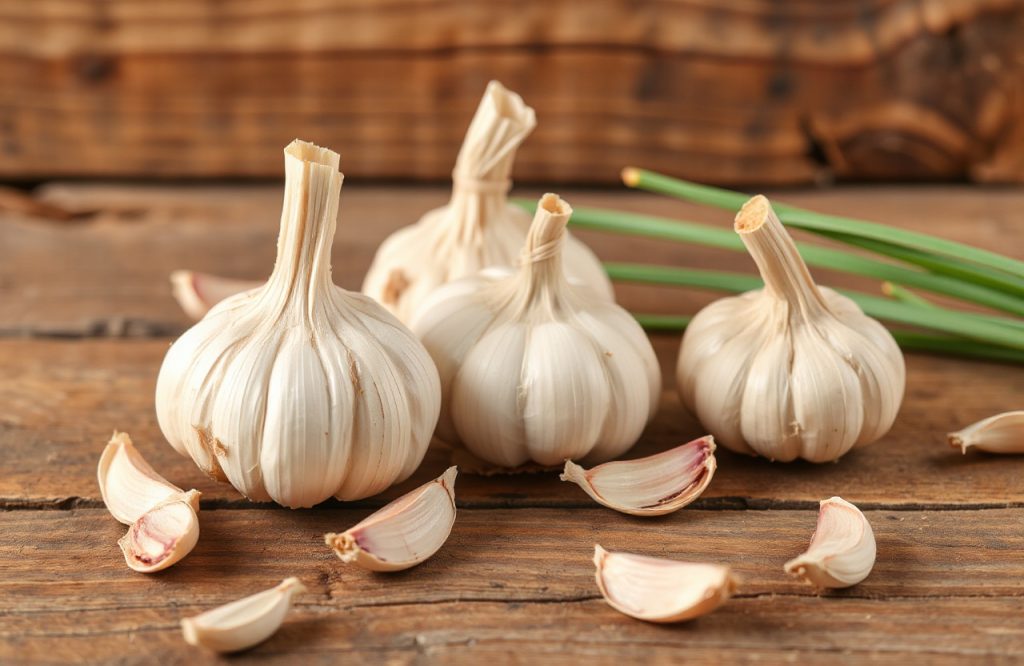
Introduction to Garlic
Garlic, scientifically known as Allium sativum, belongs to the onion genus and shares close ties with shallots, chives, and leeks. Initially native to Central Asia, garlic is now cultivated globally. For centuries, it has been valued not only as a culinary flavoring agent but also for its medicinal properties in treating various illnesses and diseases.
Historical Significance of Garlic
Ancient Uses
The earliest recorded use of garlic dates back to ancient Egypt, where it was a dietary staple. For the Egyptians, garlic symbolized strength and vitality. It also found extensive use in ancient Greek and Roman societies for its health benefits. The medicinal applications of garlic can be traced back to ancient Asia and the Middle East, where it was commonly consumed and utilized for food preservation.
Garlic in Medicine
Hippocrates, known as the “father of Western medicine,” frequently recommended garlic for various ailments, including respiratory issues, digestive problems, and mood disorders. In approximately 1500 B.C., before the advent of antibiotics, garlic served as a primary treatment for epidemics such as cholera, influenza, typhus, and dysentery.
Health Benefits of Garlic
Disease Prevention
Garlic offers numerous health benefits that can aid in disease prevention.
Heart Health
Heart disease remains a leading cause of mortality worldwide, with risk factors such as high blood pressure, high cholesterol, diabetes, and obesity contributing significantly. The nutrients and compounds in garlic can help mitigate these risks, potentially preventing strokes and heart attacks.
Reduces Blood Pressure
In Western populations, around 30% of adults suffer from uncontrolled high blood pressure (hypertension). Research has indicated that garlic possesses antihypertensive properties, aiding in the reduction of blood pressure through sulfur-containing compounds that relax blood vessels.
Lowers Cholesterol
Studies suggest that garlic supplements may effectively lower cholesterol levels. While cholesterol is essential for the body, excessive amounts can lead to health complications. A review of clinical trials involving over 2,300 participants found that various doses of garlic could help regulate cholesterol levels, with few reported side effects.
Lowers Blood Sugar
Clinical studies exploring garlic’s impact on blood sugar levels indicate its potential in managing conditions like obesity and diabetes. In one study, garlic supplements were shown to reduce blood sugar and cholesterol in diabetic and obese individuals, suggesting its utility in treating and preventing related health complications.
Anti-Cancer Properties
Long-term studies have demonstrated that garlic may offer significant protection against cancer. Health organizations, including the World Health Organization and the National Cancer Institute, recommend incorporating garlic into the diet to lower cancer risk, particularly colon cancer. Garlic’s allium compounds are known for their immune-boosting and cancer-fighting properties. Laboratory research has shown that garlic’s phytochemicals can kill cancer cells and enhance the efficacy of healthy cells in combating cancer.
Aged Garlic Extracts
Aged garlic extracts (AGEs) have been found to be more potent than fresh garlic. This extract is produced by soaking sliced garlic in vinegar or oil for an extended period, which enhances its beneficial properties while reducing harsh odors.
Immune System Support
Garlic has been traditionally recognized for its immune-boosting capabilities. Research indicates it can effectively combat various infection-causing agents, exhibiting antiviral, antibacterial, antifungal, and antiparasitic properties.
Anti-Inflammatory Effects
Inflammation is linked to numerous illnesses, from mild to severe. Garlic’s anti-inflammatory properties can help reduce inflammation in the body, potentially improving overall health.
Antioxidant Benefits
Free radicals, which can arise from natural processes or external factors, contribute to chronic diseases. Garlic is rich in antioxidants, including vitamin C, vitamin E, selenium, and manganese, which help combat the damaging effects of free radicals.
Conclusion
While the diverse benefits of garlic are well-supported by research and anecdotal evidence, further studies with larger participant groups are necessary for a comprehensive understanding of its medicinal properties. It is essential to consume garlic in moderation, following recommended dietary guidelines, and consult a healthcare professional before starting any supplements.
References
- Abdullah T, Kirkpatrick D, Carter J. Enhancement of natural killer cell activity in AIDS patients. DZ Onkologie 1989; 21:52–3.
- American Institute for Cancer Research. (2020, December 4). Garlic: Lab Studies Find Potential Cancer-Preventive Compounds. https://www.aicr.org/cancer-prevention/food-facts/garlic/
- Ansary, J., et al. (2020). Potential Health Benefit of Garlic Based on Human Intervention Studies: A Brief Overview. Antioxidants (Basel, Switzerland), 9(7), 619. https://doi.org/10.3390/antiox9070619
- Josling P. Preventing the common cold with a garlic supplement: a double-blind, placebo controlled survey. Adv Ther 2001; 18:189–93.
- Karin Ried, Garlic Lowers Blood Pressure in Hypertensive Individuals, Regulates Serum Cholesterol, and Stimulates Immunity: An Updated Meta-analysis and Review, The Journal of Nutrition, Volume 146, Issue 2, February 2016, Pages 389S–396S, https://doi.org/10.3945/jn.114.202192
- Kumar, R., et al. (2013). Antihyperglycemic, antihyperlipidemic, anti-inflammatory and adenosine deaminase-lowering effects of garlic in patients with type 2 diabetes mellitus with obesity. Diabetes, metabolic syndrome and obesity: targets and therapy, 6, 49–56. https://doi.org/10.2147/DMSO.S38888
- Richard S. Rivlin, Historical Perspective on the Use of Garlic, The Journal of Nutrition, Volume 131, Issue 3, March 2001, Pages 951S–954S, https://doi.org/10.1093/jn/131.3.951
- SYan Zhang, et al. Phytochemicals of garlic: Promising candidates for cancer therapy, Biomedicine & Pharmacotherapy, Volume 123, 2020, 109730, https://doi.org/10.1016/j.biopha.2019.109730
- Zhang, Y., et al. Phytochemicals of garlic: Promising candidates for cancer therapy. Biomedicine & pharmacotherapy, 123, 109730. https://doi.org/10.1016/j.biopha.2019.109730