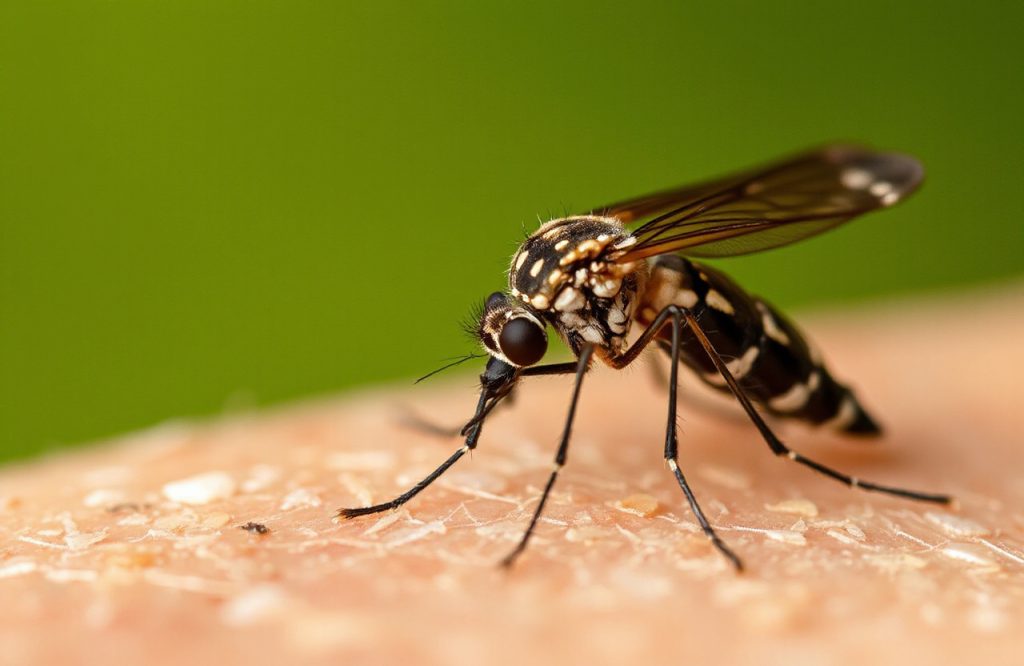
Study Explores Mosquitoes as Potential Vectors for Coronavirus
Research Focus on SARS-CoV-2 Transmission
The ongoing quest to understand the SARS-CoV-2 virus encompasses various research dimensions. While some teams concentrate on developing treatments and vaccines, others investigate the virus’s effects on the human body. A critical area of study is the transmission routes of the virus, determining which methods are plausible and which are not.
Examining Mosquitoes as Vectors
One of the pertinent questions in this field is whether mosquitoes can carry the coronavirus. The focus on COVID-19 transmission has also led to a broader examination of how other diseases are disseminated. For instance, malaria, which claims approximately 400,000 lives annually, is transmitted by mosquitoes and has historically caused immense mortality.
Amid concerns about SARS-CoV-2’s transmission, the potential role of insects such as mosquitoes has been debated. A recent study published in Nature aims to clarify these concerns.
WHO’s Position on Insect Transmission
From the pandemic’s early days, the World Health Organization (WHO) has indicated that no evidence supports the idea of SARS-CoV-2 transmission through insects. However, the absence of evidence does not equate to definitive proof against the possibility. Consequently, a research team from Kansas State University sought to explore whether mosquitoes can carry the virus.
Methodology of the Study
The research team investigated the conditions required for mosquito-borne transmission of SARS-CoV-2. For viruses like Zika or malaria, mosquitoes must first ingest a sufficient quantity of the virus from an infected host. This virus must then replicate in the mosquito’s midgut and spread to other areas, particularly the salivary glands.
To test this, researchers inoculated mosquitoes with the virus and monitored them over various time intervals to check for the recovery of infectious virus. Immediately post-inoculation, infectious virus was detected. However, at the 24-hour mark, only one out of 48 mosquitoes produced infectious virus. Beyond this timeframe, none of the 277 mosquitoes tested showed any infectious virus.
Understanding the Findings
The research specifically sought infectious virus rather than the presence of viral RNA. While RNA might still be detectable, its presence does not imply that the virus remains infectious or has replicated. The lack of infectious virus beyond 24 hours indicates that SARS-CoV-2 cannot replicate within mosquitoes, thus preventing transmission.
Confirmation of Existing Assumptions
This study primarily serves to confirm the widely held belief that SARS-CoV-2 does not spread through mosquitoes. While the exact mechanisms of the virus’s transmission continue to be explored, for the time being, mosquitoes can be ruled out as a vector for COVID-19.
Written by Michael McCarthy
1. Huang Y-JS, Vanlandingham DL, Bilyeu AN, Sharp HM, Hettenbach SM, Higgs S. SARS-CoV-2 failure to infect or replicate in mosquitoes: an extreme challenge. Sci Rep. 2020;10(1):11915.
Image by Creative Solutionist from Pixabay