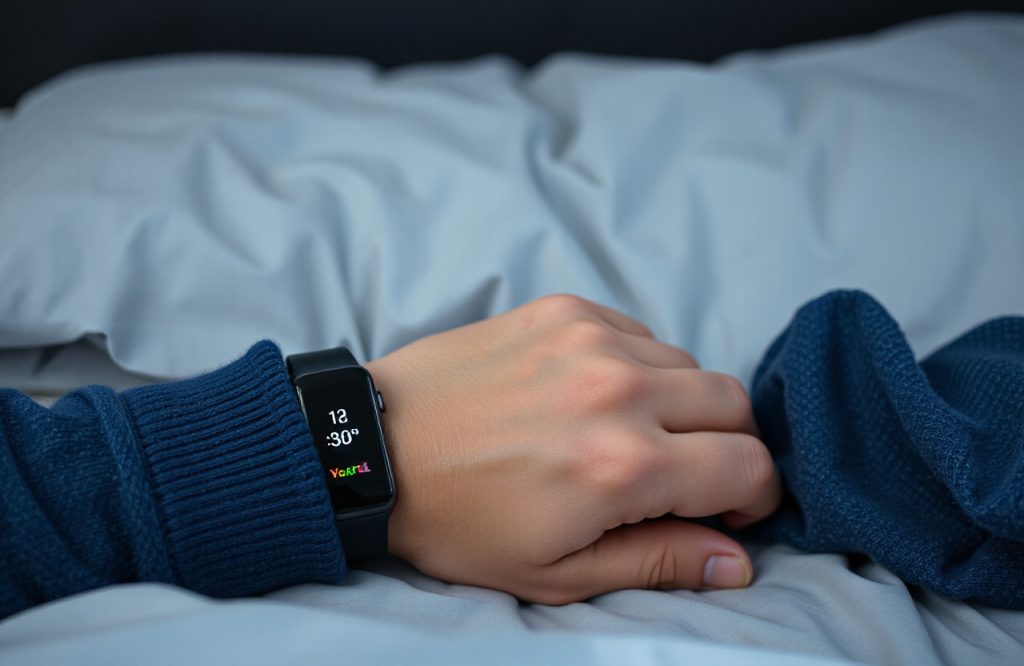
Understanding Fitbit’s Sleep Tracking Accuracy
Key Insights
Fitbit employs machine learning algorithms to provide personalized sleep insights. Recent models demonstrate enhanced accuracy in identifying sleep phases. However, there are limitations when compared to clinical sleep studies. Most research has focused on young and healthy individuals, which may not represent the broader population. Further studies are necessary to confirm these findings across diverse groups.
The Importance of Sleep Tracking
Sleep disorders affect millions of adults globally, contributing to conditions such as hypertension, depression, obesity, diabetes, and stroke. Wearable devices like Fitbit offer users insights into their sleep habits, promoting improved sleep quality. Originally designed as a fitness tracker, Fitbit has evolved to encompass various health metrics, including sleep data.
Evaluating Fitbit’s Sleep Tracking Performance
Fitbit is a wristband that continuously tracks heart rate and body movements. Some models utilize a “sleep-staging” algorithm that processes measurement data to generate detailed, personalized sleep reports. Its user-friendly design and affordability compared to traditional clinical sleep studies make it a popular choice among adults and researchers.
Recent Research Findings
A review conducted in 2024 by researchers at Soonchunhyang University College of Medicine in South Korea analyzed 24 peer-reviewed studies to evaluate the effectiveness of consumer wearable sleep monitors. Data was gathered from over 700 subjects using various devices, including Fitbit, Jawbone, and Apple Watch. The findings indicated that none of the sleep trackers produced results statistically comparable to standard sleep studies (polysomnography).
The study revealed that while Fitbit performed well in assessing the frequency of nighttime awakenings and the duration it takes to fall asleep, it generally did not provide results consistent with clinical assessments.
Research on Fitbit’s Accuracy
A study published in the Journal of Medical Internet Research aimed to assess the accuracy of Fitbit as a sleep tracker. The findings indicated that newer Fitbit models demonstrated improved sleep detection capabilities compared to older versions. These models also offered better estimates of overall sleep and wake times, as they do not rely solely on motion detection.
However, the accuracy of these devices was still less specific than that of standard sleep studies, leading to a higher rate of false positives. The researchers reviewed 22 studies that met their criteria, with ten focusing on older Fitbit models and five on newer ones. Only three of these studies compared their findings to the gold standard of polysomnography.
The analysis indicated that newer Fitbit models were more precise in estimating total sleep time, sleep efficiency, and wake after sleep onset, with results resembling those obtained from polysomnography. Additionally, three studies evaluated the consistency of Fitbit readings, which revealed minimal variability, making the device useful for tracking sleep quality trends. However, many of these studies were conducted in controlled environments with predominantly younger participants, leaving a gap in data regarding older adults and those with sleep disorders.
Fitbit Charge 2: Measuring Sleep Stages
During sleep, individuals experience multiple cycles that include various stages: two stages of light sleep, followed by deeper sleep, and finally REM sleep. Each stage serves a critical function, and variations in duration and frequency may indicate sleep disorders or medication effects.
A 2019 study in Japan examined the Fitbit Charge 2’s accuracy in detecting transitions between light sleep, deep sleep, and REM stages. The investigation revealed that the device underestimated transitions compared to a reference medical device, Sleep Scope. The researchers concluded that Fitbit’s accuracy diminishes with increased sleep stage transitions, rendering the Charge 2 unsuitable for studies focused on these transitions.
This study, published in JMIR mHealth and uHealth, involved one night of sleep data from 23 participants using both Fitbit Charge 2 and Sleep Scope. Notably, eight participants reported poor sleep quality according to the Pittsburgh Sleep Quality Index (PSQI). When participants indicated better sleep quality, the Fitbit readings were less reliable for accurately measuring sleep stage transitions.