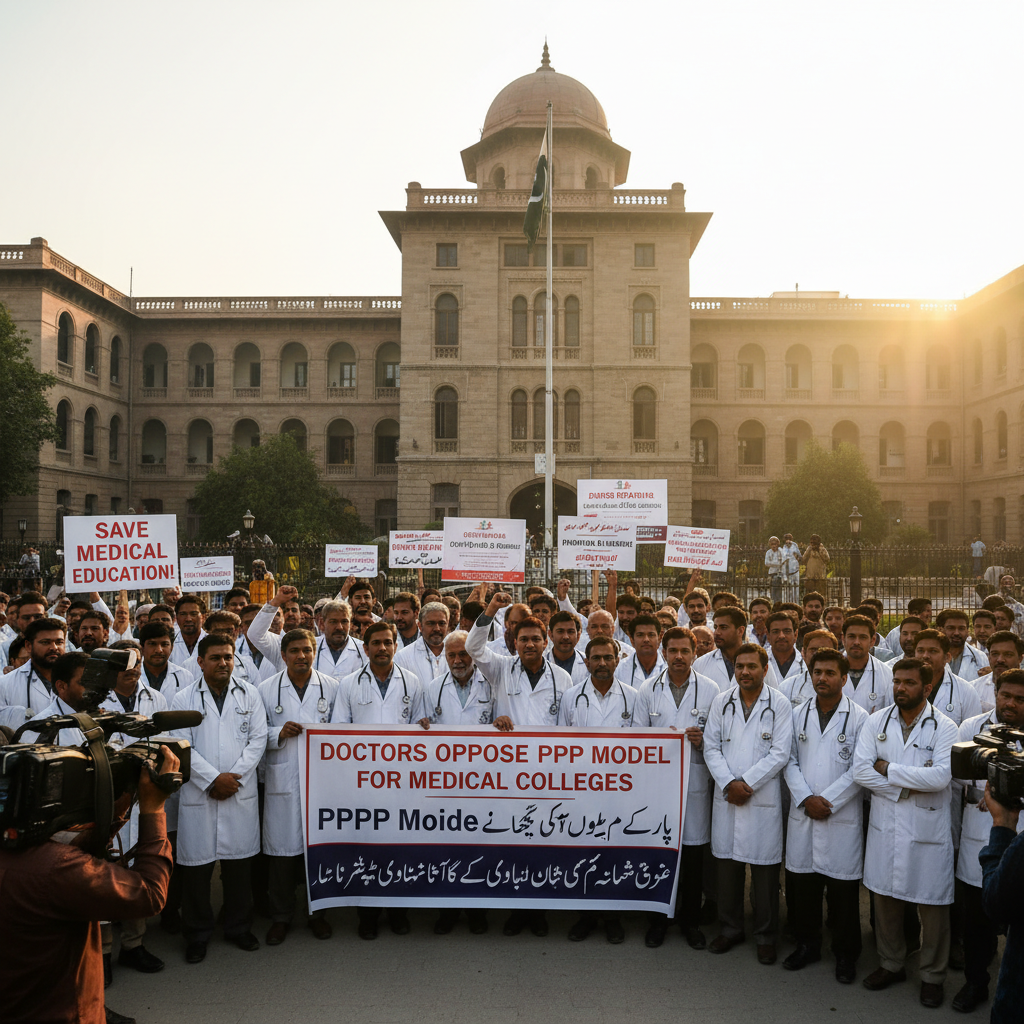
## Ludhiana Doctors Oppose Punjab Government’s PPP Medical Colleges Initiative
### Concerns Over Healthcare Privatization
Doctors in Ludhiana have voiced strong opposition to the Punjab government’s decision to establish new medical colleges under the Public Private Partnership (PPP) model. They caution that this initiative could lead to the privatization of healthcare services in the state, potentially making medical education and services unaffordable for economically disadvantaged populations.
### Demands for Government Action
In a recent statement, Dr. Arun Mitra, president of the Indian Doctors for Peace and Development (IDPD), along with central committee member Dr. Inderveer Gill, urged the government to reconsider this decision. They highlighted that the proposed medical colleges in Sangrur and Nawanshahr are being set up under the PPP framework via the Punjab Infrastructure Development Board (PIDB), with tenders for construction already issued.
### Questions Raised by Medical Professionals
The doctors’ organization raised critical questions regarding the new colleges:
– Will the fee structure in these PPP medical colleges mirror that of existing government colleges?
– Are there provisions for scholarships or fee concessions for students from low-income families?
– Will healthcare services at these colleges remain free for all citizens?
### Concerns About Broader Privatization Efforts
According to a report from the Times of India, the IDPD noted that evaluation teams from the PIDB have been inspecting government hospitals in various locations, including Rajpura, Ferozepur, Gurdaspur, Munak, and Moga. This has led to concerns that these actions may indicate the onset of a broader privatization initiative in the state’s healthcare sector.
### Economic Strain on Families
The organization emphasized the increasing financial burden on families, stating, “The cost of healthcare and medical education has risen sharply across India, especially in Punjab, since the COVID-19 pandemic. Poor and working-class families lack the financial resources to afford medical treatment or pursue education in the field of medicine. It seems the Punjab government is mirroring the central government’s approach, which has been pushing to privatize the health sector.”
### Call to Strengthen Public Healthcare
In their statement, IDPD argued that countries with predominantly public healthcare systems tend to achieve better health outcomes than those relying on private or insurance-based models. They urged the Punjab government to bolster the public health system, increase the state health budget, and ensure that healthcare remains accessible and affordable for everyone.
### Support for PPP Model from National Medical Commission
In contrast, the Chairman of the National Medical Commission (NMC), Dr. Abhijat Sheth, has described the PPP model as “the way forward” for reshaping India’s medical education landscape. His endorsement comes as states like Andhra Pradesh, Karnataka, and Gujarat are rapidly embracing these partnerships.
### Related Reading
– **Karnataka’s Plan to Set Up New GMCs Under PPP Model Draws Flak**
– **PPP Model is the Way Forward to Reshape Medical Education in India: NMC Chairman**