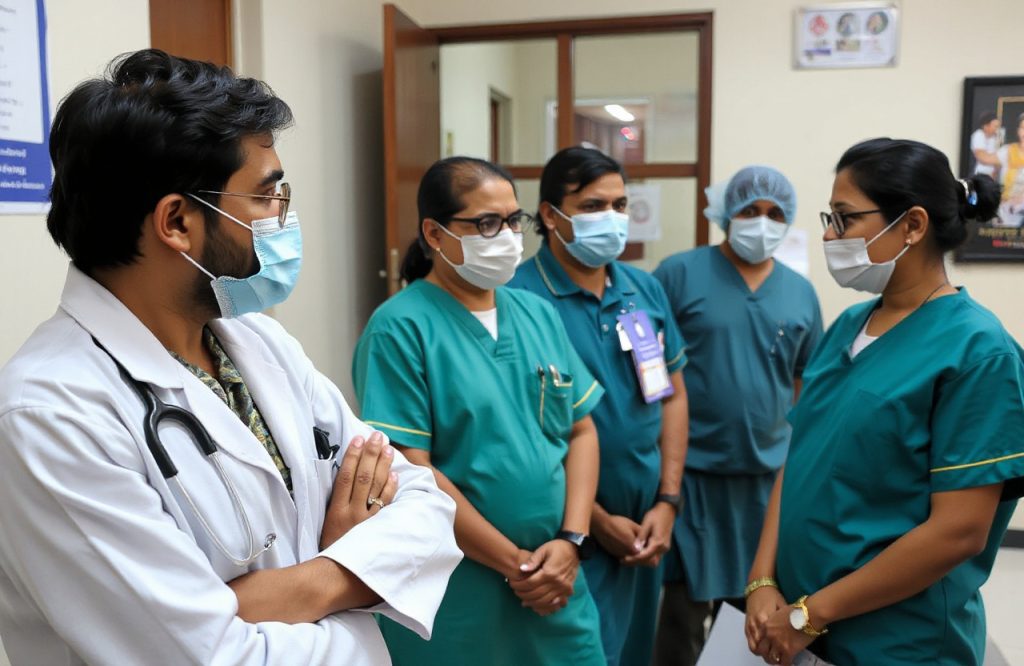
Opposition to Expansion of Telangana Medical Council
Background on Government Order
In Telangana, the medical community is expressing strong disapproval of a recent government directive that has expanded the Telangana Medical Council (TGMC) by adding four ex officio members. This increase raises the Council’s total membership from 25 to 29. The Government Order (G.O. 229), issued on December 22, 2025, by the Telangana Health Department, appointed the following officials as ex officio members:
1. Commissioner of Health & Family Welfare, Telangana
2. Director of Medical Education, Telangana
3. Director of Health and Family Welfare, Telangana
4. Commissioner, Telangana Vaidya Vidhana Parishad, Telangana
5. Vice-Chancellor, Dr. KNR University of Health Sciences, Telangana
6. Chief Executive Officer, Arogyasn Health Care Trust, Telangana
7. Special/Additional Secretary/Joint Secretary/Deputy Secretary to Government, HM&FW Department
8. Director NIMS, Hyderabad
Previously, the 25-member TGMC included 13 elected representatives, six government nominees, two members from KNRUHS, and four ex officio officials. With the new order, the addition of four more ex officio members has raised concerns within the medical community.
Reactions from Medical Organizations
The expansion has garnered significant criticism from various doctors’ organizations, including the Healthcare Reforms Doctors Association (HRDA), the Telangana branch of the Indian Medical Association, the Telangana Senior Resident Doctors Association (TSRDA), the Telangana Junior Doctors Association (T-JUDA), the Telangana Teaching Doctors Association (TTGDA), the All India Dental Students and Surgeons Association (AIDSA), and the Telangana Hospitals and Nursing Homes Association.
These associations argue that the majority of the newly appointed members are non-doctors, which raises questions about the necessity of increasing non-medical representation in a council responsible for regulating medical education and professional standards.
Statements from HRDA
In a recent press release, the HRDA condemned the government’s decision, stating, “By virtue of this G.O., the Government has raised the Council’s strength from 25 to 29 members, artificially altering its composition and effectively pushing the elected representatives of the medical profession into a minority.” They view this move as a backdoor takeover of a statutory regulatory body that undermines the spirit of the Telangana Medical Practitioners Registration Act of 1968.
HRDA further emphasized that the move compromises the statutory autonomy, professional independence, and democratic character of the Medical Council. The organization also expressed concern over the timing, noting that the TGMC has been actively engaged in a significant anti-quackery initiative to safeguard public health, which they believe the government is now undermining.
Concerns Regarding Non-Medical Representation
HRDA questioned how non-doctors could adjudicate professional misconduct or influence disciplinary actions. They criticized G.O.Ms.No. 229 for allowing non-medical personnel, including bureaucrats, to become members of the TGMC under the label of “ex officio” positions. The organization argues that a body that regulates medical education and practice should not include individuals without medical qualifications or accountability to the medical profession.
In their demands, HRDA called for the immediate retraction of G.O.Ms.No. 229, restoration of democratic representation within the TGMC, and the exclusion of non-medical influence from statutory medical regulation.
Support from Other Medical Associations
T-JUDA expressed solidarity with HRDA, urging the government to withdraw the controversial G.O. They warned that failure to do so would lead to protests and legal actions, emphasizing that “Public health cannot and will not be sacrificed at the altar of bureaucratic control.”
Similarly, IMA Telangana State branch reiterated the need for medical councils to remain autonomous and free from bureaucratic dominance, aligning with the concerns raised by other medical organizations.
Conclusion
The expansion of the Telangana Medical Council has sparked significant backlash from the medical community, who argue that increasing non-medical representation undermines the Council’s efficacy and autonomy. As calls for the withdrawal of the government order grow, the ongoing debate highlights the critical balance between governance and professional representation in medical regulation.