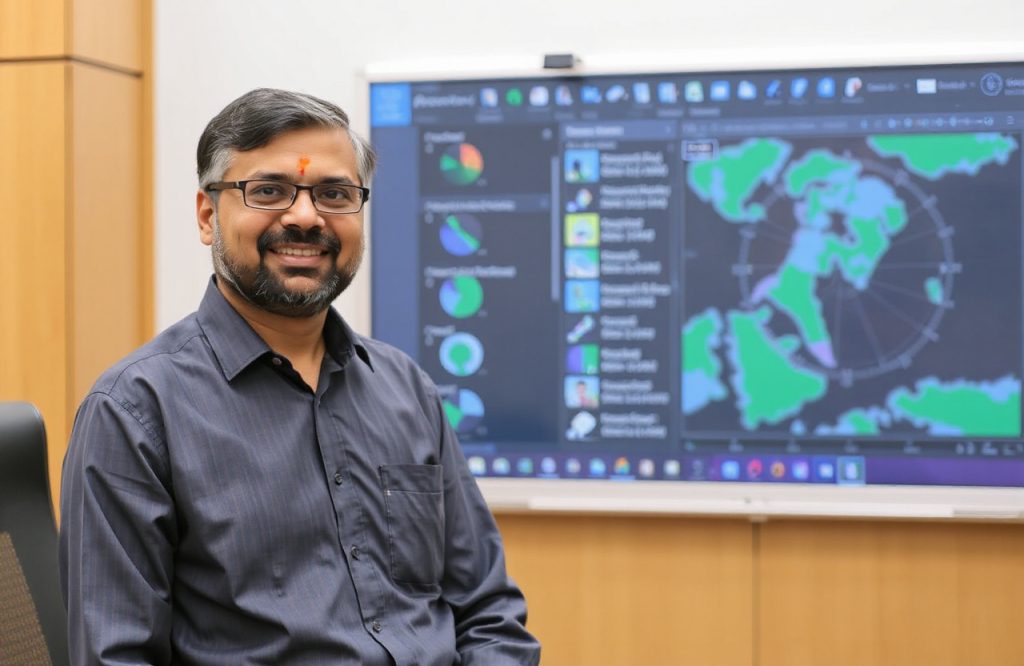
Dr. Chandrakant Lahariya Receives Wiley Research Heroes Prize 2025
Acknowledgment of Research Contributions
New Delhi: Dr. Chandrakant Lahariya, a former staff member of the World Health Organization (WHO), has been honored with the prestigious Wiley Research Heroes Prize 2025. This award recognizes his significant research contributions and policy impact under the theme ‘Impact Beyond Academia.’ The importance of research in advancing knowledge is widely acknowledged, particularly in enhancing health and well-being across societies. Research that directly influences policy and the lives of millions is considered highly impactful, as noted by the Director General of the Indian Council of Medical Research in a paper published in September 2025.
Dr. Lahariya’s Background and Achievements
Dr. Chandrakant Lahariya is a prominent health policy researcher, academician, and medical practitioner in India. His influence in the field has been recognized for years, including being ranked among the top 2% of researchers globally in clinical/internal medicine and pediatrics by an analysis from Elsevier, conducted by Stanford University researchers in 2020. He has been engaged in research since 2004, beginning his career as a Resident Doctor at Lady Hardinge Medical College in New Delhi.
Significant Research Initiatives
As a leading public health physician, Dr. Lahariya has conducted primary research in vaccination, conditional cash transfers for maternal and child health services, and primary healthcare. His evaluations of vaccine introduction, particularly for hepatitis B, and his work on conditional cash transfers and integrated management of neonatal and childhood illnesses have led to significant programmatic changes. Consequently, India has introduced around six new and underutilized vaccines into its immunization programs, with the national program now including 12 of the 13 WHO-recommended vaccines. The 13th antigen, the HPV vaccine, is currently under consideration.
Impact on Immunization Coverage
Dr. Lahariya’s efforts have greatly improved vaccine coverage in India, with childhood vaccination rates rising from approximately 55% in 2005 to around 94% in 2023. His work in designing and enhancing primary healthcare models includes involvement in initiatives like the Mohalla or Community Clinics in Delhi and Basthi Davakhana across India.
Awards and Recognition
Throughout his career, Dr. Lahariya has received numerous accolades. In 2012, he was awarded the Dr. BC Srivastava Foundation Award by the Government of India/Indian Council of Medical Research for translating community health research into policy practice. In 2014, he received a certificate of appreciation from the then Director General of WHO. His research and initiatives are widely recognized and applied in real-world policy practices.
Focus on Future Research
Dr. Lahariya’s research continues to concentrate on cardiometabolic diseases, parenting, and child development. He is also the founder director of the Foundation for People-centric Health Systems, a non-profit organization based in New Delhi.
Dr. Lahariya’s Response to the Award
In a statement regarding the Wiley Research Heroes Prize 2025, Dr. Lahariya expressed his gratitude, stating, “I am deeply honoured. This award is special because it recognizes work that goes beyond academic publications and touches people’s lives. Public health is ultimately about impact on communities, especially the most marginalized, and this prize affirms that the years of field research, policy engagement, and collaborative efforts have made a meaningful difference.”
Research Goals and Inspirations
Elaborating on his research focus, Dr. Lahariya mentioned, “My research aims to strengthen health systems so that quality, affordable care reaches every individual. This involves working on vaccination policy, conditional cash transfers for maternal and child health, and primary healthcare models. I strive to generate evidence that informs policy and large-scale programs.”
Reflecting on his motivations, he noted, “I realized that a single policy change can improve the lives of millions — far more than what any one clinician can do alone.” He highlighted the tangible impact of his work on national immunization policies and primary healthcare redesign across Indian states.
Future Directions
When discussing his future priorities, Dr. Lahariya stated, “The next frontier is strengthening comprehensive primary healthcare and making preventive health the center of health systems. There is also a significant opportunity in science communication — combating misinformation, building public trust, and empowering citizens with simple, science-based guidance. The ultimate goal remains the same: to ensure that evidence leads to action, and action improves lives, particularly for the poorest and most marginalized.”
Related News
Also Read: WHO Releases Updated Recommendations on HIV Clinical Management
Also Read: WHO, AYUSH Ministry Host Meeting to Promote Global Recognition of AYUSH Systems