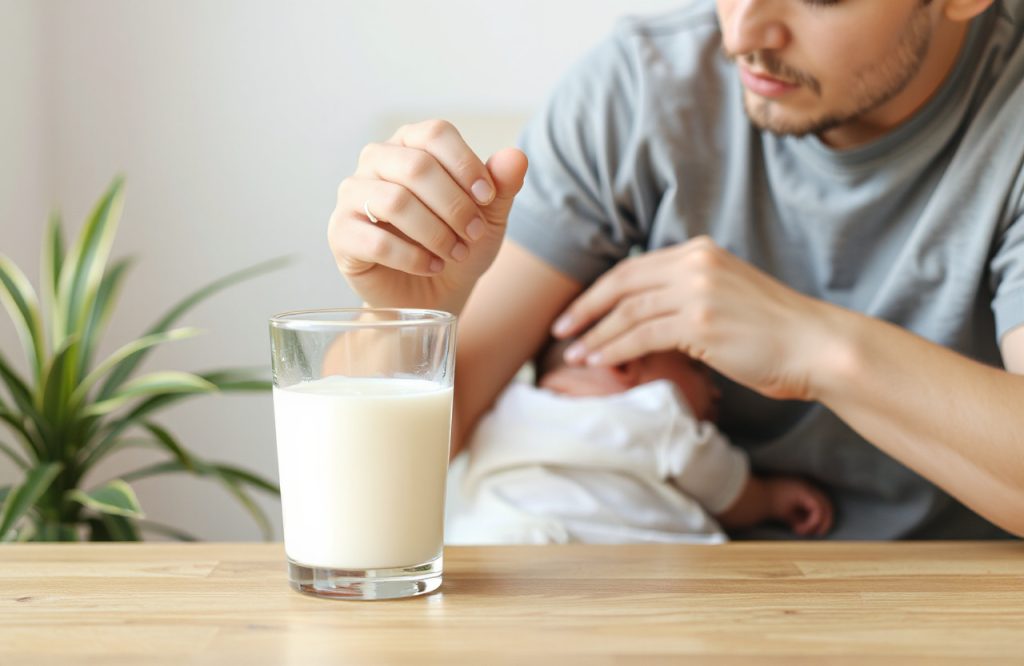
Impact of Drinking Milk While Breastfeeding on Allergy Risks in Children
Study Overview
A recent study conducted in Northern Sweden suggests that consuming cow’s milk during breastfeeding may reduce the likelihood of food allergies in infants. Researchers explored the correlation between maternal diet during pregnancy and lactation and the incidence of allergies in children within their first year.
Research Methodology
The study involved 637 families between 2015 and 2018. Mothers completed food frequency questionnaires both during pregnancy and postpartum, providing dietary details regarding their intake of probiotics, sugars, heavy metals, and fats. Additionally, maternal blood and breast milk were analyzed for specific biomarkers, namely pentadecanoic acid and heptadecanoic acid, which are associated with cow’s milk consumption.
Findings on Allergy Development
Children were evaluated for allergies by the time they reached 12 months. The study found that those whose mothers consumed higher amounts of dairy products had a lower risk of developing food allergies compared to those whose mothers had a lower dairy intake. This observation aligns with the hygiene hypothesis, which posits that cow’s milk may contain microorganisms that promote the development of a child’s immune system. However, the exact components of milk that contribute to allergy prevention remain unclear.
Broader Implications of Maternal Nutrition
These findings highlight the potential significance of maternal nutrition during breastfeeding, particularly the consumption of milk, on the risk of allergy development in children. Approximately 30% of individuals globally are affected by allergies, which are among the most prevalent chronic conditions in children. Allergies result from a combination of genetic and environmental influences.
Genetic and Environmental Factors
Research indicates that certain genetic factors, like the SERPINB gene cluster on chromosome 18, may play a role in the emergence of food allergies. Environmental contributors, including maternal obesity, stress, and dietary choices, significantly influence allergy development in children.
Future Research Directions
Understanding and mitigating factors that compromise a child’s immune system could be crucial for preventing allergies and improving health outcomes. Further research is essential to clarify the mechanisms and implications of both genetic and environmental factors on the immune systems of infants.
References
– Burbank, A., Sood, A., Kesic, M., Peden, D., & Hernandez, M. (2017, July). Environmental determinants of allergy and asthma in early life. Retrieved from https://www.ncbi.nlm.nih.gov/pmc/articles/PMC5675123/pdf/nihms883642.pdf
– Chad, Z. (2001, October). Allergies in children. Retrieved from https://www.ncbi.nlm.nih.gov/pmc/articles/PMC2805592/
– Chalmersuniv. (2020, December 21). Drinking milk while breastfeeding may reduce the child’s food allergy risk. Retrieved from https://www.eurekalert.org/pub_releases/2020-12/cuot-dmw122020.php
– Delbrück, M. (2017, October 24). Genetic causes of children’s food allergies. Retrieved from https://www.sciencedaily.com/releases/2017/10/171024110707.htm
– Stråvik, M., Barman, M., Hesselmar, B., Sandin, A., Wold, A., & Sandberg, A. (2020, November 28). Maternal Intake of Cow’s Milk during Lactation Is Associated with Lower Prevalence of Food Allergy in Offspring. Retrieved from https://www.mdpi.com/2072-6643/12/12/3680/htm