Drones in Cardiac Arrest Response
Innovative Technology for Emergency Medical Services
Recent studies indicate that drones may play a crucial role in delivering defibrillators to patients experiencing cardiac arrests outside of hospital environments. Cardiac arrest incidents occurring in such settings often have a survival rate of only 8 to 10%. This low survival rate is primarily due to delays in administering defibrillation. For bystanders to improve survival chances, immediate CPR and access to automated external defibrillators (AEDs) are essential. Unfortunately, patients in hard-to-reach locations often do not receive timely access to these vital resources.
Research Studies Supporting Drone Use
An article from the American Heart Association News highlights two significant studies: one conducted in Canada, published in Circulation, and another in Sweden, published in JAMA. Both studies explore the potential of utilizing drones to deliver AEDs to patients outside hospital settings.
The Importance of Time in Cardiac Arrest Cases
Critical Minutes for Survival
The article emphasizes that brain cells begin to deteriorate within three minutes of cardiac arrest, and survival probabilities decrease with each passing minute. The Canadian study involved attaching AEDs to drones, which were deployed in 53,702 out-of-hospital cardiac arrest cases from 2006 to 2014. Researchers found that the drone delivery network could reach patients one, two, or three minutes faster than the typical 9-1-1 response time.
Design and Testing of Drones
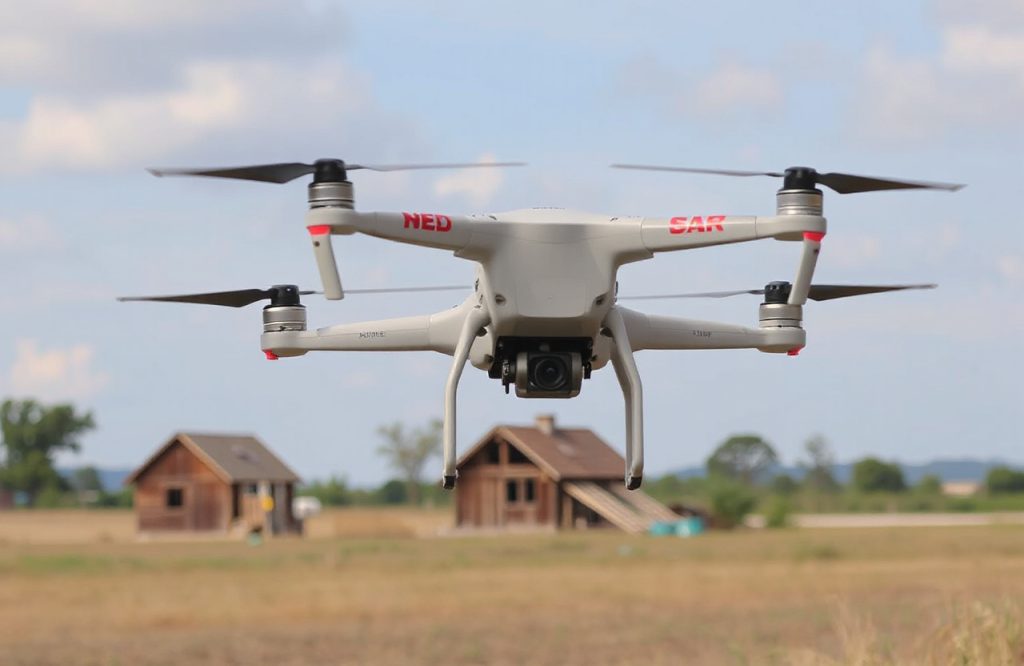
In the Swedish study, a transportation agency developed a drone specifically for AED delivery, equipped with GPS, a high-definition camera, and an autopilot function. The drone was tested in northern Stockholm, an area known for its high summer population and challenging access for emergency services.
Efficiency of Drones Over Traditional Emergency Services
Improved Response Times
The Canadian study determined that implementing 100 drones and 81 bases could enhance emergency response times by three minutes. The drone delivery method improved response times by an average of 6 minutes and 43 seconds in urban areas and 10 minutes and 34 seconds in rural settings compared to traditional 9-1-1 responses.
Successful Drone Delivery Trials
The Swedish research successfully conducted 18 drone missions, achieving a median distance of 3.2 kilometers and a reduced median delivery time of 16 minutes and 39 seconds compared to conventional emergency medical services. Importantly, no technical failures occurred during these flights. However, the article notes that while these findings are promising, the drone delivery method has yet to be tested in actual cardiac arrest emergencies.
Future Implications of Drone Technology in Healthcare
Building a Case for Drones in Medical Emergencies
The combined findings from both studies present a compelling argument for the use of drones in delivering AEDs. Although the research has not yet applied to real-time cardiac arrest situations, the mathematical models used in previous cases indicate reliable outcomes. Drones can navigate obstacles that ambulances face, enhancing accessibility in challenging areas. This drone delivery approach exemplifies how technological advancements can improve patient care and biomedical services.
References
Drones may soon help save people in cardiac arrest. (2018, June 07). Retrieved from https://news.heart.org/drones-may-soon-help-save-people-in-cardiac-arrest/
Claesson, A., Bäckman, A., Ringh, M., Svensson, L., Nordberg, P., Djärv, T., & Hollenberg, J. (2017). Time to Delivery of an Automated External Defibrillator Using a Drone for Simulated Out-of-Hospital Cardiac Arrests vs Emergency Medical Services. Jama, 317(22), 2332. doi:10.1001/jama.2017.3957
Boutilier, J. J., Brooks, S. C., Janmohamed, A., Byers, A., Buick, J. E., Zhan, C., . . . Chan, T. C. (2017). Optimizing a Drone Network to Deliver Automated External Defibrillators Clinical Perspective. Circulation, 135(25), 2454-2465. doi:10.1161/circulationaha.116.026318