E-Cigarettes and Health Risks
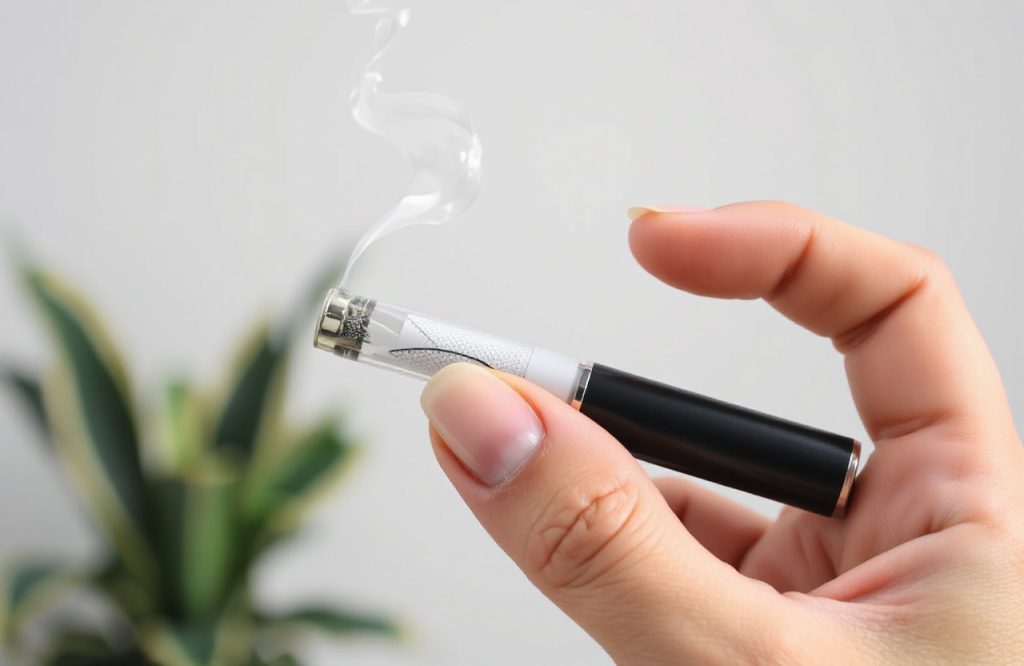
E-cigarettes have emerged as a relatively new product, with some claims suggesting they are “healthier” than traditional cigarettes. Nonetheless, the use of e-cigarettes may carry significant health risks. A recent study indicates that e-cigarette usage is linked to a heightened risk of developing prediabetes.
Insights from the Study
Dr. Shyam Biswal, a co-author of the study, highlighted the findings’ importance, stating, “With both e-cigarette use and prevalence of prediabetes dramatically on the rise in the past decade, our discovery that e-cigarettes carry a similar risk to traditional cigarettes with respect to diabetes is important for understanding and treating vulnerable individuals.”
Understanding Prediabetes
Prediabetes is a condition that often precedes diabetes, characterized by a slight impairment in glucose regulation. It is defined by a Hemoglobin A1c level between 5.7% and 6.4%, a fasting blood glucose level of 100-125 mg/dL, or a two-hour post-75g glucose consumption level of 140-199 mg/dL. The incidence of prediabetes has been rising; among U.S. adults aged 65 or older, the rates increased from 34.5% in 2013 to 46.6% in 2016. In the 19-34 age group, the prevalence of prediabetes was reported at 24.0% between 2005 and 2016. Importantly, prediabetes can be reversed through healthier dietary and lifestyle choices.
The Rise of E-Cigarette Popularity
The use of e-cigarettes has surged over the past few years. In 2016, 4.5% of the 10.8 million adult U.S. population reported using e-cigarettes. Previous research indicated that cigarette smoke might increase insulin resistance, a precursor to diabetes. Although another survey suggested a possible association between e-cigarette use and prediabetes, its sample size was deemed unreliable.
Study Methodology
The recent study, published in the American Journal of Preventive Medicine, aimed to analyze the link between e-cigarette use and prediabetes using a more robust sample size. Researchers surveyed 600,046 adults aged 18 and older from 2016 to 2018, focusing on current, past, and non-smokers. They categorized participants into groups: “sole” e-cigarette users (those who have only used e-cigarettes and currently smoke) and “dual” e-cigarette users (those who currently use both conventional cigarettes and e-cigarettes).
Prevalence of Prediabetes Among E-Cigarette Users
The findings revealed that the prevalence of prediabetes was notably higher in e-cigarette users. Among dual users, the prevalence was 10.2%. Conventional cigarette smokers exhibited a 13.4% prevalence, while 5.9% of sole e-cigarette smokers reported having prediabetes. Furthermore, current and former e-cigarette users were found to be 12% and 22% more likely to have prediabetes compared to non-users, respectively. Dual users were 14% more likely to report prediabetes than individuals who never smoked either type of cigarette. In comparison, former e-cigarette users and current sole users had increased likelihoods of 13% and 54%, respectively, of having prediabetes.
Expert Commentary
Dr. Biswal expressed surprise at the study’s results, which associate prediabetes with e-cigarette use, noting that they are often marketed as safer alternatives. He stated, “In the case of cigarette smoking, nicotine has a detrimental effect on insulin action, and it appears that e-cigarettes may also have the same effect.”
Future Implications
The researchers hope their findings will promote e-cigarette cessation and the implementation of treatment programs aimed at preventing the rising incidence of prediabetes.
References
Zhang, Z. et al. (2022). The Association Between E-Cigarette Use and Prediabetes: Results From the Behavioural Risk Factor Surveillance System, 2016-2018. American Journal of Preventative Medicine. Doi: 10.1016/j.amepre.2021.12.009
Leahy, Eileen and Jillian B. Morgan. (2022). Evidence links e-cigarette use with increased odds of prediabetes. EurekAlert! Accessed Mar. 8 2022. Retrieved from https://www.eurekalert.org/news-releases/945011.
American Diabetes Association. (2018). 5. Prevention or delay of type 2 diabetes: standards of Medical Care in Diabetes-2018. Diabetes Care; 41: S51-S54. Doi: 10.2337/dc18-S005.
Bansal, N. (2015). Prediabetes diagnosis and treatment: a review. World Journal of Diabetes; 6: 296-303. Doi: 10.4239/wjd.v6.i2.296.
Menke, A. et al. (2015). Prevalence of and trends in diabetes among adults in the United States, 1988-2012. JAMA; 314: 1021-1029. Doi: 10.1001/jama.2015.10029.
Andes, L.J. et al. (2020). Prevalence of prediabetes among adolescents and young adults in the United States, 2005-2016. JAMA Pediatrics; 174: e194498. Doi: 10.1001/jamapediatrics.2019.4498.
Mirbolouk, M. et al. (2018). Prevalence and distribution of e-cigarette use among U.S. adults: Behavioral Risk Factor Surveillance System, 2016. Annals of Internal Medicine; 169: 429-438. Doi: 10.7326/M17-3440
Willi, C. et al. (2007). Active smoking and the risk of type 2 diabetes: a systemic review and meta-analysis. JAMA; 298: 2654-2664. Doi: 10.1001/jama.298.22.2654.
Atuegwu. N.C. et al. (2019). E-cigarette use is associated with a self-reported diagnosis of prediabetes in never cigarette smokers: results from the Behavioural Risk Factor Surveillance System survey. Drug Alcohol Dependence; 205: 107692. Doi: 10.1016/j.drugalcdep.2019.107692.