Importance of Personal Protective Equipment for Healthcare Workers
Role of Face Masks in Preventing Virus Spread
Personal protective equipment (PPE), particularly face masks, plays a crucial role for healthcare workers, especially during the current pandemic. Respiratory viruses, including the novel coronavirus (SARS-CoV-2), are primarily transmitted through droplets expelled by infected individuals during coughing and sneezing.
Challenges in Mask Availability
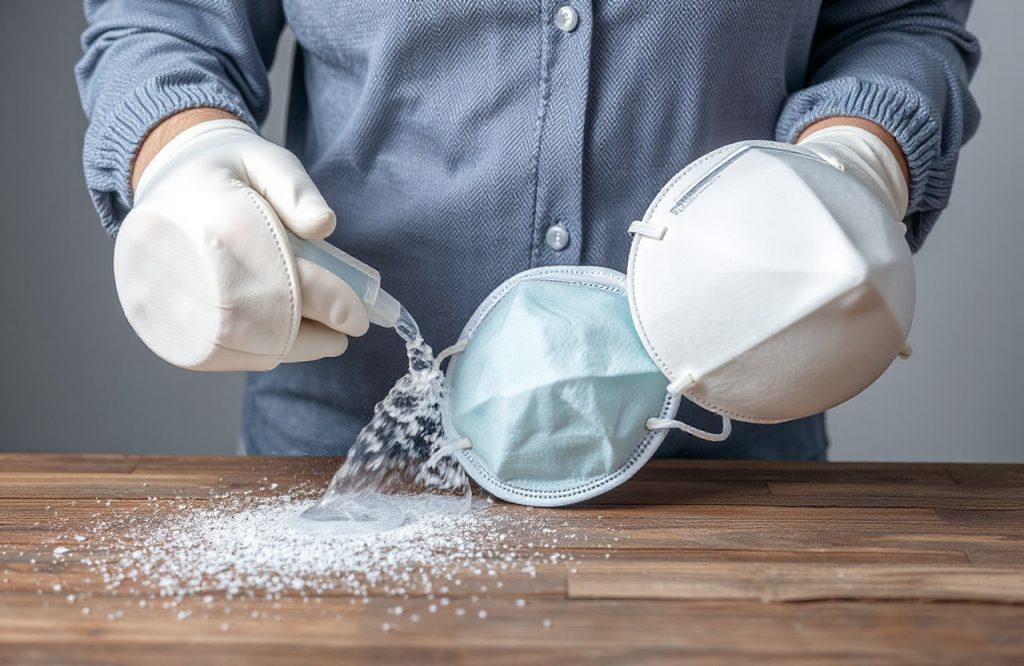
The surge in demand for PPE has led to a significant shortage of masks, hindering healthcare workers’ ability to protect themselves. In response, many have resorted to reusing masks initially designed for single use, and some are exploring methods to decontaminate them to extend their usability.
Reusing and Decontaminating Masks
Risks of Mask Reuse
Healthcare professionals are currently extending the use of masks beyond a single patient encounter, which increases the risk of contamination. Prolonged use can lead to the accumulation of virus particles on the mask’s surface, posing a risk if the wearer touches these areas and subsequently their face.
Exploring Decontamination Methods
Recent studies have investigated the feasibility of decontaminating masks to prolong their use. Comprehensive scientific research is necessary to identify effective decontamination methods that preserve the mask’s integrity.
Decontamination Techniques
Steam and Heat Decontamination
One study indicated that wrapping N95 masks in protective peel pouches and using steam sterilization might effectively decontaminate them. Another examination tested a simple method where medical masks and N95 respirators were placed in plastic bags and steamed over boiling water for five minutes. This approach kept the masks dry and achieved complete inactivation of avian coronaviruses, which were utilized to simulate contamination.
Additionally, researchers explored using a rice cooker for steam sterilization and compared it with dry-heat decontamination. The steam method, taking no more than 15 minutes, was found to be superior to dry heat, which involved exposing masks to 100 degrees Celsius for 15 minutes. Notably, the study did not evaluate the masks’ effectiveness post-decontamination.
UV Irradiation for Disinfection
Ultraviolet (UV) irradiation has been previously utilized for disinfecting drinking water and air. A recent study demonstrated that a UV-C disinfection cabinet effectively decontaminated N95 masks within a 31-minute cycle. Another investigation using a UV-C germicidal lamp confirmed that this method could decontaminate masks contaminated with SARS-CoV-2, although the duration required was longer than that for hard surfaces and may depend on the initial contamination level.
Conclusion
As the demand for face masks surges, healthcare workers are seeking ways to reuse and decontaminate these essential items effectively. Continued research into safe and effective decontamination methods is vital to ensure the safety and health of frontline workers.
References
1. Strategies for Optimizing the Supply of N95 Respirators: Crisis/Alternate Strategies. Center for Disease Control website. [CDC](https://www.cdc.gov/coronavirus/2019-ncov/hcp/respirators-strategy/crisis-alternate-strategies.html)
2. Centers for Disease Control and Prevention. Cloth masks and mask sterilisation as options in case of shortage of surgical masks and respirators. Available at: [ECDC](https://www.ecdc.europa.eu/sites/default/files/documents/Cloth-face-masks-incase-shortage-surgical-masks-respirators2020-03-26.pdf)
3. Carrillo, I., Floyd, A., Valverde, C., Tingle, T., & Zabaneh, F. (2020). Immediate Use Steam Sterilization (IUSS) Sterilizes N95 Masks Without Mask Damage. Infection Control & Hospital Epidemiology, 1-5. doi:10.1017/ice.2020.145
4. Ma, Q.-X., et al. (2020). Decontamination of face masks with steam for mask reuse in fighting the pandemic COVID-19: experimental supports. J Med Virol. Accepted Author Manuscript. doi:10.1002/jmv.25921
5. Li, DF., et al. (2020). It’s Not the Heat, It’s the Humidity: Effectiveness of a Rice Cooker-Steamer for Decontamination of Cloth and Surgical Face Masks and N95 Respirators, AJIC: American Journal of Infection Control. doi: https://doi.org/10.1016/j.ajic.2020.04.012
6. Cadnum JL, et al. (2020). Effectiveness of Ultraviolet-C Light and a High-Level Disinfection Cabinet for Decontamination of N95 Respirators. Pathog Immun. 2020;5(1):52-67. doi:10.20411/pai.v5i1.372
7. Fischer, R, et al. (2020). Assessment of N95 respirator decontamination and re-use for SARS-CoV-2. medRxiv 2020.04.11.20062018; doi: https://doi.org/10.1101/2020.04.11.20062018
Image by Engin Akyurt from Pixabay.