Comparative Analysis of Therapies for Heel Pain
Understanding Sharp Heel Pain
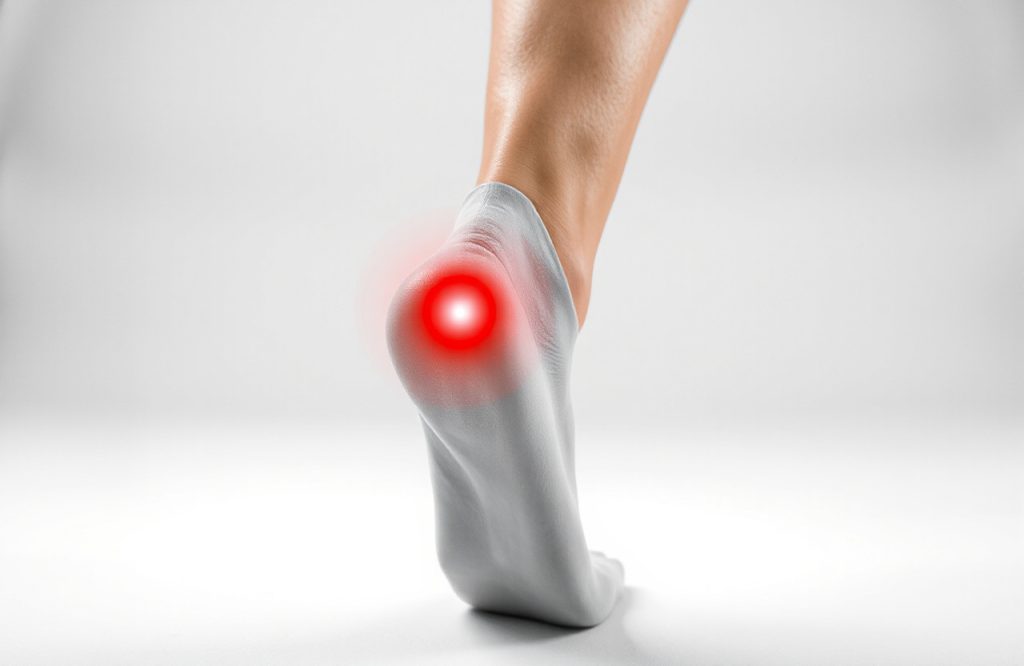
A recent network meta-analysis investigated eight different therapies to identify the most effective treatment for sharp heel pain, commonly known as plantar fasciitis. This condition frequently impacts both active and sedentary adults. Key symptoms include significant foot pain upon waking and a sharp, knife-like pain during walking. The primary cause of this discomfort is inflammation in the plantar fascia, the thick connective tissue supporting the foot’s arch. Common risk factors include being overweight and prolonged standing.
Traditional Treatment Approaches
Many individuals suffering from plantar fasciitis find relief through traditional methods such as rest, arch support, stretching, and night splints. However, chronic cases may necessitate more intensive interventions, including medications, physical therapy, or surgery. Treatment effectiveness can take several months to manifest.
Common Therapeutic Interventions
Several therapeutic options are available to treat sharp heel pain. These include:
– Non-steroidal anti-inflammatory drugs (NSAIDs)
– Ultrasound therapy (US)
– Corticosteroid injections (CS)
– Extra-corporeal shock wave therapy (ECWT)
– Platelet-rich plasma injections (PRP)
– Autologous whole blood (AWB)
– Botulinum Toxin A (BTX-A)
– Dry needling (DN)
While NSAIDs have raised concerns regarding their efficacy for non-inflammatory conditions, localized steroid injections can provide temporary relief, though repeated use may risk damaging the plantar fascia. Both PRP and AWB therapies utilize growth factors that promote tissue healing. BTX-A works by inhibiting pain mediators, and dry needling offers a minimally invasive pain relief option. Additionally, ECWT employs ultrasound technology to alleviate pain and has shown high effectiveness in treating plantar fasciitis.
Effectiveness of Various Treatments
Study Overview
Numerous studies have attempted to evaluate the effectiveness of these treatments, often yielding inconsistent results. However, a recent study published in the Journal of Cellular Physiology provides new insights. Researchers from Tianjin, China, conducted a network meta-analysis involving 41 studies and 2,889 participants. They assessed treatment effectiveness using a visual analog scale (VAS), which measures pain on a scale from 0 (no pain) to 10 (unbearable pain).
Short-term Treatment Efficacy
At the one-month mark, only extra-corporeal shock wave therapy showed significant efficacy compared to a placebo, while NSAIDs were the least effective. Two months into treatment, shock wave therapy continued to outperform other options, with autologous whole blood and corticosteroid injections proving less effective. By three months, extra-corporeal shock wave therapy was confirmed as the most effective for heel pain, with platelet-rich plasma falling short of optimal effectiveness.
Long-term Treatment Efficacy
The six-month analysis reiterated the effectiveness of extra-corporeal shock wave therapy, followed by Botulinum Toxin A. Autologous whole blood and ultrasound therapy ranked as the least effective options in the long term.
Conclusion: The Most Effective Treatment
The comprehensive analysis indicates that extra-corporeal shock wave therapy emerges as the most effective treatment for sharp heel pain associated with plantar fasciitis. While corticosteroids and platelet-rich plasma provide average efficacy, dry needling and ultrasound therapy are more effective in the short term but less so over time. Botulinum Toxin A shows promise as a new therapy, whereas autologous whole blood and NSAIDs were found to be ineffective.
The strength of this study lies in its network meta-analysis approach, allowing for a comparative analysis of multiple treatments. However, limitations include a limited number of trials and the exclusive use of the visual analog scale for evaluating treatment effectiveness.
In conclusion, the findings suggest that extra-corporeal shock wave therapy may represent the superior treatment option for sharp heel pain, warranting consideration in the management of plantar fasciitis.
Written by Preeti Paul, MS Biochemistry
Reference: Haibo Li et al., Comparison of efficacy of eight treatments for plantar fasciitis: a network meta-analysis. J Cell Physiol;2018;1-11